Getting your brand’s visibility in ChatGPT or Perplexity requires more than publishing content or ranking in traditional search. AI platforms evaluate information from across the web to understand brands, answer queries, and surface relevant recommendations.
This guide provides a practical process for improving your brand’s visibility, from establishing your current AI presence and understanding customer queries to strengthening your online entity, improving content, and removing technical barriers. For agencies like RankingBite, this approach can help build a stronger and more consistent presence across AI search.
The goal is to improve your brand’s visibility across the trusted sources AI systems can access, while making your expertise easier for platforms like ChatGPT and Perplexity to understand and reference.
Step 1: Establish Your Current AI Visibility Baseline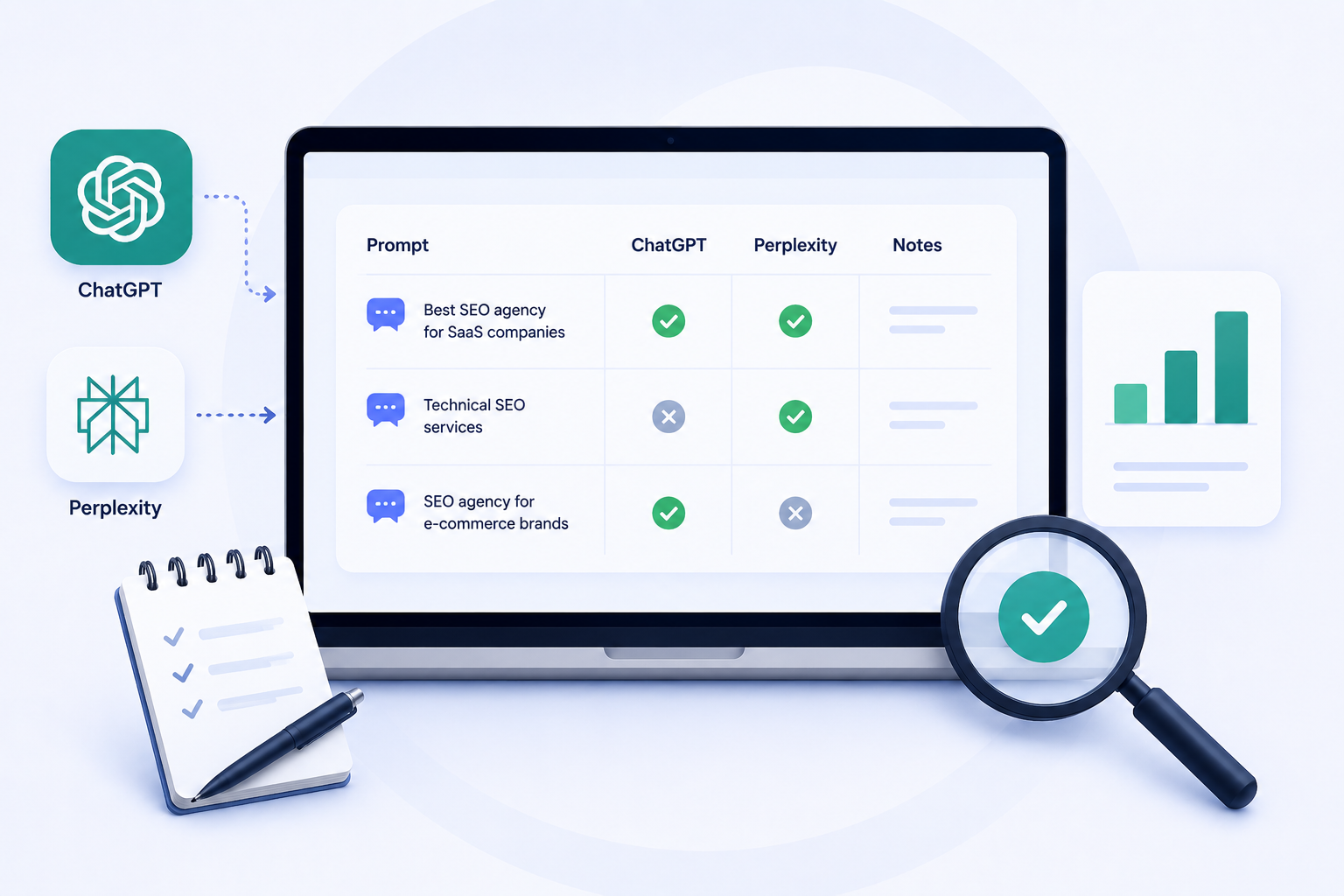
Before making changes, determine how your brand currently appears across AI platforms. This gives you a starting point for measuring progress later.
Select Your Target AI Platforms
Choose the AI platforms most relevant to your audience, such as ChatGPT and Perplexity. Keep the same platforms throughout your tracking period so results remain comparable.
Record Your Existing Brand Presence
Test relevant customer queries and note whether your brand appears, how it is described, and which competitors are mentioned alongside it. Save the responses for future comparison.
Example: For an SEO agency, test queries such as “best SEO agency for SaaS companies” and “SEO agencies for e-commerce brands.”
Create a Baseline Report
Summarize your initial findings in a simple report containing the platforms tested, prompts used, brand presence, competitor presence, and key observations. This baseline becomes your reference point for measuring future improvements.
Step 2: Map the Queries Your Customers Ask AI
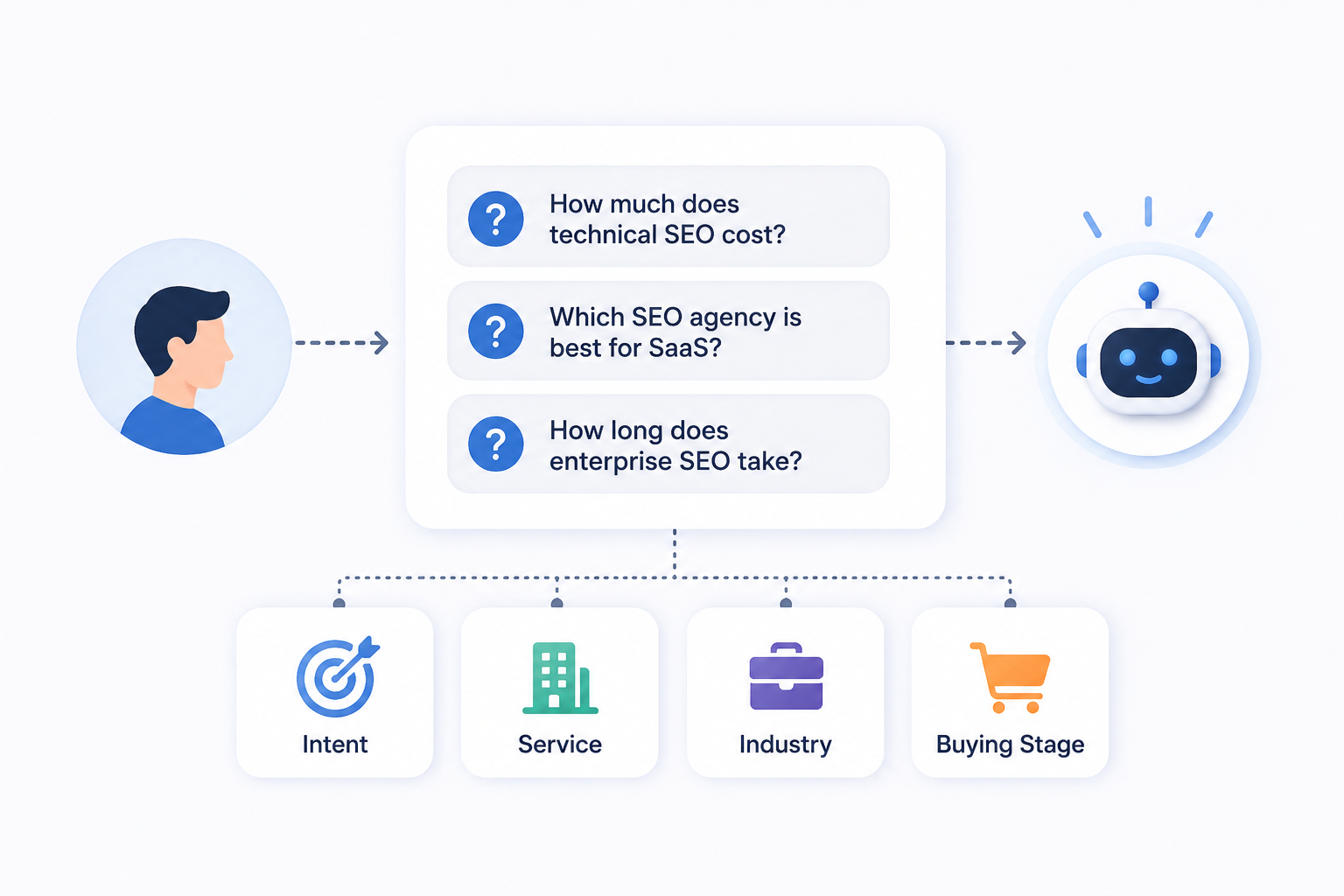
Identify the questions your target customers are likely to ask when researching problems, solutions, brands, and services. Group these queries by intent, service, industry, and buying stage to create a practical testing set.
Example: For an SEO agency, queries could include “How much does technical SEO cost?”, “Which SEO agency is best for SaaS?”, and “How long does enterprise SEO take?”
Prioritize queries that are relevant to your services and have clear commercial or informational value. This ensures your visibility efforts focus on searches that can actually influence brand discovery.
Step 3: Analyze Which Brands AI Currently Recommends
Review your target prompts to identify which brands AI platforms recommend most often. Look beyond the brand name and examine why each brand appears, such as its expertise, content, reviews, industry presence, or third-party coverage.
Create a simple competitor comparison covering:
- Brands recommended
- Services or topics associated with them
- Frequency of appearance
- Common supporting sources
- Prompts where they appear
Example: If three competitors repeatedly appear for “best SEO agency for SaaS companies,” compare their content, industry mentions, case studies, and external references to identify patterns behind their visibility.
Step 4: Strengthen Your Brand’s Online Entity
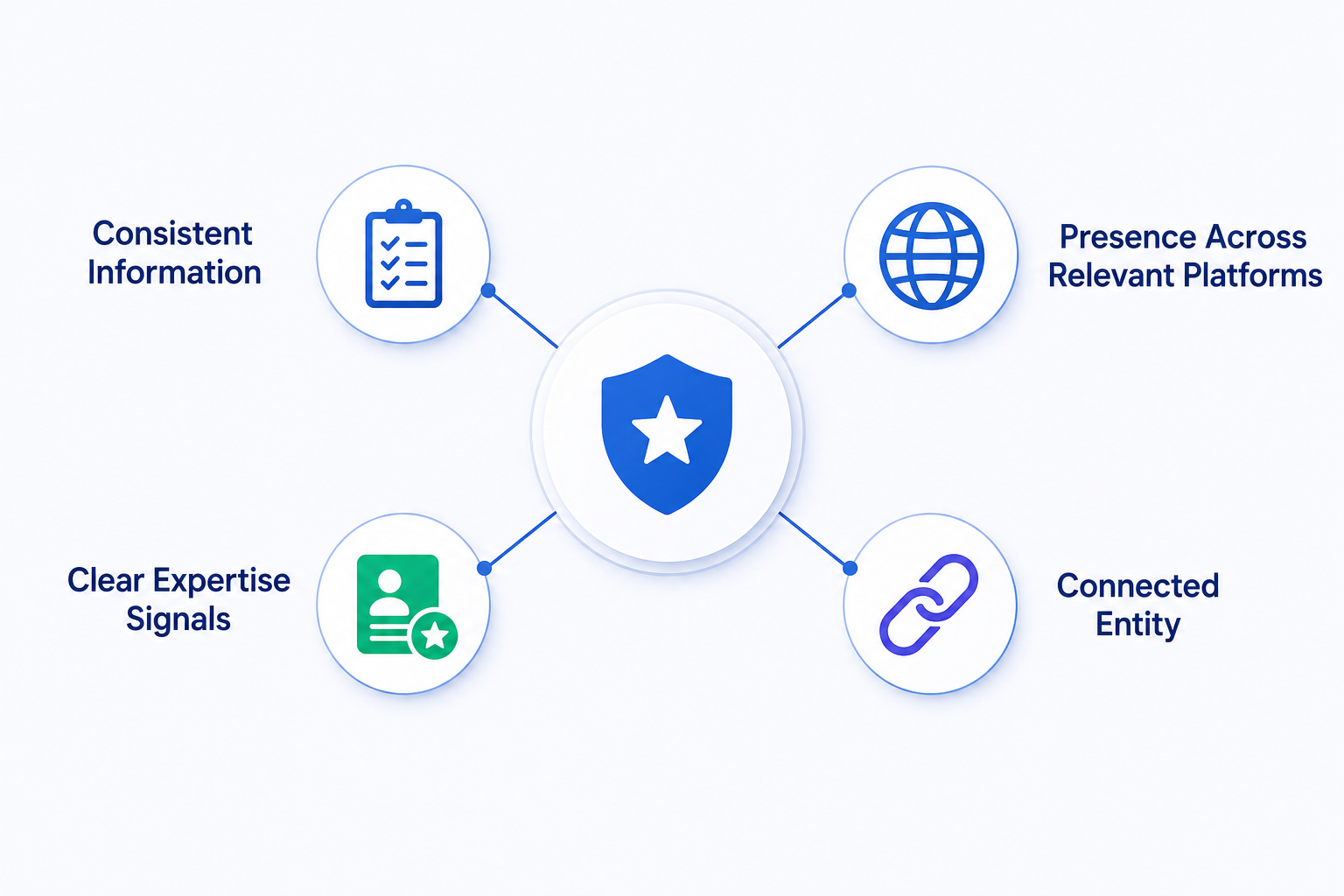
Make your brand easy to identify and understand across the web. Consistent information and clear expertise help reduce ambiguity around what your business does and what it is known for.
Standardize Brand Information
Use the same brand name, description, services, and key business details across your website and relevant profiles. Avoid conflicting descriptions or outdated information.
Connect Your Brand Across Relevant Platforms
Maintain consistent brand references across appropriate business profiles, industry platforms, publications, and other trusted sources. Where relevant, connect these profiles back to your official website.
Build Clear Expertise Signals
Clearly demonstrate what your brand specializes in through expert authors, case studies, credentials, original insights, and focused content.
Example: An agency specializing in technical SEO should consistently communicate that specialization across its website, expert profiles, case studies, and relevant industry references.
Step 5: Create Content AI Can Reliably Understand
Create content with a clear structure and enough context for AI systems to interpret the topic accurately. Focus on making important information easy to identify without sacrificing usefulness for human readers.
Answer Questions Directly
Address the main question early, then provide supporting details. Avoid burying the answer under lengthy introductions or unnecessary information.
Example: For “What is technical SEO?”, define it first, then explain its key components and practical applications.
Add Evidence and Context
Support important claims with reliable sources, examples, data, or first-hand experience. Make it clear what the evidence represents and when it applies.
Build Topic Coverage
Cover the important subtopics connected to your core subject instead of creating isolated pages for every variation. Link related resources where they genuinely help readers explore the topic.
Step 6: Create Content Worth Citing
Create resources that provide information other websites and AI systems have a reason to reference. Prioritize original value over content volume.
Focus on:
- Original research: Publish surveys, studies, benchmarks, or proprietary findings.
- Unique data: Provide statistics or datasets that are difficult to find elsewhere.
- Expert insights: Add first-hand observations, expert analysis, or practical findings.
- Clear evidence: Support important claims with credible references and explain the context.
- Useful resources: Create reports, frameworks, checklists, or comprehensive guides.
Example: Instead of publishing another article about SEO trends, an agency could analyze data from 500 websites and publish an original 2026 SEO Performance Benchmark Report. Such a resource provides information others can reference.
Step 7: Build Visibility Beyond Your Website
Your brand’s online presence is not limited to your own domain. Build credible references across relevant publications, industry platforms, expert profiles, reviews, and communities where your target audience already looks for information.
Focus on earning genuine mentions rather than creating large numbers of low-quality listings or links. Prioritize sources that are relevant to your industry and can independently reinforce your brand’s expertise.
Example: An SEO agency could contribute expert insights to reputable marketing publications, maintain relevant industry profiles, and participate in professional communities where its expertise is genuinely useful.
Step 8: Make Your Content Accessible to AI Search
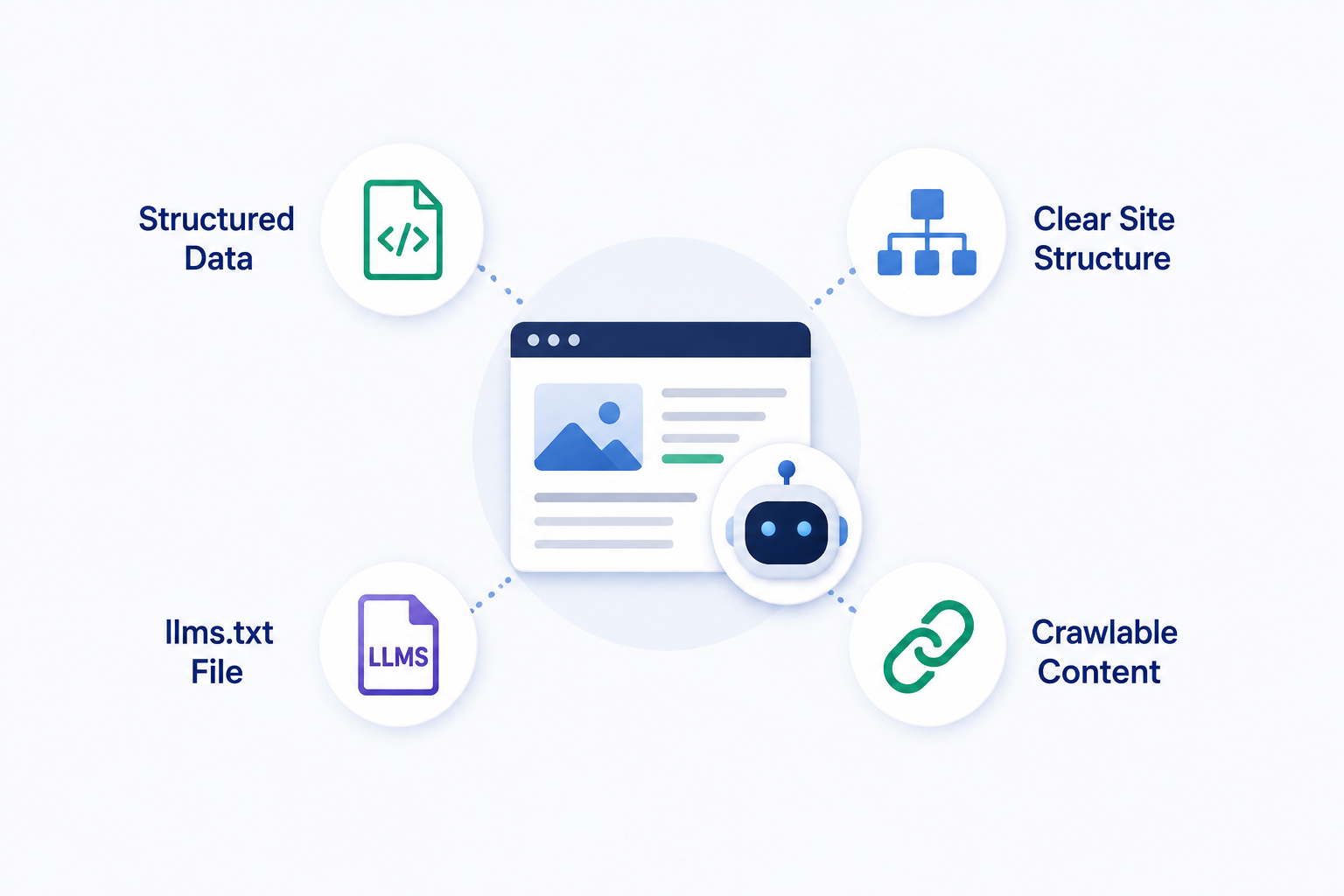
Even strong content needs to be technically accessible before AI systems can discover and use it. Review your site to ensure important information can be crawled, rendered, and accessed without unnecessary barriers.
Check Crawling and Indexing
Verify that important pages are not unintentionally blocked by robots.txt, noindex directives, or access restrictions. Check whether key URLs are discoverable and indexed where appropriate.
Review Technical Barriers
Look for issues such as heavy JavaScript rendering, broken links, slow-loading resources, or content that requires user interaction to access.
Keep Important Information on Accessible Pages
Place essential facts, expertise signals, research findings, and service information in crawlable HTML content rather than hiding them behind scripts, forms, or inaccessible elements.
Example: If an agency’s key case-study results load only after a JavaScript interaction, moving the important findings into accessible page content makes them easier for search and AI systems to process.
Step 9: Test Your Brand’s Visibility Across Real AI Prompts
Test your brand’s Visibility using the same types of questions your customers would realistically ask. Avoid testing only branded queries, as these do not show how easily new customers can discover your business.
Check whether your brand appears, how it is described, which competitors are included, and whether the response reflects your actual expertise.
Example: An SEO agency could test prompts such as “best SEO agency for SaaS companies” or “agencies that specialize in technical SEO” and compare the results across ChatGPT and Perplexity.
Repeat these tests periodically to identify changes in how your brand is represented and where visibility opportunities remain.
Step 10: Improve Based on What AI Shows
Use AI test results to prioritize specific improvements:
- Identify gaps: Find relevant prompts where your brand is missing.
- Review competitors: Analyze why competing brands appear more often.
- Improve weak topics: Strengthen areas where your expertise is unclear.
- Update existing content: Improve pages that lack clarity, evidence, or useful context.
- Strengthen external signals: Look for relevant third-party sources supporting competitors.
- Retest changes: Run the same prompts after improvements to assess changes.
Example: If your agency appears for general SEO queries but not for “technical SEO for SaaS,” strengthen your existing technical SEO content and relevant expertise signals before creating additional pages.
How Long Does It Take to Improve AI Visibility?
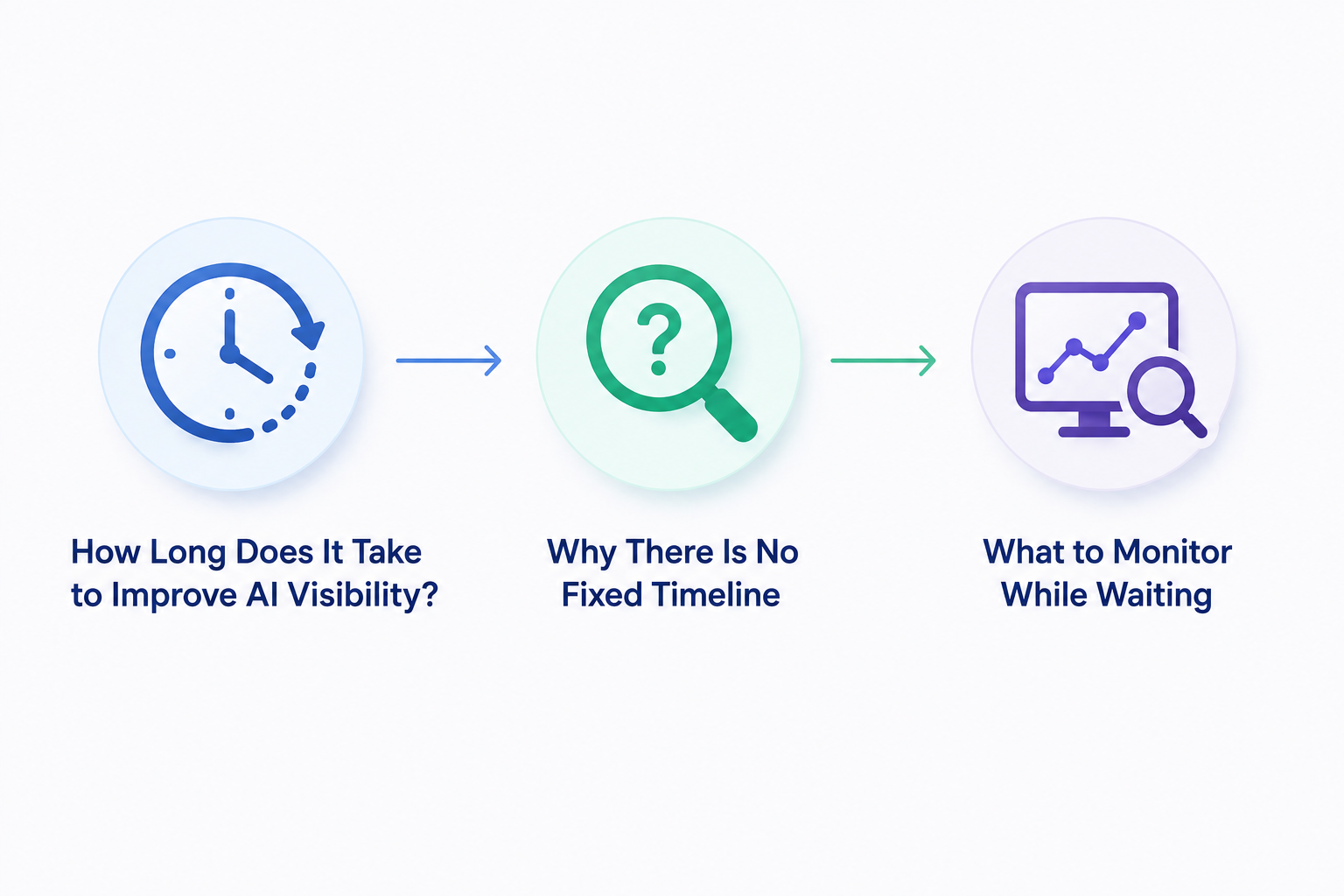
There is no fixed timeline for improving visibility in ChatGPT or Perplexity. Results can depend on content updates, source discovery, brand signals, competition, and how each AI platform retrieves information. Focus on consistent improvements and measure changes over time rather than expecting immediate results.
Why There Is No Fixed Timeline
AI platforms process and retrieve information differently, while competitors and available web sources also change. New or updated content may take time to become discoverable, and the same prompt can produce different results at different times.
What to Monitor While Waiting
Track changes in brand appearances, competitor presence, citations, brand descriptions, and visibility across important topics.
For example, if your brand initially appears in 10 of 50 tracked prompts, continue testing the same prompts after making improvements to identify meaningful changes.
Common Problems and How to Fix Them
AI visibility can remain limited even when a brand has strong content. Common issues can affect brand’s visibility, including unclear positioning, weak supporting signals, or technical accessibility.
Brand is rarely mentioned: Clarify your services, expertise, and positioning across important pages to improve brand’s visibility.
Competitors appear more often: Compare their content and external references to identify specific gaps affecting your brand’s visibility.
Content is not surfaced: Improve structure, evidence, and clarity on relevant pages.
Brand information is inconsistent: Standardize descriptions, services, and key details across trusted platforms.
Important pages are difficult to access: Check crawling, indexing, rendering, and access restrictions.
Visibility changes unexpectedly: Retest the same prompts and look for changes in sources, competitors, or AI responses.
Example: If an agency is consistently missing from prompts about enterprise SEO, first check whether its website clearly demonstrates enterprise SEO expertise before creating additional content. This can help strengthen brand’s visibility in relevant AI search results.
Frequently Asked Questions
Does having a Wikipedia page guarantee AI visibility?
No. A Wikipedia presence may contribute to broader brand information, but it does not guarantee that ChatGPT or Perplexity will mention the brand.
Should I optimize specifically for ChatGPT or Perplexity?
No. Build a strong, accessible, and trustworthy web presence rather than creating separate content solely for one AI platform.
Can social media improve AI visibility?
It can contribute to your broader online presence, but social activity alone does not guarantee AI mentions or recommendations.
Should I remove content that AI never mentions?
Not necessarily. A page can still attract search traffic, support users, or strengthen topical coverage even if it is not currently surfaced by AI.
Can a new brand become visible in AI search?
Yes. A newer brand can build visibility by establishing clear expertise, publishing useful information, and developing credible references across the web.
Conclusion
Improving brand’s visibility in ChatGPT and Perplexity is a gradual process that starts with understanding how your brand currently appears and where gaps exist. Focus on clear brand information, useful content, credible external references, and strong technical accessibility.
Test your brand with real customer prompts, use the results to identify weaknesses, and make targeted improvements. Consistent testing and refinement are more valuable than trying to optimize for a single AI response.

Shanya
Hi, I'm Shanya, an SEO and content writer at RankingBite. I specialize in creating SEO-focused content around search, AI, cybersecurity, and digital marketing. I enjoy turning complex topics into clear, useful content that helps brands build visibility, connect with their audience, and grow their digital presence.