SEO is not dead. Zero-click search changed the payout, not the mechanism. Google still ranks pages, and AI Overviews still pull their sources from the same Search index. Fewer searches end in a click. The searches that do click convert better.
SEO looks dead to many marketers because one number collapsed: organic click-through rate on informational queries. That number fell for a specific reason. Google now answers the question above the results. The answer comes from ranked pages.
This article covers what zero-click search changed, what still works, what to do instead of chasing rankings, and which metrics replace traffic.
Is SEO Really Dead?
The Short Answer: NO
SEO is not dead in 2026. Google Search processes billions of queries daily, AI Overviews cite pages from the Search index, and organic conversions still close revenue. Google confirmed the mechanism in its official generative AI optimization guide, published May 15, 2026: AI Overviews and AI Mode run on Google’s core ranking and quality systems.
There is no separate AI index. A page that Google cannot retrieve cannot be cited.
Why Do People Think SEO Is Dead?
Marketers believe SEO is dead because three signals arrived together:
- Traffic dropped on informational content. Blogs and guides lost clicks first.
- Dashboards showed impressions rising while clicks fell. The pattern looked like a penalty.
- AI assistants answered questions without links. ChatGPT and Perplexity removed the visible referral.
Each signal is real. None of them removes the ranking layer underneath.
What Does the Data Actually Show?
Data shows a click decline concentrated on informational queries, not a search decline. Pew Research measured a 47% relative drop in click rate across 68,000 queries when an AI Overview appears. Ahrefs measured a 34.5% CTR drop for position 1 across 300,000 keywords. SISTRIX recorded position-one CTR on AI-feature queries falling from 27% to 11% in March 2026.
Three counter-numbers matter equally:
- Seer Interactive found brands cited inside an AI Overview earn 35% more clicks than uncited brands.
- E-commerce queries trigger AI Overviews in 4% of cases. Transactional pages kept their clicks.
- Pages ranking in positions 11–20 earn AI Overview citations when they answer the sub-query better.
How Did AI Overviews and Zero-Click Search Change SEO?
What is Zero-Click Search?
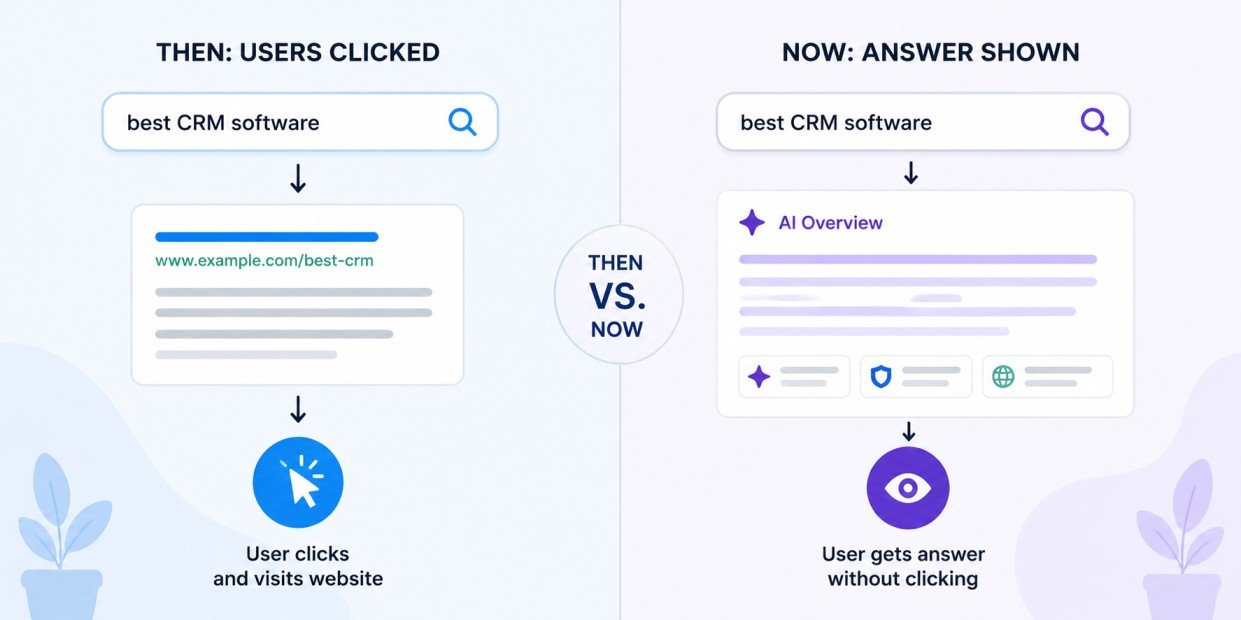
Zero-click search describes a search session that ends without a click to any external website. The user reads the answer inside Google and stops. SparkToro, using Similarweb data, measured 68% of US Google searches ending without an external click between January and April 2026. The earlier 2024 baseline, roughly 58.5%, came from SparkToro’s analysis of Datos clickstream data, so the two figures are not a like-for-like series.
Zero-click predates AI. Weather boxes, definitions, and featured snippets built it. AI Overviews expanded its scope to full explanations.
Search Became Answer-First
Google Search now leads with a synthesized answer on informational queries. Two mechanisms produce it:
- Retrieval-augmented generation (RAG). Google pulls live pages from the Search index and summarizes them with citation links.
- Query fan-out. Google expands one query into multiple sub-queries, then retrieves sources for each.
Query fan-out rewards depth. A page covering a full topic earns citations for sub-questions it never targeted directly.
AI Overviews Reduced Some Organic Clicks
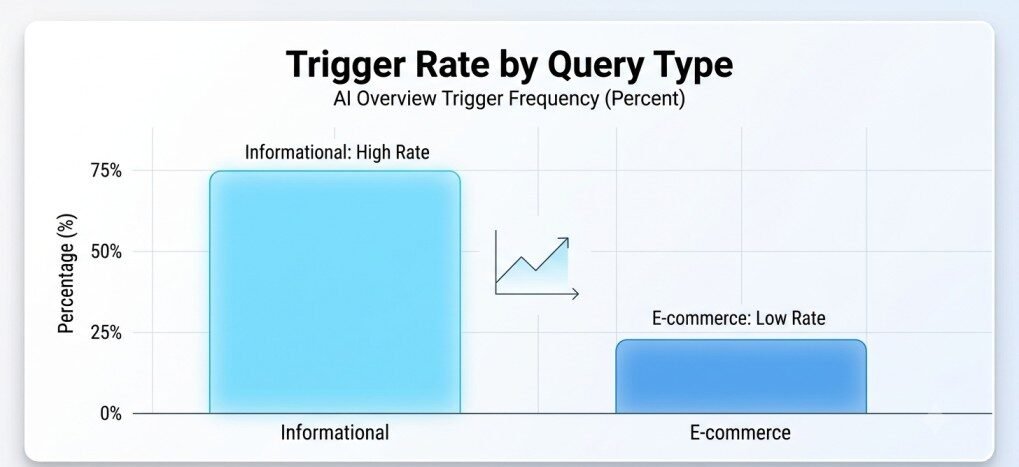
AI Overviews reduced clicks on informational queries and left transactional queries intact. AI Overviews appeared in 25.8% of US searches in January 2026. Informational queries triggered them 39.4% of the time. E-commerce queries triggered them 4% of the time.
The reduction targets the top of the funnel. “What is X” lost clicks. “Best X for Y under ₹50,000” kept them.
What Has Zero-Click Search Actually Changed?
Search Optimization Now Has Multiple Targets
Search optimization now carries two targets: ranking in the index and earning citation inside AI answers. Ranking feeds retrieval. Retrieval enables citation. One workflow serves both.
Google addressed the vocabulary directly in its May 2026 guide. Answer Engine Optimization and Generative Engine Optimization are, from Google Search’s perspective, still SEO. Google named four tactics to skip: llms.txt files, content chunking, AI-specific markup, and inauthentic mentions.
The targets split. The discipline did not.
We are Still Ranking on Google, So Why Does It Matter?
Ranking guarantees retrieval eligibility. Ranking no longer guarantees visibility. Citation overlap with the organic top 10 weakened from roughly 76% in mid-2025 to between 17% and 54% in early 2026, depending on the study.
Position 1 now delivers a smaller share of a smaller click pool. Citation delivers the rest. A page that ranks and gets cited captures both.
SEO Performance is Harder to Measure Than Before
Google Search Console reports impressions and clicks. Search Console does not report whether an AI Overview appeared or whether your page was cited inside it. Rank trackers report position. Position no longer predicts citation.
Three surfaces now carry your content: organic results, AI Overviews, and AI Mode. Only 14% of URLs in AI Mode citations overlap with AI Overview citations. Attribution requires measuring each surface separately.
What Still Works in SEO?
Helpful, People-First Content
Non-commodity content earns citations. Commodity content does not. Google’s May 2026 guide names unique, expert-led content as the primary driver of visibility in generative AI search.
Commodity content restates public knowledge. A language model generates it without reading your page. Non-commodity content carries original data, first-hand results, named expertise, and a documented point of view.
Strong Brand Authority
Brand authority produces the one query class AI Overviews cannot intercept: branded search. Nobody asks Gemini to summarize whether your company exists. Branded queries route directly to your site.
Brand authority also feeds citation. Generative systems ingest text, so unlinked mentions across press, forums, Reddit, and YouTube corroborate your entity.
Technical SEO
Technical SEO controls retrieval. Retrieval controls citation. Five requirements carry both targets:
- Crawlable, server-rendered content
- Clean information architecture and internal linking
- Fast, stable page delivery
- Structured data. Google states schema is not required for generative AI features, and it remains recommended.
- Clean DOM and accessibility semantics, which browser agents read
Topical Authority
Topical authority determines citation stability. Sources demonstrating consistent topical coverage earn more predictable citation placements in 2026 than sources optimizing single pages.
Query fan-out amplifies this. One deep page covering a complete task retrieves for many sub-queries. Five thin pages covering keyword variants compete with each other.
High-Quality Backlinks
Backlinks still feed the ranking systems that AI features run on. Volume-based acquisition carries the same demotion risk as before, and Google’s spam policies now apply to generative AI responses in Search. A demoted site leaves the citation pool.
Editorial links from topically relevant sources outperform directory volume.
What Should You Do Instead of Chasing Rankings?
Three changes define the 2026 workflow:
- Fewer organic clicks on informational queries
- Two optimization targets instead of one: Search rankings and AI citations
- Business outcomes: as the success metric, replacing rankings alone
Optimize for AI Visibility
Build a prompt set of 30–50 questions your buyers ask. Run each prompt through AI Overviews, AI Mode, ChatGPT, and Perplexity. Record which domains earn citations.
Then restructure pages for extraction: a direct answer within the first 100 words of each section, question-based headings, and specific figures instead of adjectives.
Target Commercial Intent Keywords
Commercial and transactional queries trigger AI Overviews least and convert most. E-commerce queries trigger them 4% of the time. Navigational queries trigger them 12% of the time.
Shift content investment toward comparisons, pricing pages, product decisions, and case studies with real numbers. These formats resist synthesis and sit closer to revenue.
Build a Recognizable Brand
Entity clarity determines whether a model stakes an answer on your brand. Four signals build it:
- One canonical brand name used consistently across the web
- Organization and Person schema with sameAs links to authoritative profiles
- Author bylines carrying real credentials
- Google Business Profile and Merchant Center feeds, which Google names as direct inputs into AI responses for local and shopping queries
Measure Business Outcomes Instead of Clicks
Sessions measure the wrong target when AI answers the question. Revenue, pipeline, and qualified leads measure the right one. Conversion rate per visit rises when low-intent traffic moves to the summary layer.
Which SEO Metrics Matter Now?
Organic Conversions
Organic conversions measure revenue from search, independent of session volume. Traffic fell on informational queries. Conversions from commercial queries hold. Report the second number.
Branded Search Growth
Branded search volume proves AI visibility converts into demand. A brand cited across AI answers without clicks still generates branded queries later. Track branded impressions in Search Console monthly.
AI Visibility
AI visibility measures citation rate per surface and share of voice against competitors on your prompt set. Track AI Overviews, AI Mode, ChatGPT, and Perplexity separately, because citation overlap between surfaces runs as low as 14%.
Qualified Organic Traffic
Qualified organic traffic counts visits from commercial and branded queries, not total sessions. This segment survived zero-click search intact. Segment Search Console by query type to isolate it.
Assisted Conversions
Assisted conversions capture AI-influenced revenue that lands without an attributable referral. A user reads your citation, searches your brand, and converts three days later. Multi-touch attribution records that path.
Where Should You Focus Next?
Three practical topics extend this article.
Branded vs Non-Branded Search
Branded and non-branded queries moved in opposite directions through 2026. Branded queries held. Non-branded informational queries lost clicks. Splitting your reporting by this line separates AI absorption from real decline.
Why Impressions Increase While Clicks Decline
Rising impressions with falling clicks is the AI absorption signature, not a penalty. Core update damage produces a different pattern: impressions and clicks fall together.
How to Shift Content Investment by Query Intent
High AI exposure requires a citation strategy. Low AI exposure rewards classic SEO and conversion optimization. Query intent decides the allocation.
Frequently Asked Questions
Will organic traffic return to 2022 levels?
No. Top-funnel informational volume reallocated to the summary layer permanently. Commercial and branded traffic remains available.
Does ranking #1 still matter?
Yes. Position 1 feeds retrieval and still earns clicks on the 74.2% of US searches that did not show an AI Overview in January 2026. Position 1 no longer guarantees citation.
Should I block AI crawlers?
Blocking removes your pages from the citation pool. On Google, AI Overviews and AI Mode use the Search index, so opting out affects Search visibility. It is a business tradeoff, not a moral one.
Do I need an llms.txt file?
Not for Google. Google states that machine-readable files, AI text files, and Markdown versions receive no special treatment in Google Search, and John Mueller confirmed on May 20, 2026 that maintaining one neither helps nor hurts. Keeping one is completely fine if other AI systems or developer-doc tooling in your stack read it.
Is SEO still worth the budget for a small business?
Yes for local and commercial intent. Local queries trigger AI Overviews least often, and Google Business Profile data feeds AI responses directly.
How long does AI citation take?
Citation patterns stabilized through 2026 and favor sustained topical authority. Measure in quarters, not weeks.
Conclusion
SEO is not dead. Zero-click search moved the reward from clicks to citations, brand recall, and qualified conversions. The index still decides retrieval. Ranking systems still decide citation. Quality signals still decide both.
Three changes define the work: informational clicks fell, optimization split into two targets, and attribution now requires measuring three surfaces. The response is not a new discipline. The response is SEO executed against business outcomes: commercial intent, entity clarity, technical retrieval, and content only your team can produce.

Farhan khan
Farhan is an SEO writer covering content strategy, search visibility, and brand discovery across search engines and AI platforms.