

B2B SEO in 2026 is a strategic approach to improving search visibility, attracting qualified business leads, and reaching decision-makers through targeted keywords, relevant content, technical optimisation, and authority building. It helps businesses connect with potential buyers who are researching solutions, comparing providers, and evaluating products or services before making a purchase.
Unlike consumer purchases, B2B decisions mostly involve multiple stakeholders, detailed research, and longer buying cycles. An well-planned B2B SEO strategy needs to address these factors by creating useful content that answers buyer questions at every stage, from initial research to the final decision. In 2026, businesses must also consider how buyers use AI tools, search engines, and review platforms to discover and compare potential providers.
What Makes B2B SEO Different in 2026?
B2B SEO focuses on reaching businesses and the people responsible for making purchasing decisions. The goal is not just to bring more visitors to a website, but to attract people who are likely to become customers. For B2B companies, the buying process often takes weeks or months, so content needs to support buyers throughout their research and evaluation.
Three factors make B2B SEO different in 2026.
– Multiple decision-makers and longer sales cycles: A B2B purchase may involve managers, technical teams, department heads, and finance teams. Each person has different questions and priorities. Content needs to address these concerns and help stakeholders evaluate a solution before making a decision.
The buying group can be larger than many businesses expect. Forrester’s 2026 research found that a typical B2B buying decision involves 13 internal stakeholders and nine external influencers. This makes it important to create content that addresses different concerns, from technical requirements to budget and business value.
– Low search volume but high commercial intent: Some B2B keywords receive relatively few searches but attract people who are close to making a purchase. For example, someone searching for a specific software comparison may be more valuable than someone looking for general industry information. B2B SEO strategies should consider business value and search intent, not just keyword volume.
– Buyers using search engines, review platforms, and AI tools for research: Buyers often explore Google results, customer reviews, industry publications, and AI-powered platforms before contacting a provider. They compare features, pricing, alternatives, and customer experiences across different sources. Businesses need useful, accurate information in the places where potential customers conduct their research.
How to Build a B2B SEO Strategy
A strong strategy starts with knowing who you want to reach and what they search for before they pick a provider. Rather than chasing keywords just to get more traffic, focus on the searches that connect you with real potential customers and help them make a decision.
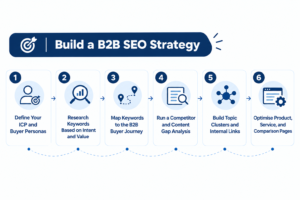
Define your ideal customer profile (ICP) and buyer personas
Start with the kind of business that gets the most value from what you offer. Your ideal customer profile (ICP) can include company size, industry, location, budget, and the specific problems your solution solves. The best source for this is your existing customers: look at who stays longest, who buys fastest, and who recommends you.
Then look at the people inside those companies. A marketing manager might search for ways to improve campaign results, while a business owner is thinking about cost, return on investment, and long-term value. Once you understand these differences, it becomes much easier to write content that answers the right questions for the right person.
Research keywords based on intent and business value
Search volume only tells part of the story. What matters more is what the person actually wants. Someone searching “what is CRM software” is most likely learning the basics. Someone searching “best CRM software for B2B sales teams” is probably comparing products and getting ready to choose. Both keywords are worth targeting, but they call for very different pages.
When you evaluate a keyword, weigh its intent, competition, relevance, and potential business value. A few tools can help:
- Google Search Console shows the queries you already appear for, which makes it great for spotting pages that are close to ranking well. It isn’t a discovery tool for new keywords.
- Google Keyword Planner gives you volume and ideas, but you need a Google Ads account to use it.
- Semrush or Ahrefs go further, with keyword difficulty, competitor keywords, and gap analysis.
Map keywords to the B2B buyer journey
Buyers look for different things as they move from noticing a problem to choosing a solution. Mapping your keywords to each stage helps you show up with the right content at the right moment.
Gartner found that 61% of B2B buyers prefer an overall rep-free buying experience. Its survey of 632 buyers also found that 73% actively avoid suppliers that send irrelevant outreach.

Awareness stage
Buyers are still trying to understand the problem. Target informational searches and publish educational articles that explain common challenges in plain language.
Consideration stage
Buyers are now exploring ways to solve it. Create guides, use cases, and articles that compare different approaches, so they understand their options.
Decision stage
Buyers are comparing providers and getting ready to buy. This is where comparison pages, product details, pricing information, and case studies matter most.
After the purchase
The journey doesn’t end when a deal closes. Onboarding guides, how-to content, and feature explainers help new customers get value quickly, which supports retention and expansion. Happy customers also leave the reviews and referrals that bring in the next round of buyers.
Mapping like this keeps your content from clustering around early-stage searches, and gives people something useful whichever stage they’re in.
Run a competitor and content gap analysis
Before you plan new content, look at who already ranks for the searches you care about. Find the topics your competitors cover that you don’t, the questions nobody is answering well, and the pages where you could realistically do better. Semrush and Ahrefs both have gap tools for this. The aim isn’t to copy anyone. It’s to find the openings where a clearer, more useful page could win.
Build topic clusters and internal links
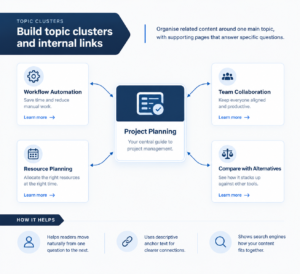
Organise related content around one central topic, with supporting pages that each answer a specific question. Say you sell project management software. Your main page might cover project planning, with supporting articles on workflow automation, team collaboration, resource planning, and how your tool compares with alternatives.
Link these pages to each other with descriptive anchor text. This helps readers move naturally from one question to the next, and it shows search engines how your content fits together.
Optimise product, service, and comparison pages
These pages are where buyers decide whether you’re a fit, so they need to be clear and honest. Explain your features, benefits, and use cases, and be upfront about how you differ from competitors. Use relevant keywords naturally in page titles, headings, URLs, and meta descriptions.
For B2B SaaS companies, it also helps to cover pricing, integrations, alternatives, and industry-specific uses. Comparison pages work best when they give a fair picture of the differences instead of just promoting your own product. Buyers can tell the difference, and so can AI tools that summarise these pages. Finish each page with a clear next step, such as booking a demo, starting a free trial, or contacting sales.
B2B Content Strategy
B2B content needs to do more than bring visitors to a website. It should help potential customers understand a problem, evaluate their options, and decide whether your business is the right fit.
Match Content to the Buyer Journey
Start with educational articles that explain industry problems. As buyers explore solutions, offer detailed guides and use cases. When they are ready to choose a provider, give them access to case studies, product details, and comparison pages that support their decision.
Choose Useful Content Formats
Different content formats serve different buyer needs. Case studies show real customer results, comparison pages help buyers evaluate alternatives, and use cases explain how a solution works in practice. Industry-specific content makes these resources more relevant by addressing the challenges of a particular sector.
Share Original Insights
Buyers need reasons to trust the information they find. Share original data, customer experiences, expert insights, and practical examples that bring something new to the discussion. Support factual claims with reliable sources and explain what the findings mean for your audience.
Refresh Existing Content
Your content should change as buyer expectations and industry information evolve. Review performance in Google Search Console, update outdated details, and improve pages that are losing visibility. Questions raised by sales teams and customers can also reveal where existing content needs clearer answers.
Technical SEO, Authority Building, and AI Search Visibility
B2B SEO involves more than choosing the right keywords and publishing content. Your website needs to work properly, other credible websites should have reasons to reference your business, and your company information should be easy to understand across search engines and AI platforms.

1. Get the Technical Basics Right
Start by checking whether search engines can access your important pages. Pages blocked from crawling, incorrect indexing settings, broken links, and redirect issues can prevent useful content from appearing in search results. A clear site structure also helps visitors find product information, service pages, and supporting resources without unnecessary steps.
Page speed, mobile usability, canonical tags, and structured data deserve attention during regular technical audits. Fix issues based on their impact on important pages rather than treating every technical recommendation as equally urgent.
2. Earn Relevant Backlinks and Industry Mentions
For B2B companies, a link from a respected industry publication may be more valuable than several links from unrelated websites. Look for opportunities to share original research, contribute expert commentary, publish useful resources, or collaborate with relevant industry publishers. These activities give other websites a genuine reason to reference your business. The aim is to build connections with sources that matter to your industry and audience. A large backlink count alone does not tell you whether those links are relevant or useful.
3. Make Your Content Useful for AI Search
Buyers may ask AI platforms questions such as which software suits their business, how two providers compare, or which solution supports a particular integration. Your website should address these questions with specific, accurate information rather than broad claims about your product.
Comparison pages, detailed use cases, integration documentation, and answers to common buyer questions can help explain where your solution fits. Keep important details accessible and avoid vague descriptions that could apply to almost any provider. You can also test relevant buyer prompts across AI platforms to check whether your brand appears, which competitors are mentioned, and whether the answers reflect your actual offering.
4. Keep Your Brand Information Accurate
A buyer researching your company might visit your website, read customer reviews, check a business directory, and then ask an AI assistant about your product. If these sources describe your company differently, the buyer may struggle to understand what you offer.
Review your listings on relevant platforms, including G2 and Capterra where applicable. Check that product names, features, company details, and service descriptions are current. Genuine customer reviews can also help buyers assess your offering, so make it easy for customers to share honest feedback and respond constructively when they raise concerns.
How to Measure B2B SEO Performance
Measuring B2B SEO performance means looking beyond website traffic. The right metrics show whether your efforts are reaching potential buyers, generating qualified leads, and contributing to revenue.
| Metric | What to Measure | Tools |
|---|---|---|
| Organic visibility and qualified traffic | Impressions, clicks, rankings, and relevant organic visitors | Google Search Console, Google Analytics |
| Conversion rates and qualified leads | Demo requests, form submissions, and sign-ups | Google Analytics, CRM |
| MQLs and SQLs | Leads that meet marketing criteria and leads ready for sales follow-up | CRM, marketing automation tools |
| Pipeline contribution and revenue | Sales opportunities, pipeline value, and revenue from organic search | CRM, Google Analytics |
| AI mentions and citations | Brand mentions and content citations in AI-generated answers | AI visibility tracking tools, manual prompt checks |
Review these metrics regularly to understand which pages and keywords attract valuable leads. Combining SEO data with sales and conversion data gives you a clearer picture of how organic search contributes to business growth.
Common B2B SEO Mistakes to Avoid
Avoid these common mistakes to keep your B2B SEO strategy focused on attracting potential customers and supporting business growth.
- Prioritizing traffic over qualified leads: High traffic does not always bring customers. Focus on visitors who match your target audience and are likely to convert.
- Ignoring buyer intent: Choose keywords based on whether buyers are researching problems, comparing solutions, or preparing to purchase.
- Publishing content without a clear purpose: Give every page a specific goal and avoid creating multiple articles that cover the same search intent.
- Ignoring conversion paths and business outcomes: Add relevant calls to action, make contact options easy to find, and track how organic visitors become leads and customers.
Conclusion
A strong B2B SEO strategy in 2026 is about reaching the right decision-makers, not simply increasing website traffic. It combines keyword research, buyer-focused content, technical SEO, authority building, and AI search visibility to support buyers throughout longer purchasing cycles.
Start by understanding your target audience, creating content around their needs, and improving your website’s search visibility. Track qualified leads, conversions, and pipeline contribution alongside traditional SEO metrics. As search behaviour continues to change, businesses that focus on useful information, credible expertise, and measurable results will be better positioned to attract potential customers and support long-term growth.