As more people use ChatGPT to find answers, getting your content cited has become an important part of AI search visibility. Instead of showing only a list of links, ChatGPT can summarize information from trusted sources and, in some cases, reference the websites it uses.
While there is no guaranteed way to earn citations, you can improve your chances by creating high quality content, making your website accessible to AI crawlers, and building strong trust signals.
This guide explains What getting Cited in ChatGPT, how ChatGPT finds information, what influences its citations, and the practical steps you can take to improve your visibility.
What Does “Getting Cited in ChatGPT” Mean?
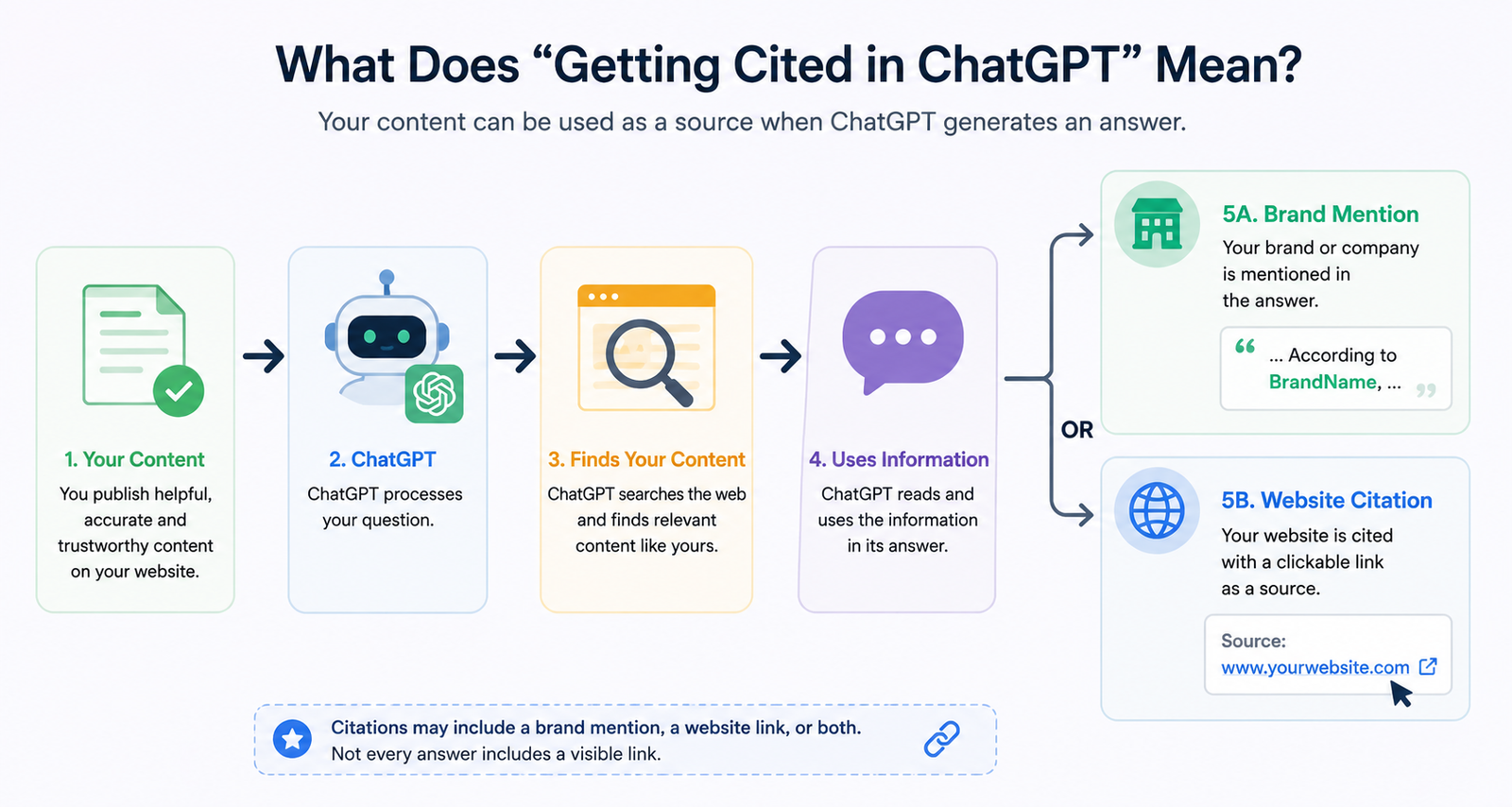
Getting cited in ChatGPT means your website or brand is used as a source when ChatGPT generates an answer. Depending on the response, ChatGPT may mention your brand, link to your website, or both. While there is no guaranteed way to earn citations, creating trustworthy, accessible, and high quality content can improve your chances.
Brand Mentions vs Website Links
A brand mention means ChatGPT refers to your company, product, or organization by name. A website link includes a clickable source that directs users to your content. Some responses include both, while others may only mention the brand without linking to the website.
Why AI Citations Matter
AI citations can increase your brand visibility, credibility, and referral traffic. As more users rely on AI generated answers, being cited helps your content reach audiences even when they do not click through traditional search results.
How ChatGPT Actually Finds Information
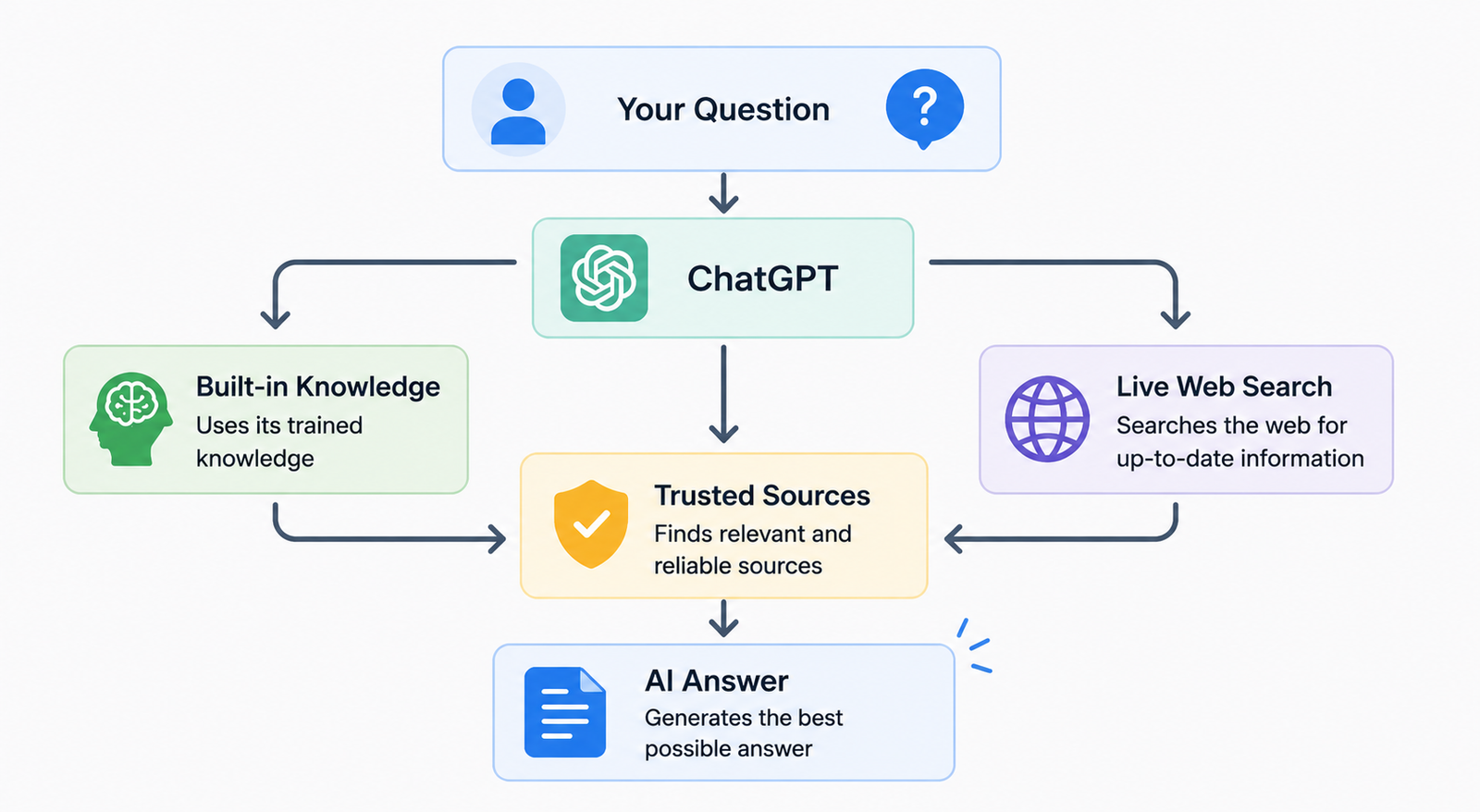
ChatGPT answers questions using a combination of its trained knowledge and, when needed, live web search. The source it relies on depends on the type of question and whether up-to-date information is required.
ChatGPT’s Training Data vs Live Web Search
Depending on the question, ChatGPT may answer using its built-in knowledge or retrieve information from live web sources when search is available. The retrieval process can vary by model, product, and query.
When ChatGPT Decides to Search
ChatGPT is more likely to search the web for topics involving recent events, live data, product updates, or information that may have changed over time. Simple or well-established topics are often answered from its existing knowledge.
The Role of Bing in ChatGPT Search
While Bing has historically been an important search provider for ChatGPT, OpenAI has stated that ChatGPT Search can use multiple search providers and other live web sources. Because the retrieval system may evolve over time, it’s better to optimize for overall web visibility than for a single search engine.
How ChatGPT Differs from Google Search
Google Search ranks webpages based on search algorithms, while ChatGPT generates direct answers by combining information from trusted sources. Instead of returning a list of links, it focuses on providing the most relevant response.
Why ChatGPT Citations Don’t Transfer to Other AI Platforms
Each AI platform has its own retrieval systems, ranking methods, and source selection process. Being cited in ChatGPT does not guarantee citations in platforms like Google AI Overviews, Gemini, Perplexity, or Copilot.
Earn Mentions on Sources ChatGPT Already Trusts
ChatGPT doesn’t rely only on your website. Depending on the query, it may reference well-established sources such as reputable news publications, industry websites, Wikipedia, Reddit discussions, official documentation, and other authoritative resources.
Building your brand’s presence on these trusted sources through original research, expert contributions, digital PR, community participation, and high-quality backlinks can strengthen your overall authority and improve the chances that AI systems recognize and reference your content.
Technical Access: Make Your Website Accessible to ChatGPT
- Allow OpenAI Crawlers : Don’t block OAI-SearchBot, GPTBot, or ChatGPT-User if you want your content to be accessible to OpenAI services.
- Check Your CDN Settings : Review your firewall, CDN, and security settings to ensure legitimate AI crawlers can access your public pages.
- Use Server-Side Rendering : Render important content on the server so AI crawlers can read it without relying on JavaScript.
- Set Up Bing Webmaster Tools and IndexNow : Submit your website through Bing Webmaster Tools and enable IndexNow so new and updated pages can be discovered more quickly.
What Makes Content More Likely to Be Cited in ChatGPT?
While no strategy guarantees citations, these practices can improve your chances of being selected as a source.
Start Each Section with a Direct Answer
Place the most important answer in the first one or two sentences before adding explanations. ChatGPT often favors content that clearly answers a question without requiring users to read several paragraphs.
Show Experience and Expertise
Publish well-researched content with expert insights, accurate information, and clear author details to build credibility.
Build a Trustworthy Brand
Maintain consistent brand information, earn mentions from trusted websites, and keep your content accurate and up to date.
Make Your Content Easy to Read
Use clear headings, short paragraphs, bullet points, and simple language to make your content easier for both readers and AI systems to process.
How to Check Whether You’re Being Cited in ChatGPT
Since there is no notification when ChatGPT cites your content, regularly monitor your visibility using these methods.
Search Your Target Topics in ChatGPT
Ask ChatGPT the same questions your audience is likely to ask. Check whether your website, brand, or content appears as a cited source.
Compare Multiple Prompts
Try different versions of the same question. ChatGPT’s responses and citations can vary depending on how a query is written.
Track AI Visibility
Use AI visibility tools such as Peec AI, Profound, Scrunch AI, Semrush AI Toolkit, or Ahrefs Brand Radar to monitor AI citations, brand mentions, and overall visibility across AI search platforms.
Monitor Brand Mentions
Regularly search for your brand in ChatGPT and other AI search tools to see how consistently your business is identified and whether the information being presented is accurate.
Common Mistakes That Reduce Your Chances of Being Cited
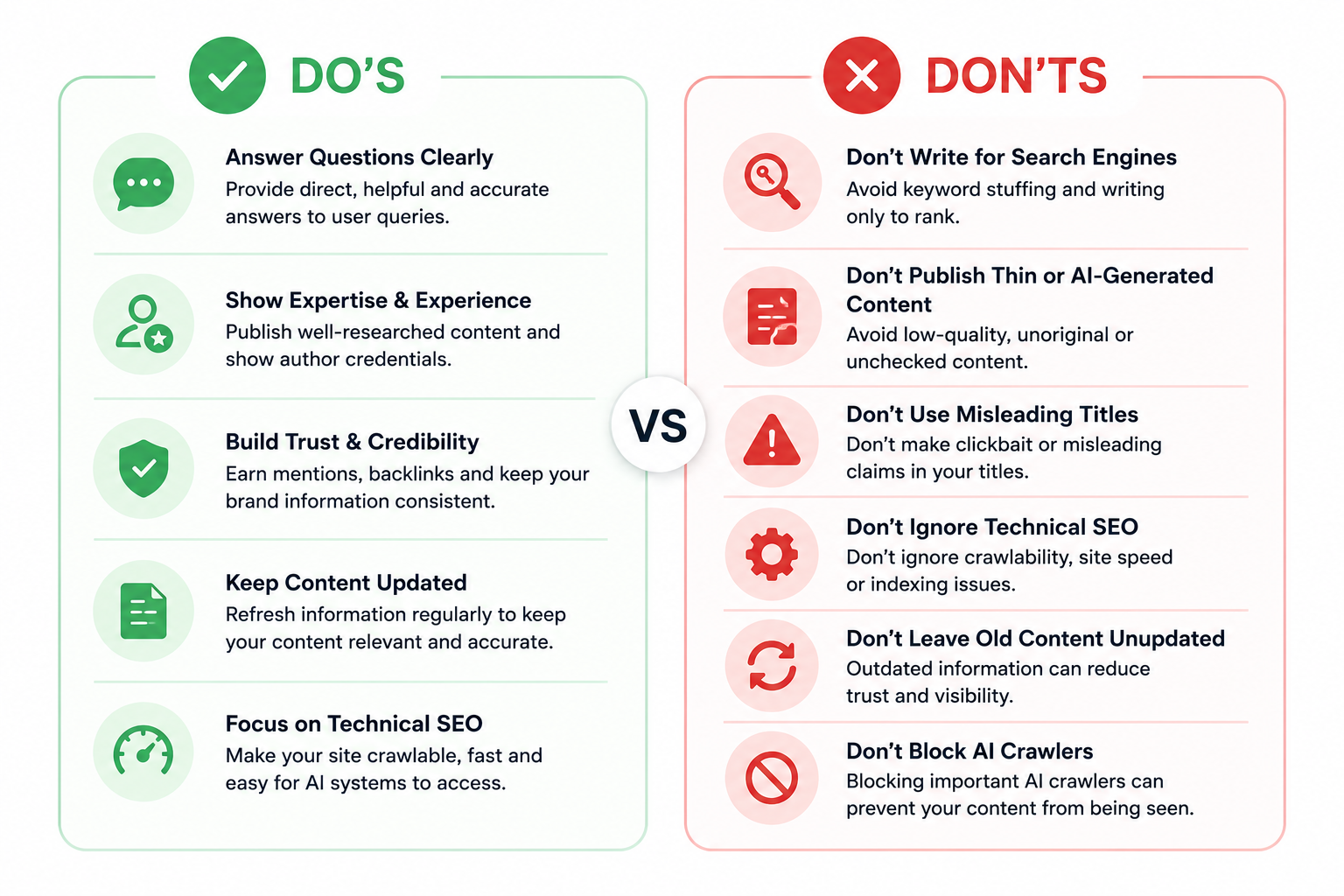
- Writing only for search engines: Focus on answering user questions instead of stuffing keywords.
- Publishing thin or AI-generated content without review: Ensure your content is accurate, original, and adds real value.
- Using misleading titles: Match your title with the actual content to build trust.
- Ignoring technical SEO: Make sure your website is crawlable, fast, and easy for AI systems to access.
- Not updating old content: Refresh outdated information to keep your content relevant.
- Having inconsistent brand information: Use the same brand name, website, and business details across all platforms to strengthen trust.
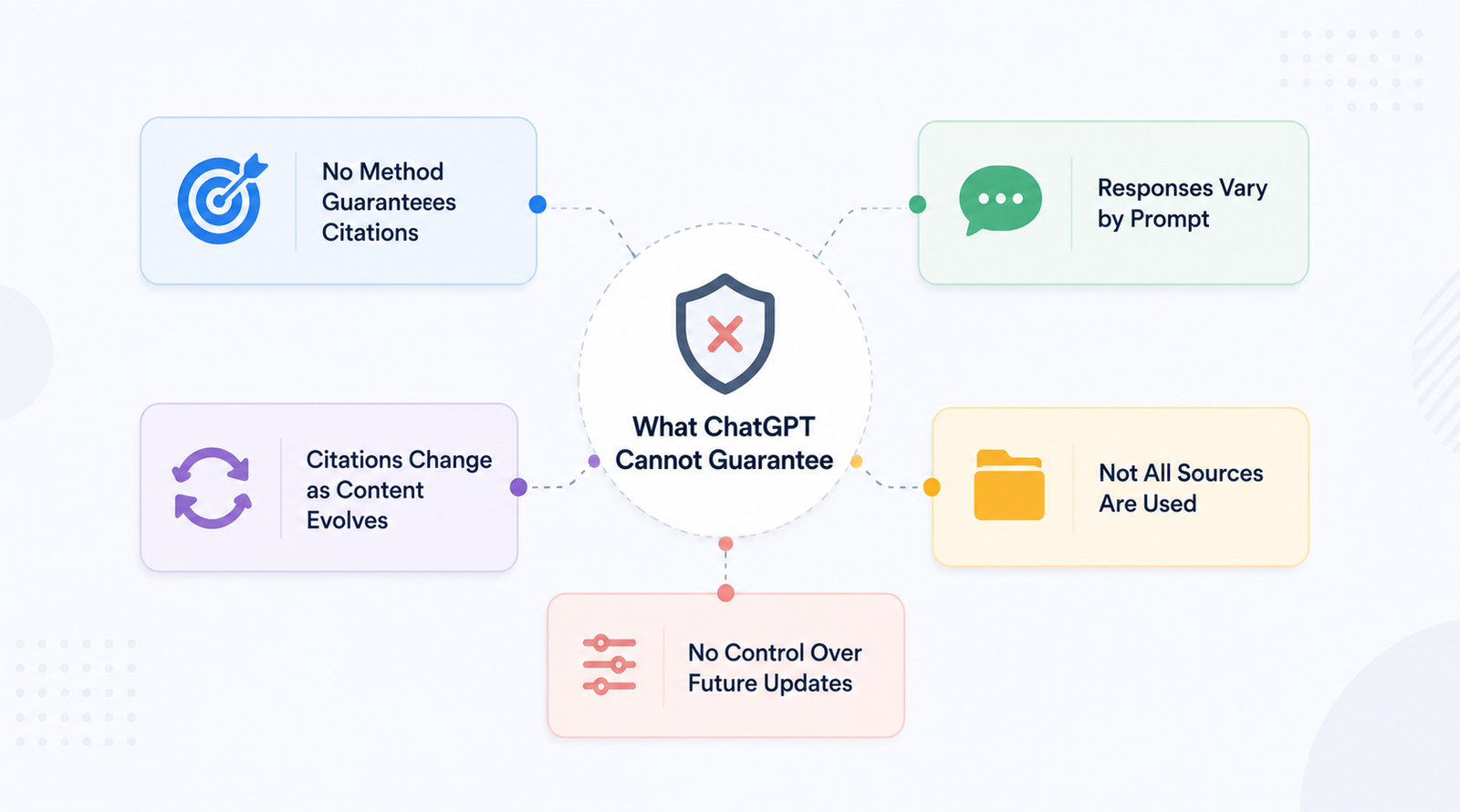
What ChatGPT Cannot Guarantee
It’s important to have realistic expectations. Even with high quality content and strong technical SEO, ChatGPT cannot guarantee citations.
No Method Guarantees Citations
There is no confirmed strategy that ensures your content will be cited in ChatGPT. Citations depend on many factors, including the query and available sources.
AI Responses Can Vary by Prompt
The same question can produce different responses based on how it is asked, which means citations may also vary.
Citations Change as Content and Models Evolve
ChatGPT’s responses can change as web content is updated, new sources become available, and AI models improve over time.
Frequently Asked Questions
-
Should I block GPTBot?
Only if you do not want your public content used for future OpenAI model training. Blocking GPTBot does not necessarily prevent your content from appearing in ChatGPT Search.
-
Does ChatGPT use Bing or Google?
ChatGPT Search is not limited to Bing. It can use multiple search providers and live web sources to retrieve information.
-
Do I need to rank in Google to be cited by ChatGPT?
No. Google rankings are not a requirement, but high quality, accessible, and trustworthy content has a better chance of being cited.
-
Does ChatGPT read JavaScript-rendered content?
It can, but server-side rendered content is generally easier for crawlers to access and understand.
-
How long does it take to appear in ChatGPT?
There is no fixed timeline. It depends on when your content is discovered, indexed, and considered relevant for user queries.
-
Does llms.txt help me get cited in ChatGPT?
There is no evidence that llms.txt directly increases cited in ChatGPT . It may help with content discovery, but it is not a confirmed ranking or citation signal.
Final Thoughts
Getting cited in ChatGPT is not about optimizing for a single ranking factor. It requires creating helpful, accurate, and trustworthy content that AI systems can easily access and understand. Strong technical SEO, clear site structure, consistent brand signals, and regularly updated content all contribute to improving your AI visibility.
While ChatGPT does not guarantee citations, following these best practices of cited in ChatGPT can increase your chances of being selected as a source. As AI search continues to evolve, focusing on quality, credibility, and accessibility will remain the most reliable long-term strategy.

Shanya
Hi, I'm Shanya, an SEO and content writer at RankingBite. I specialize in creating SEO-focused content around search, AI, cybersecurity, and digital marketing. I enjoy turning complex topics into clear, useful content that helps brands build visibility, connect with their audience, and grow their digital presence.