How to Track AI Chatbot Brand Recommendations in 2026
AI recommendations are becoming an important part of brand discovery, influencing how users find and evaluate businesses, products, and services. Tracking these recommendations helps…
AI recommendations are becoming an important part of brand discovery, influencing how users find and evaluate businesses, products, and services. Tracking these recommendations helps you understand where your brand appears, how frequently it is recommended, and how its visibility compares with competitors.
At RankingBite, we help brands monitor AI search visibility and identify opportunities to strengthen their presence across major AI platforms. This guide explains how to track AI recommendations, measure performance, monitor citations, and turn the data into actionable insights.
What Should You Track in AI Brand Recommendations?
Tracking AI chatbot recommendations helps you understand how often, where, and in what context your brand appears in AI-generated answers. Focus on three key signals: brand appearance, recommendation position, and recommendation frequency.
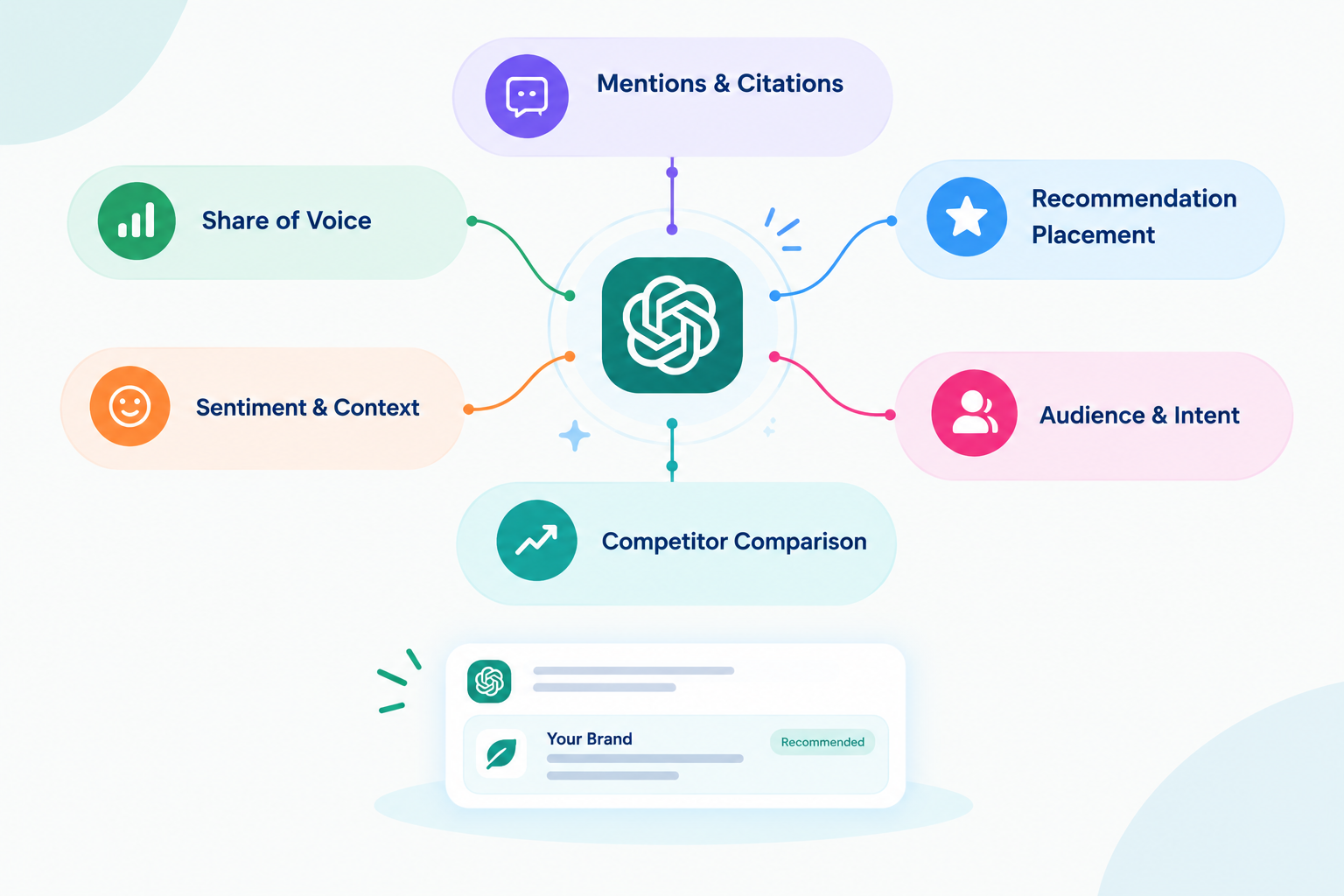
Brand Appearance
Track whether your brand appears in relevant AI chatbot responses and whether it is recommended, compared, or simply mentioned.
Recommendation Position
Record where your brand appears when an AI chatbot recommends multiple brands, such as first, second, or third.
Recommendation Frequency
Measure how often your brand is recommended across selected AI chatbot prompts and testing periods. This helps identify changes in your recommendation visibility over time.
Build an AI Recommendation Tracking Framework
A structured tracking framework makes your AI chatbot monitoring more consistent and easier to compare over time. Instead of testing random prompts, define what you want to measure, where you want to measure it, and how results will be recorded.
- Define Your Target Queries: Select relevant queries that potential customers may use to find products, services, or brands in your category. Include both broad category searches and specific recommendation queries.
- Group Queries by Search Intent: Organize prompts by informational, commercial, comparison, and recommendation intent. This helps you understand which types of queries generate the most brand visibility.
- Select AI Platforms to Monitor: Choose relevant platforms such as ChatGPT, Gemini, and Perplexity based on your target audience and track the same queries consistently across them.
- Set a Consistent Testing Schedule: Test your selected prompts at regular intervals so you can identify changes in brand recommendations and visibility.
- Record Key Results: Track brand mentions, recommendation position, competitors, citations, and relevant sources for each response.
- Create a Comparison Baseline: Record your initial results so future tests can be compared against a consistent starting point.
Create a Consistent Testing Process
Run the same prompts across selected AI platforms at regular intervals.
Record each response, recommendation, citation, and competitor appearance in a structured tracking sheet so you can make reliable comparisons over time.
Measure Brand Recommendation Performance
Measuring AI brand recommendation performance shows how often your brand is recommended and how it compares with competitors.
Recommendation Rate
Measure the percentage of relevant prompts where your brand is recommended.
Example: If your brand is recommended for 40 out of 100 tested prompts, your recommendation rate is 40%.
Brand Share of Recommendations
Measure your brand’s share of all brand recommendations across your selected prompts.
Example: If 100 total brand recommendations are recorded and your brand receives 25, your recommendation share is 25%.
Competitor Recommendation Rate
Track how often competitors are recommended for the same queries.
Example: If your competitor appears in 60 out of 100 relevant prompts, its recommendation rate is 60%, compared with your 40%.
Recommendation Position
Track where your brand appears when AI recommends multiple brands.
Example: If ChatGPT lists Brand A first, your brand second, and Brand C third, your recommendation position is #2.
Track AI Citations and Sources
Tracking citations helps you understand which sources AI platforms use when generating answers about your brand and competitors.
Record Cited URLs
Record the URLs cited in AI responses to identify which pages are being used as supporting sources.
Identify Recurring Sources
Look for websites and publications that appear repeatedly across your tested prompts and responses.
Compare Your Sources With Competitors
Compare the sources cited for your brand with those cited for competitors to identify differences in external coverage and citation presence.
Analyze Changes in AI Recommendations
- Compare Results Over Time: Compare recommendation results from different testing periods to identify changes in your brand’s AI visibility.
- Identify Visibility Gains and Losses: Track increases or decreases in brand recommendations across your target prompts.
- Investigate Significant Changes: Review major changes to understand whether they may be related to new content, updated information, competitors, or changes in available sources.
Turn AI Recommendation Data Into Insights
- Find High-Value Queries: Identify queries that generate the most visibility and have strong potential business value.
- Identify Competitive Gaps: Compare your brand’s recommendations with competitors to find areas where they have stronger visibility.
- Spot Performance Patterns: Analyze results across queries and AI platforms to identify consistent gains or losses.
- Prioritize Improvement Opportunities: Focus your optimization efforts on queries and topics where improvements can have the greatest impact.
- Measure Progress: Compare current results with previous testing periods to track changes in AI recommendation performance.
Common AI Recommendation Tracking Mistakes
Avoiding common tracking errors is important for getting reliable AI chatbot recommendation data. Small inconsistencies in prompts, platforms, or context can make your results difficult to compare.
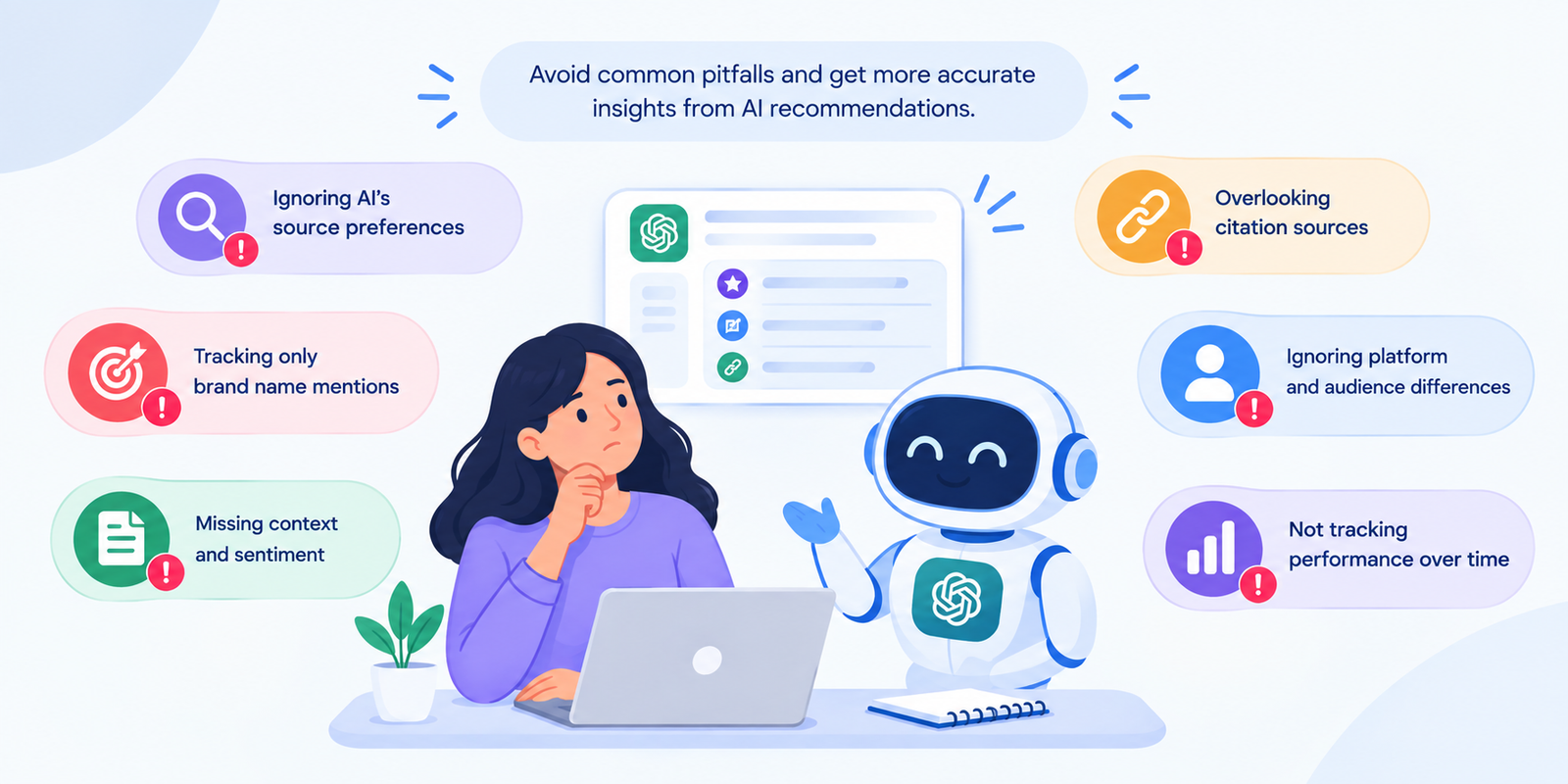
Testing Too Few Queries
Testing a limited number of prompts may not reflect your overall AI visibility. Use a wider range of relevant queries covering different customer intents.
Changing Prompts Between Tests
Changing your prompts between testing periods can make results unreliable. Keep your core prompts consistent when measuring changes over time.
Tracking Mentions Without Context
A brand mention does not necessarily mean a recommendation. Record whether your brand was recommended, compared, or simply mentioned.
Measuring Results From Only One AI Platform
AI platforms can produce different recommendations and sources. Monitor multiple relevant platforms to get a more complete view of your AI chatbot visibility.
Frequently Asked Questions
How many prompts should I track?
Track enough relevant prompts to cover your main topics, products, services, and search intents.
Should I track branded and non-branded queries?
Yes. Branded queries measure existing visibility, while non-branded queries show broader discovery.
Should I save AI responses?
Yes. Saving responses helps compare recommendations, citations, and competitors over time.
What if AI recommendations suddenly change?
Check changes in prompts, sources, competitors, brand information, and recent content updates.
Is AI tracking useful for local businesses?
Yes. Track location-specific queries to see how often AI platforms recommend your business.
Should I track competitor recommendations?
Yes. Competitor data helps you understand your relative position in AI-generated recommendations.
Conclusion
Tracking AI chatbot recommendations gives brands a clearer view of how often they are discovered, recommended, and cited across AI platforms. Consistent testing helps identify changes in visibility, competitor performance, and the sources influencing AI-generated answers.
Instead of relying on a single result, monitor multiple platforms and query types over time. This makes it easier to identify opportunities, measure progress, and prioritize improvements that can strengthen your AI search presence.
In RankingBite, we help brands track AI recommendations, analyze visibility data, and develop data-driven strategies to improve their presence across AI search platforms.

Shanya
Hi, I'm Shanya, an SEO and content writer at RankingBite. I specialize in creating SEO-focused content around search, AI, cybersecurity, and digital marketing. I enjoy turning complex topics into clear, useful content that helps brands build visibility, connect with their audience, and grow their digital presence.