Many websites publish accurate content, but not all become trusted sources for AI. Good writing alone isn’t enough. AI also looks for who created the content, whether they have relevant expertise, and if that expertise can be verified. This is where E-E-A-T for AI becomes important.
- Experience: The author has done the work.
- Expertise: The author understands the topic deeply.
- Authoritativeness: The author or website is recognized as a reliable source.
- Trustworthiness: The information is accurate, transparent, and well-supported.
Readers expect the same level of transparency. A real author, clear credentials, and visible publisher information make content more trustworthy. AI relies on many of these same signals when deciding which sources to cite.
This article covers why trust matters beyond good content, how author bios and bylines strengthen credibility, the role of trust signals and Author Schema, common mistakes to avoid, and practical steps for creating author profiles that are more likely to earn AI citations.
Why AI Needs More Than Good Content to Trust a Page
Good content is important, but it is only one part of earning trust. Before AI uses a page as a source, it also looks for clues about who created the content and whether that person or organization is credible. Without those signals, even accurate information may not carry the same level of trust.
Why Accurate Content Alone Isn’t Always Enough
A page can contain correct information but still lack credibility if it doesn’t show who wrote it or why they are qualified. AI looks for both accurate content and evidence that the source is trustworthy.
How AI Connects Information to Identifiable People and Organizations
AI looks for details that connect content to a real person or business. Common signals include:
- Author name
- Author bio
- Company information
- Author page
- Author or Person Schema
These signals help AI understand who is responsible for the content.
Anonymous Content vs. Attributable Content
Content with no clear author or only a generic name like “Admin” provides little information about its source. Attributable content identifies the author, explains their expertise, and creates accountability.
| Anonymous Content | Attributable Content |
|---|---|
| No identifiable author | Named author |
| Generic or no credentials | Relevant expertise |
| Low accountability | Clear ownership |
| Fewer trust signals | Strong trust signals |
What “Trust Signals” Actually Mean in AI Search
Trust signals are details that help AI evaluate the credibility of a page. These include:
- Clear author byline
- Detailed author bio
- Relevant credentials
- About page
- Editorial policy
- Citations and references
- Author or Person Schema
The more consistent these signals are, the easier it is for AI to trust the content and its source.
The Author Bio Elements AI Can Understand
An author bio does more than introduce the writer. It gives readers and AI important context about who created the content and why they are qualified to write about the topic. A clear, specific bio builds more trust than a generic description.
A strong author bio should include:
- Professional role or job title
- Area of expertise
- Relevant experience
- Certifications or qualifications (if applicable)
- Company or organization
- Links to an author page or professional profile
Example: Weak Bio vs. Strong Bio
| Weak Bio | Strong Bio |
|---|---|
| John is a content writer who enjoys writing about technology and business. | John Smith is an SEO Content Strategist with 8+ years of experience in technical SEO and content marketing. He has helped SaaS companies improve organic visibility and regularly writes about AI search, SEO, and digital marketing. |
The goal is not to list every achievement. Instead, include the details that help readers and AI understand why the author is a credible source for the topic.
Bylines That Strengthen Content Credibility
A byline tells readers who wrote an article. It also helps AI connect the content to a specific author. A clear and consistent byline adds accountability and makes it easier to understand who is responsible for the information.
A strong byline should include:
- The author’s full name
- A link to the author’s profile page
- The publication date
- The last updated date (when applicable)
- The editor or reviewer for topics that require extra oversight
Example
Weak Byline
By Admin
Strong Byline
By Sarah Johnson, Technical SEO Specialist
Published: March 10, 2026 • Last Updated: June 25, 2026
Reviewed by Michael Brown, SEO Director
Avoid using generic names like Admin, Editorial Team, or Staff Writer unless there is a dedicated author page explaining who is behind the content. Clear attribution helps readers and AI place more confidence in the information. Corroborating Signals That Strengthen E-E-A-T
AI doesn’t rely on a single author bio or byline to judge credibility. It looks for supporting information that confirms the author’s identity and expertise across different sources. These corroborating signals make it easier to trust that the person behind the content is genuine.
Strong corroborating signals include:
- A complete LinkedIn profile
- A dedicated author page
- A professional website or portfolio
- Speaking at conferences or webinars
- Published research or articles
- Mentions on reputable websites
- Consistent author information across platforms
The goal isn’t to be present everywhere. It’s to keep your professional information accurate and consistent wherever it appears. When multiple sources tell the same story about an author, both readers and AI can have greater confidence in their expertise.
Trust Signals Beyond the Author Box
A strong author bio is important, but it is only one part of building credibility. AI also looks for trust signals across the entire website. When these signals work together, they create a clearer picture of a reliable and transparent publisher.
Some of the most important trust signals include:
- A detailed About page
- Clear contact information
- Editorial and review policies
- Published and updated dates
- Citations to reliable sources
- Company information
- Secure website (HTTPS)
Each of these elements supports the others. An author bio identifies who created the content, while website-wide trust signals show that the publisher is transparent, accountable, and committed to maintaining accurate information.
How Author Schema Helps AI Connect Identity
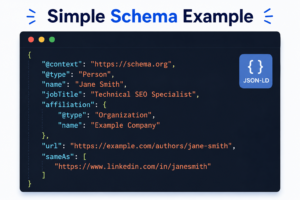
Author Schema gives search engines and AI systems structured information about the person behind the content. Instead of relying only on the visible text, AI can use this markup to connect an article to a specific author and understand their relationship with the website.
Common properties include:
- Name
- Job title
- Affiliation
- URL to the author page
- sameAs links to verified profiles
How Author Schema Supports Trust
| Without Author Schema | With Author Schema |
|---|---|
| AI relies mainly on visible page content. | AI receives structured author information. |
| Author identity may be unclear. | Author identity is easier to verify. |
| Limited connection between pages. | Stronger connection between the author and their content. |
Author Schema does not create trust on its own, but it helps AI understand and verify the identity behind your content more accurately.
How Author Schema Helps AI Connect Identity
Author Schema helps AI understand who created a piece of content by providing structured information about the author. Instead of relying only on the visible text, AI can use this data to connect articles to a specific person and understand their expertise and relationship with the website.
A basic Author Schema can include:
- Author’s name
- Job title
- Organization or company
- Author page URL
- sameAs links to trusted profiles (such as LinkedIn)
Best Practices for Author Schema
- Use the author’s real name consistently across the website.
- Link the schema to a dedicated author page.
- Add sameAs links to verified professional profiles.
- Keep the information updated if the author’s role or credentials change.
- Match the schema details with the visible author bio to avoid inconsistencies.
Author Schema doesn’t make content trustworthy by itself. It simply helps AI recognize and verify the person behind the content, making it easier to connect your articles to a credible author.
Corroborating Signals That Strengthen E-E-A-T
AI doesn’t rely on a single author bio or byline to judge credibility. It looks for supporting information that confirms the author’s identity and expertise across different sources. These corroborating signals make it easier to trust that the person behind the content is genuine.
Strong corroborating signals include:
- A complete LinkedIn profile
- A dedicated author page
- A professional website or portfolio
- Speaking at conferences or webinars
- Published research or articles
- Mentions on reputable websites
- Consistent author information across platforms
The goal isn’t to be present everywhere. It’s to keep your professional information accurate and consistent wherever it appears. When multiple sources tell the same story about an author, both readers and AI can have greater confidence in their expertise.
Common Trust Mistakes That Reduce Citation Potential
Even well-written content can lose credibility if important trust signals are missing or inconsistent. The following mistakes make it harder for readers and AI to verify who created the content and why it should be trusted.
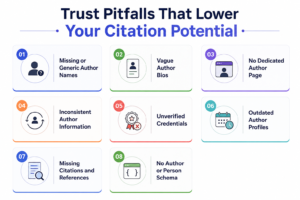
Missing or Generic Author Names
Using bylines like Admin, Editorial Team, or leaving the author unnamed provides little information about who is responsible for the content.
Vague Author Bios
A bio that only says “content writer” or “marketing enthusiast” doesn’t demonstrate expertise. Include relevant experience, specialization, or qualifications instead.
No Dedicated Author Page
Without an author page, readers and AI have limited information to verify the author’s background or view their other work.
Inconsistent Author Information
Using different names, job titles, or profile details across your website and other platforms can create confusion and weaken trust.
Unverified Credentials
Claiming certifications, awards, or experience that cannot be confirmed may reduce credibility rather than strengthen it.
Outdated Author Profiles
An old job title or outdated experience can make your content appear neglected. Review and update author information regularly.
Missing Citations and References
When discussing facts, statistics, or research, include reliable sources to support your claims and improve transparency.
No Author or Person Schema
Without structured data, AI has fewer signals to connect your content with a specific author and understand their identity.
Building an AI-Ready Author Profile (Step-by-Step)
Creating a trustworthy author profile doesn’t require a long biography. The goal is to make it easy for readers and AI to understand who the author is, what they specialize in, and why they are qualified to write on the topic.
- Create an author page with the author’s bio, expertise, articles, and professional links.
- Write a clear author bio highlighting their role, experience, and specialization.
- Use consistent bylines across all content and link them to the author page.
- Add Author or Person Schema to help AI identify the author.
- Link trusted professional profiles such as LinkedIn or a personal website.
- Keep author information updated, including credentials and profile links.
- Maintain editorial transparency with publication dates, update dates, reviewer details, and editorial policies.
How This Connects to Your Overall AI Citation Strategy
Strong author profiles are only one part of creating content that AI is willing to cite. They work best when combined with other practices that improve clarity, accuracy, and credibility.
- Content Structure for AI Extraction makes your answers easier for AI to identify and reference.
- Entity and Attribute Rich Content helps AI understand the people, organizations, and topics discussed on the page.
- Fact-Checking and Reliable Sources support your claims with verifiable evidence.
- The Analyst Voice strengthens authority by presenting information clearly and objectively.
When these elements work together with clear author bios, bylines, and trust signals, your content becomes easier for AI to understand, verify, and confidently reference.
FAQs
1. Can a new website build E-E-A-T from the beginning?
Yes, Strong author information, transparency, and quality content can establish trust from the start.
2. Can guest authors improve content credibility?
Yes, Qualified guest authors can strengthen credibility when their expertise is clearly identified.
3. Can author credibility influence AI citations over time?
Yes, Consistent expertise and trustworthy publishing can increase citation potential.
4. Can companies build E-E-A-T without a personal brand?
Yes, Transparent policies, expert contributors, and reliable content can build trust.
5. Can AI evaluate publisher credibility separately from the author?
Yes, AI assesses both the publisher’s reputation and the author’s expertise when evaluating content.
