ChatGPT is becoming an important channel for users researching brands, products, and services. Instead of relying only on traditional search, users can ask ChatGPT which brands are worth considering for a specific need.
Getting recommended by ChatGPT requires more than simply mentioning your brand online. Your brand needs clear information, relevant content, credible sources, and a website that can be discovered and understood.
In this step-by-step guide, RankingBite explains how to improve your brand’s chances of being recommended by ChatGPT, from building your information base to testing prompts, finding citation gaps, and improving visibility.
Understand How ChatGPT Can Find Brand Information
ChatGPT can use information from different sources to understand brands and answer user queries. Before optimizing for recommendations, understand what information is available about your brand and how ChatGPT may access it.
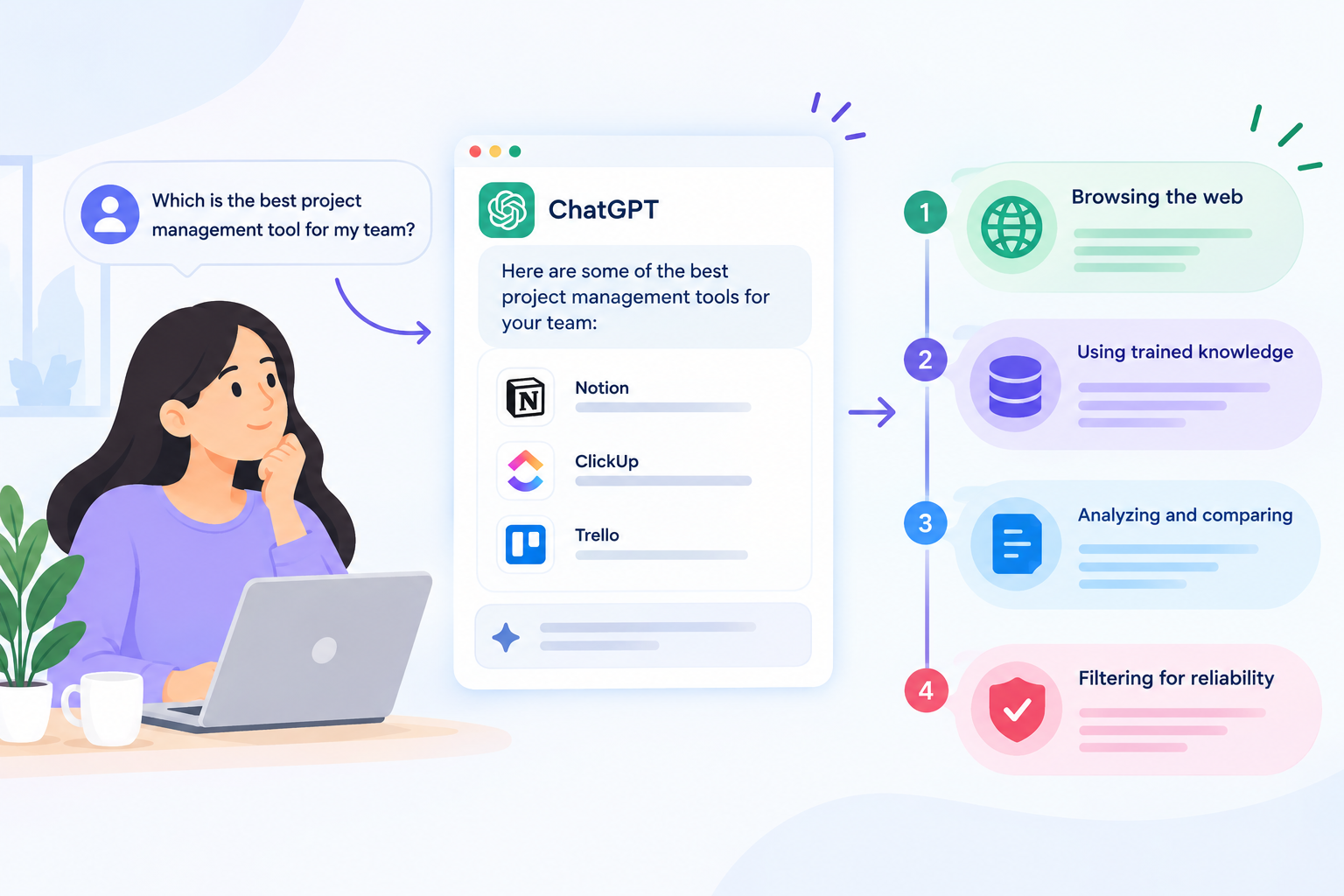
Focus on making your website content, external mentions, product information, and other relevant sources clear, accurate, and accessible. This gives ChatGPT better information to work with when responding to relevant queries.
Step 1: Create a Complete Brand Information Base
Before trying to improve ChatGPT visibility, make sure your brand is clearly represented across its key information sources. Consistent and complete information helps establish what your brand is, what it offers, and where it fits.
Define Your Core Brand Information
Clearly document your brand name, products or services, target audience, category, unique value proposition, and key business details.
Keep Key Business Details Consistent
Ensure important information such as brand name, offerings, descriptions, locations, and contact details remains consistent across your website and external profiles.
Create Dedicated Pages for Important Brand Entities
Create clear, dedicated pages for major products, services, people, locations, or other important entities associated with your brand.
Step 2: Turn Your Existing Content Into Answerable Resources
Identify Questions Customers Ask ChatGPT
Identify questions your potential customers may ask ChatGPT about your category, products, services, and use cases. Prioritize queries with clear informational or commercial intent.
Give Direct Answers to Specific Questions
Convert existing content into clear, concise answers that directly address one question at a time. Provide the answer early and support it with relevant details or evidence.
Step 3: Map Your Brand to Relevant Topics
Mapping your brand to relevant topics helps connect your business with the questions and use cases your audience searches for in ChatGPT.
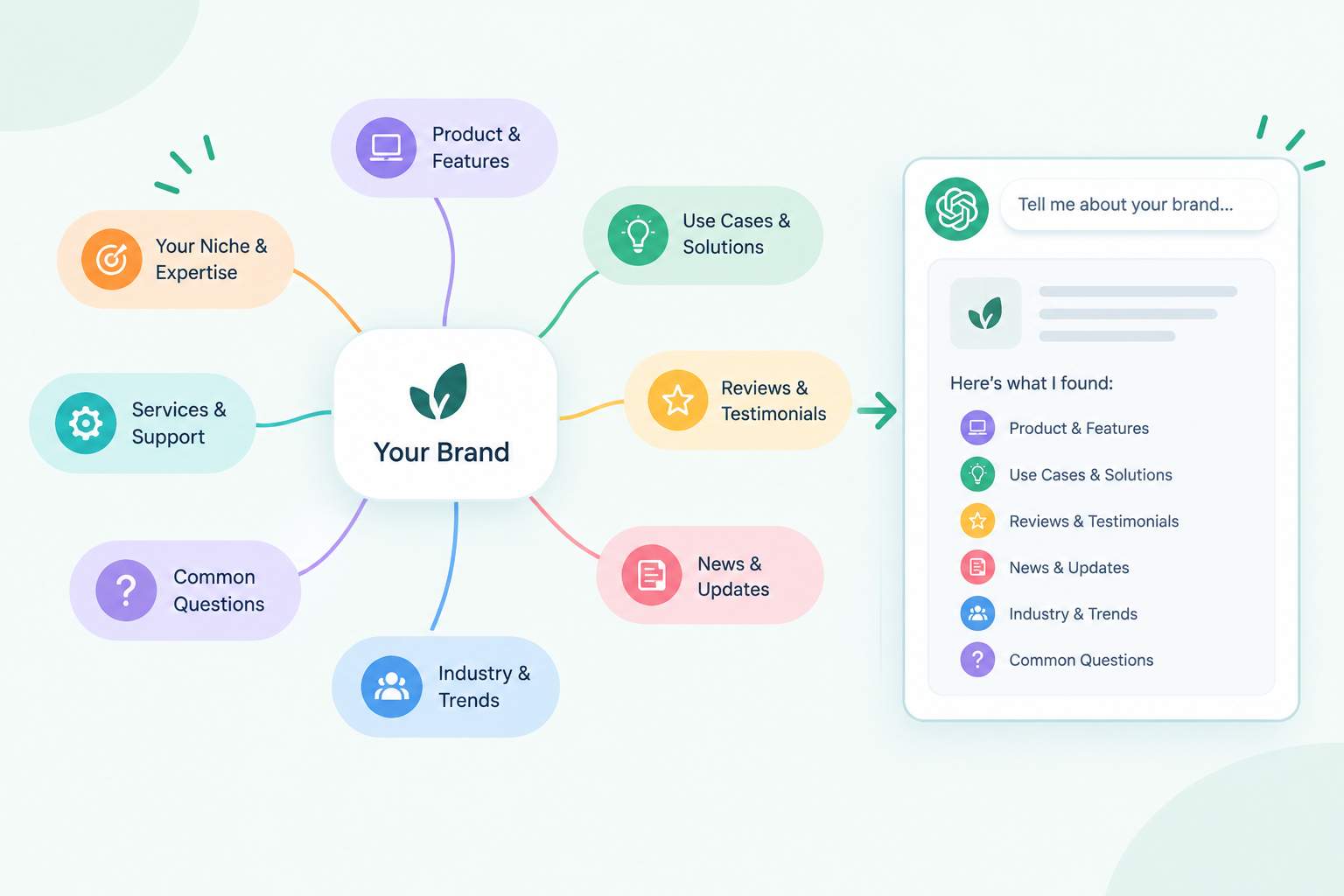
Identify Your Core Category
- Define the primary category your brand belongs to.
- Identify the main products or services within that category.
- Align your content around your core expertise.
Map Related Customer Use Cases
- List common customer problems your brand solves.
- Identify different use cases for each product or service.
- Create content around real customer search scenarios.
Find Content Gaps Around Your Category
- Identify important topics missing from your website.
- Compare your content coverage with competitors.
- Prioritize unanswered customer questions for new content.
Step 4: Build Your Brand’s External Information Footprint
Find Relevant Industry Publications
Identify trusted publications and websites that regularly cover your industry, category, or target audience. Focus on platforms where your brand can contribute genuinely useful and relevant information.
Earn Relevant Brand Mentions
Build mentions through digital PR, expert contributions, partnerships, and industry coverage. Prioritize relevant and credible mentions over a high volume of unrelated links.
Participate in Relevant Communities
Contribute useful insights to communities where your target audience discusses relevant problems and solutions. Focus on adding genuine value rather than promoting your brand repeatedly.
Step 5: Strengthen Customer Trust Signals
Customer trust signals can provide additional context about how customers experience and perceive your brand.
- Collect Genuine Customer Reviews – Encourage real customers to share honest feedback about their experience with your products or services.
- Respond to Customer Feedback – Address positive and negative feedback professionally and demonstrate that your brand actively engages with customers.
- Keep Review Information Consistent – Ensure your brand name, products, services, and key details remain consistent across review platforms and business profiles.
Step 6: Check Whether ChatGPT Can Access Your Content
Your content needs to be accessible for it to have a chance of being discovered and used by AI systems. Check your technical setup to identify anything that may prevent important pages from being accessed.
Review Robots.txt Rules – Check whether your robots.txt file unintentionally blocks relevant crawlers or important content.
Check Important Pages for Accessibility – Make sure key product, service, and informational pages can be accessed without unnecessary restrictions.
Test Your Site’s Crawlability – Check whether search crawlers can successfully discover and access your important pages.
Remove Unnecessary Access Barriers – Fix technical restrictions, blocked resources, or configuration issues that prevent important content from being accessed.
Step 7: Add Original Evidence to Your Content
Original evidence makes your content more credible and useful by providing information that is specific to your brand or research.
Include first-party data, original research, case studies, real results, and expert insights to support your claims and demonstrate genuine expertise.
Step 8: Build a ChatGPT Prompt Testing Set
A ChatGPT prompt testing set helps you consistently evaluate how your brand appears across different user queries, intents, and recommendation scenarios.
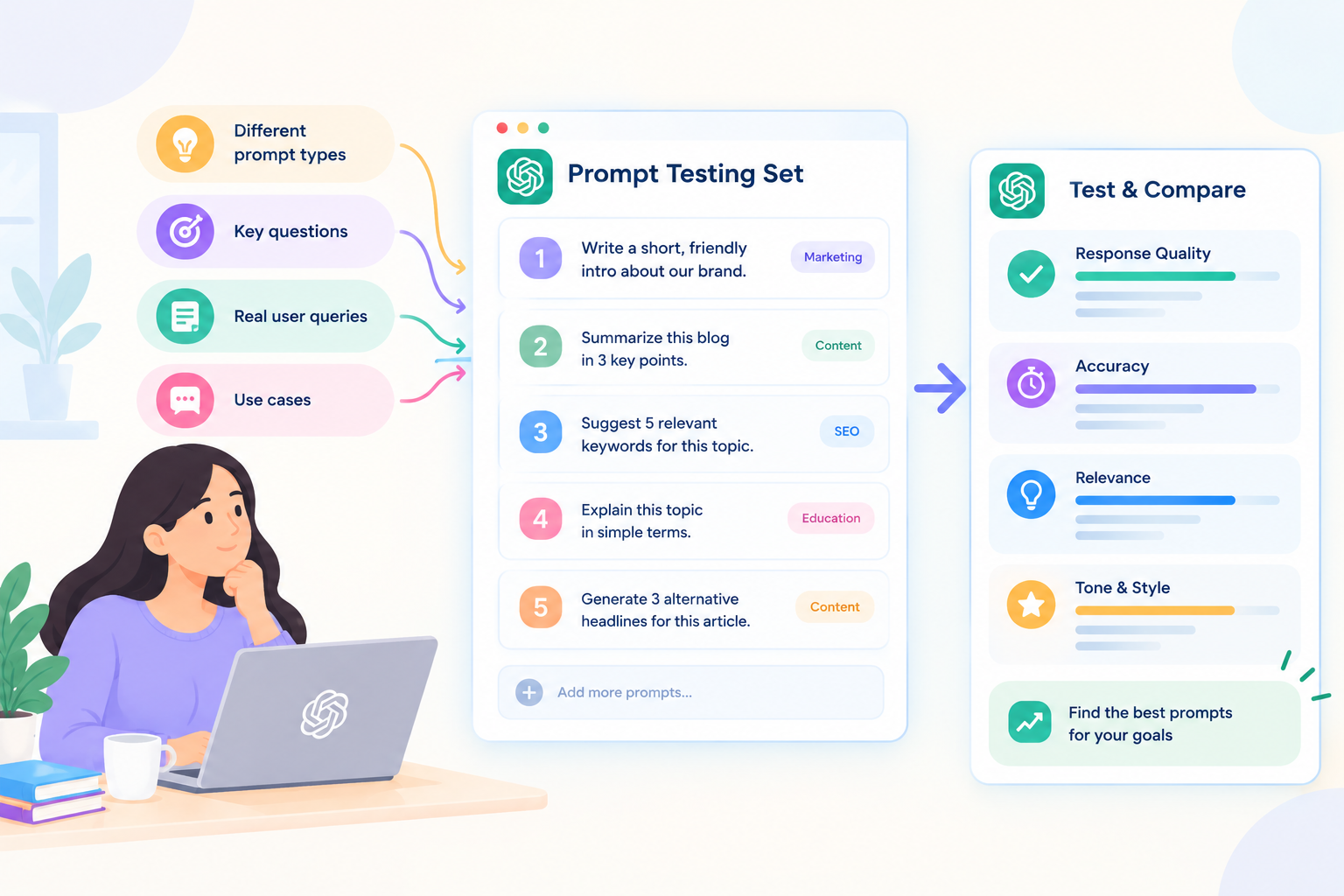
- Category Queries: Test broad questions related to your industry.
- Product/Service Queries: Test searches directly related to your offerings.
- Comparison Queries: Test prompts comparing your brand with competitors.
- Recommendation Queries: Test prompts asking ChatGPT to recommend brands.
- Use-Case Queries: Test questions based on specific customer needs.
Step 9: Find Your Brand’s Citation Gaps
Identify Which Sources ChatGPT Cites
Review ChatGPT responses for your target prompts and record the websites, publications, and pages it cites. This helps you understand which sources are currently supporting relevant AI answers.
Compare Your Sources With Competitors
Compare the sources cited for your brand with those cited for competitors. Look for credible sources that consistently support competitor visibility but have little or no coverage of your brand.
Find Missing Topics and Evidence
Identify topics, claims, data, or supporting information that competitors have covered but your brand has not. These gaps can highlight areas where additional content or evidence may be useful.
Step 10: Improve and Re-Test
After identifying visibility and citation gaps, update the relevant content or brand information based on your findings. Re-run the same ChatGPT prompts after the changes to compare results and determine whether your brand’s visibility has improved.
Track these results over time and continue refining the areas where your brand remains less visible.
Frequently Asked Questions
Can I control exactly what ChatGPT says about my brand?
No. You can improve the information available about your brand, but you cannot directly control ChatGPT’s responses.
Should I test ChatGPT with the same prompts repeatedly?
Yes. Consistent prompts make it easier to compare results over time.
Can paid advertising make ChatGPT recommend my brand?
No. Advertising does not guarantee organic recommendations in ChatGPT.
Should I track ChatGPT recommendations manually?
You can start manually with a structured prompt set and tracking sheet, then use specialized AI visibility tools as your testing needs grow.
Conclusion
Getting your brand recommended by ChatGPT is an ongoing process, not a one-time optimization. Focus on clear brand information, useful content, credible external sources, technical accessibility, and regular prompt testing.
At RankingBite, we help brands build stronger visibility across AI search by combining SEO, content strategy, and AI visibility optimization. The goal is to make your brand easier for AI systems to discover, understand, and consider for relevant queries.

Shanya
Hi, I'm Shanya, an SEO and content writer at RankingBite. I specialize in creating SEO-focused content around search, AI, cybersecurity, and digital marketing. I enjoy turning complex topics into clear, useful content that helps brands build visibility, connect with their audience, and grow their digital presence.