AI recommendation visibility is difficult to improve if you do not know where your brand currently stands. A brand may appear for some prompts, disappear for others, or be consistently overlooked while competitors are recommended instead.
For brands working with RankingBite, an AI recommendation audit helps identify these gaps by testing relevant queries, comparing competitor visibility, reviewing cited sources, and analysing how AI platforms represent your brand.
This guide explains how to run that audit systematically and turn the findings into actionable next steps.
Define What You Want to Measure
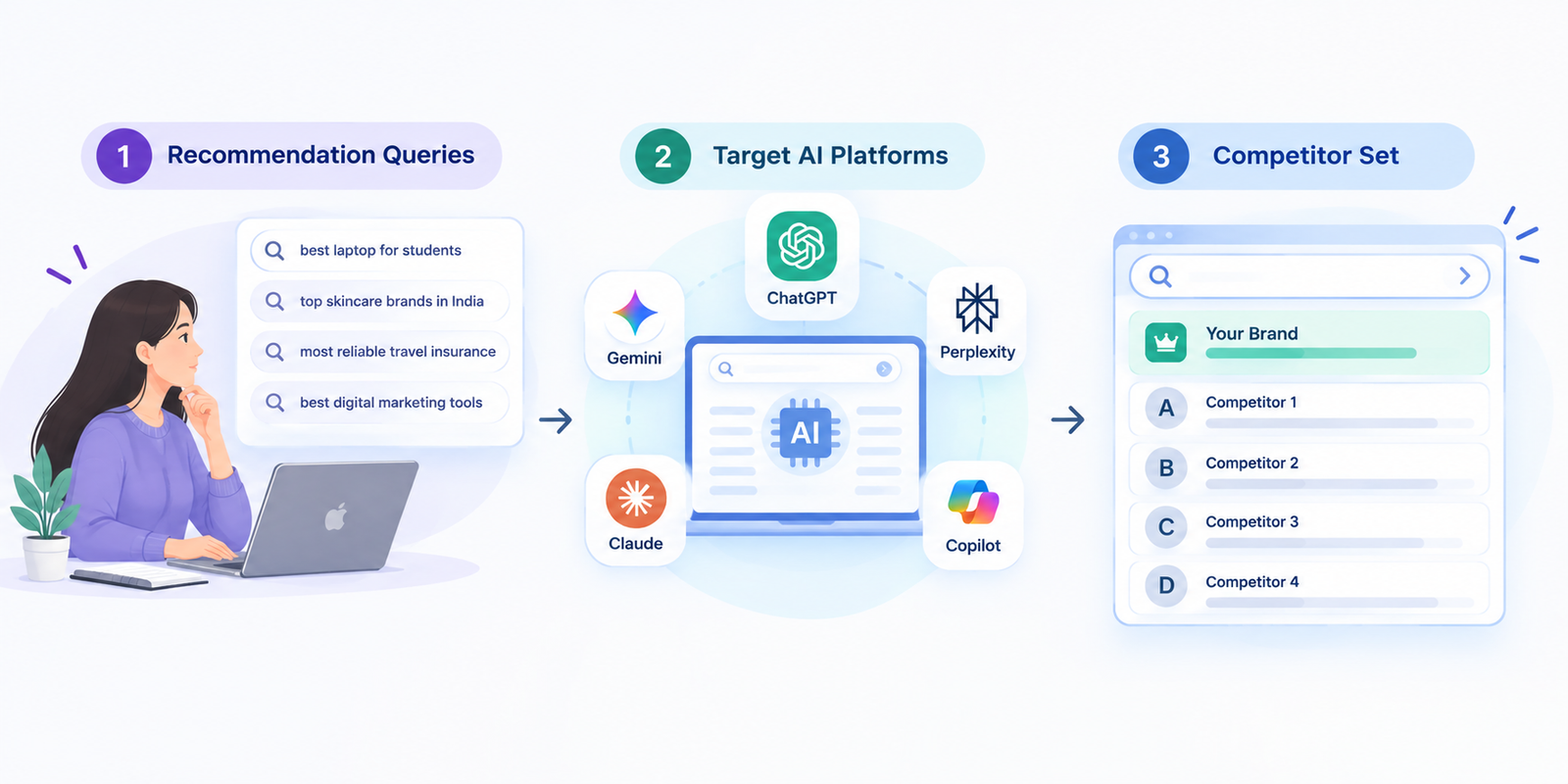
Before starting an AI recommendation audit, define the queries, platforms, and competitors you will evaluate. This creates a consistent baseline for comparing your brand’s visibility.
Recommendation Queries
Choose realistic, high-value queries that reflect how potential customers might ask AI for recommendations. Include questions around your main products, services, use cases, and customer needs.
Avoid testing only brand-name searches because they may show whether AI knows your brand, rather than whether it considers your brand a relevant recommendation.
Target AI Platforms
Select the AI platforms that matter most to your audience and business category. Run comparable prompts across each platform and record the responses separately. This helps identify whether your brand’s visibility is consistent or varies significantly between AI systems.
Competitor Set
Create a defined list of direct competitors and brands that frequently appear for your target queries. Track which competitors are recommended, how often they appear, and which queries exclude your brand.
This gives you a clear comparison point for identifying where your recommendation visibility is weaker or stronger.
Build Your AI Recommendation Test Set
Create a balanced set of prompts that reflects different ways potential customers may discover and evaluate your brand. This helps you identify where your brand appears, where competitors dominate, and which query types need attention.
- Commercial Prompts – Test queries where users are actively looking for products, services, providers, or solutions.
- Category-Level Prompts – Use broader queries that ask AI to identify leading brands, providers, or solutions within your industry.
- Brand-Specific Prompts – Test queries that directly mention your brand to see how accurately AI understands and represents your business.
Run a Consistent AI Visibility Audit
Run every test using the same prompts, platforms, and evaluation criteria. Consistency helps you compare results accurately and identify meaningful changes in your brand’s AI visibility.
Record Brand Appearances
Note whether your brand is mentioned, recommended, or excluded from each AI response. Record the type of visibility and the query that triggered it.
Record Competitor Appearances
Track which competitors appear for the same prompts and how they are positioned. This helps identify queries where competitors receive visibility while your brand does not.
Capture AI Responses and Sources
Save the relevant AI responses along with the sources or citations provided. Reviewing these sources can help you understand what information may be supporting the AI-generated recommendation.
Analyse How AI Represents Your Brand
An AI recommendation audit should examine not only whether your brand appears, but also how the AI describes and positions it. A brand may receive visibility but still be presented inaccurately, connected to the wrong category, or recommended for an unsuitable use case.
Brand Description Accuracy
Check whether the AI accurately describes your company, products, services, location, and target audience.
Example:
If your agency provides GEO and technical SEO services for B2B SaaS companies, but AI describes it only as a general content agency, there is a brand representation gap.
Service or Product Relevance
Check whether the AI connects your brand with the products or services you actually provide and whether those offerings match the user’s query.
Example:
If a user asks, “Which agencies provide GEO services for SaaS companies?” and AI mentions your brand but describes only your traditional SEO services, your visibility exists but the service relevance is weak.
Recommendation Context
Look at why and where the AI recommends your brand. The recommendation should align with the user’s specific requirement rather than being a generic brand mention.
Example:
If AI recommends your agency specifically for “AI visibility tracking for B2B brands,” the recommendation has stronger contextual relevance than simply mentioning your agency in a general list of SEO companies.
Identify Your Recommendation Gaps
Once the audit data is collected, look for patterns that explain where your brand is losing AI recommendation visibility. Focus on missing opportunities, unavailable supporting sources, and queries where competitors consistently appear instead.
- Missing Prompts – Identify relevant queries where competitors are recommended but your brand does not appear.
- Missing Sources – Find important sources or references that support competitors but are missing from your brand’s visibility profile.
- Competitor-Only Visibility – Track queries where competitors receive recommendations while your brand is consistently absent.
Turn Audit Findings Into an Action Plan
Once the gaps are identified, convert them into specific actions rather than treating every issue equally. Prioritize the findings based on their relevance to your business and the frequency with which they appear across your target queries.
- Prioritize the Gaps – Start with high-value prompts where your brand is missing or competitors consistently appear.
- Assign the Right Action – Connect each gap to a specific improvement, such as correcting brand information, strengthening relevant content, or addressing source gaps.
- Set a Follow-Up Benchmark – Record the current results, apply the changes, and retest the same prompts after a defined period to measure movement.
How to Track AI Recommendation Changes
Track the same prompts, platforms, and competitors throughout each audit cycle. This creates comparable data and helps distinguish real visibility changes from differences caused by changing queries.
Recommendation Rate
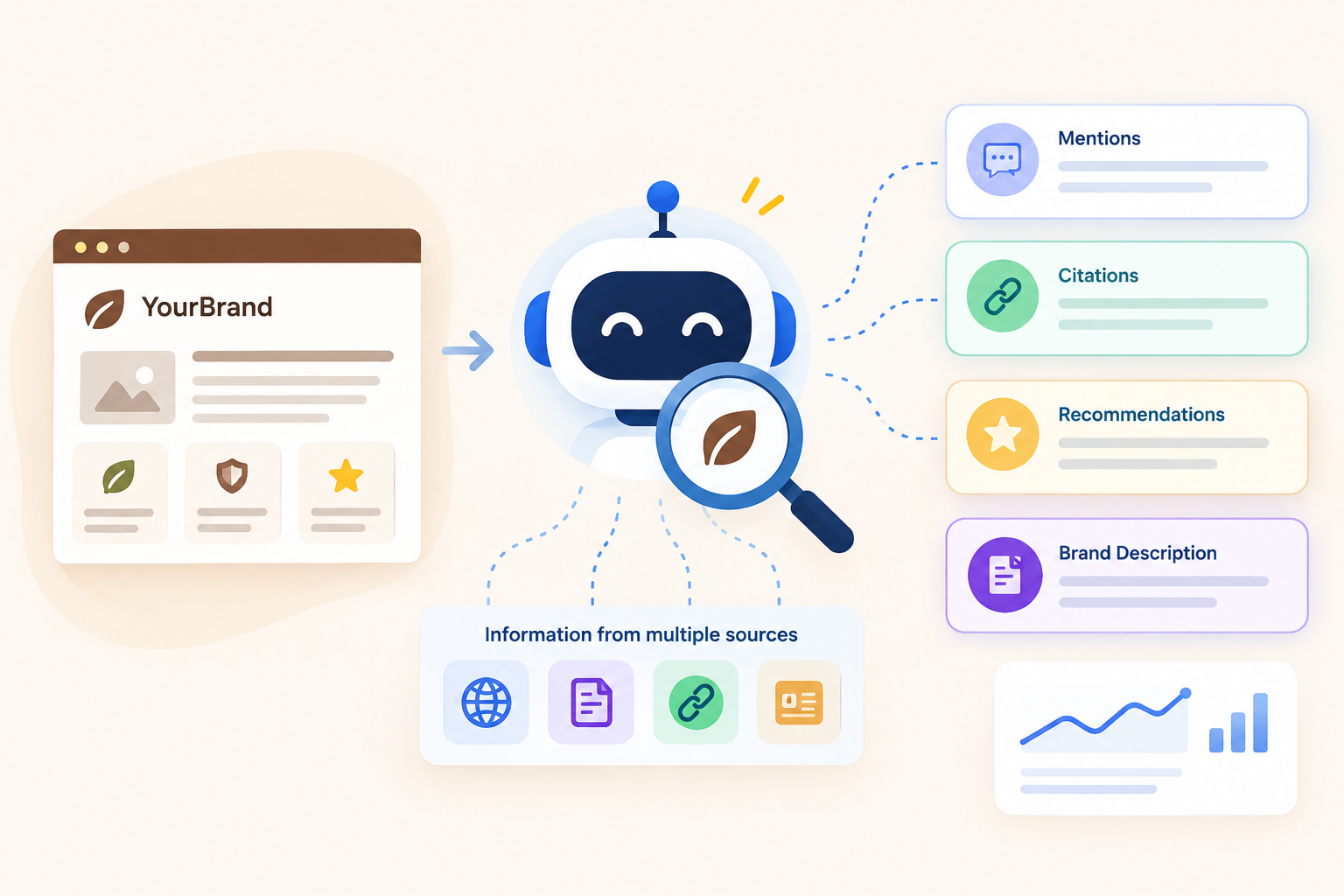
Measure how frequently your brand is recommended across the selected prompts. Compare the percentage with previous audit periods to identify changes.
Competitor Appearance Rate
Track how often selected competitors appear or receive recommendations for the same prompts. This shows whether competitor visibility is changing alongside your own.
Source Coverage
Monitor the sources AI systems reference when generating relevant responses. Compare which sources support your brand versus competitors and identify new or missing sources over time.
You can also read How to Track AI Chatbot Brand Recommendations for a more detailed approach.
Frequently Asked Questions
What is an AI recommendation audit?
It is a structured review of how often and in what context a brand appears in AI-generated recommendations for relevant queries.
How many prompts are needed for a useful audit?
There is no fixed number, but a diverse set of relevant prompts provides a more representative view than testing only a few queries.
Should AI audits be repeated regularly?
Yes. Repeating the same test set helps identify changes in visibility and provides comparable results over time.
Can AI audit results vary between identical tests?
Yes. AI-generated responses can vary, so consistent testing and repeated observations are important when interpreting results.
What should be included in an AI recommendation audit report?
Include the tested prompts, platforms, brand and competitor appearances, relevant sources, key gaps, and changes from previous audits.
Final Thoughts
An AI recommendation audit helps turn AI visibility into a measurable process. By testing consistent prompts, comparing competitors, reviewing sources, and tracking changes over time, RankingBite can help brands identify visibility gaps and turn those findings into focused optimization opportunities.
The key is to audit regularly, act on the data, and measure progress against the same benchmarks.

Shanya
Hi, I'm Shanya, an SEO and content writer at RankingBite. I specialize in creating SEO-focused content around search, AI, cybersecurity, and digital marketing. I enjoy turning complex topics into clear, useful content that helps brands build visibility, connect with their audience, and grow their digital presence.