If I had to choose where to optimize first, I’d look at the buyer journey before choosing the platform. I’d prioritize Google AI Overviews when the biggest opportunity is early search discovery, and ChatGPT when buyers are already comparing vendors, alternatives, or recommendations.
That distinction matters because I don’t see AI visibility as a single channel. At RankingBite, we look at where a brand needs to influence the buyer first and then decide which platform deserves the initial investment. A brand that is already strong in vendor consideration may have more to gain from early Google discovery, while another that gets found through search but disappears during evaluation may need to prioritize ChatGPT.
This guide walks through that decision step by step, from mapping the buyer journey to choosing where the first optimization effort should go.
Understand What Each Platform Can Influence
Before choosing a platform, I separate the type of buyer action each one can influence. The distinction isn’t absolute, but it provides a useful starting point for deciding where to concentrate resources.
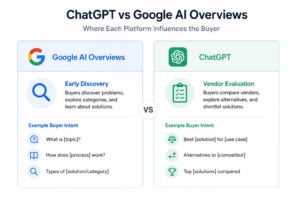
Google AI Overviews: Early Search Discovery
I look at Google AI Overviews primarily through the lens of search-led discovery. Buyers can encounter an AI-generated answer while researching a problem, learning about a category, or exploring possible solutions.
This makes Google particularly relevant when a business depends on prospects finding and understanding its category before they start evaluating specific vendors.
ChatGPT: Product Evaluation
ChatGPT becomes more relevant when the buyer’s questions move closer to choosing a solution. They may ask for product recommendations, compare vendors, look for alternatives, or narrow down options for a particular use case.
For businesses with consideration-heavy buying cycles, this stage can be commercially important because the buyer is no longer simply learning about the problem—they are deciding what deserves further attention.
Don’t Choose Based on Platform Size
I wouldn’t choose between the two simply because one platform has a larger audience or receives more attention.
Instead, I ask: Which platform is closer to the decision I need to influence?
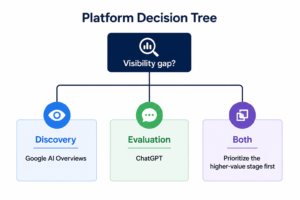
If the answer is early discovery, Google AI Overviews may deserve the first investment. If it is vendor evaluation, ChatGPT may be the better starting point. That gives me a business-led way to prioritize rather than trying to optimize for both platforms equally from day one.
Map Your Buyer Journey Before Choosing
Once I understand what each platform can influence, I map the actual journey my buyers follow. This prevents me from choosing a platform based on assumptions about how people might use it.
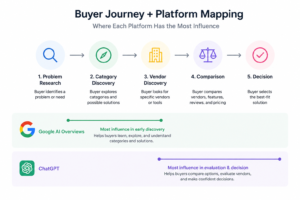
A simple starting point is:
Problem Research → Category Discovery → Vendor Discovery → Comparison → Decision
The objective isn’t to assign one platform permanently to each stage. It’s to identify where AI visibility can change the buyer’s next step.
Identify the First Search Your Buyer Makes
I start with the question that brings the buyer into the category.
Is the prospect searching for a problem, researching a process, or trying to understand which type of solution exists? If most journeys begin this way, early search visibility deserves greater attention.
For example, a buyer may not initially search for a specific software brand. They may first search for how to solve a particular operational problem. That initial discovery can shape which solutions they encounter later.
Find Where Vendor Selection Begins
Next, I identify the point where the buyer moves from learning to evaluating.
This is where questions change from How do I solve this? to Which tools can solve this? or Which vendor is best for my situation?
That transition is important because it can change the platform priority. A business may have strong visibility during early research but still be missing when buyers start comparing actual products.
Mark the Most Valuable Decision Point
Finally, identify the stage with the strongest connection to commercial outcomes. If losing visibility at category discovery means losing the buyer before competitors enter consideration, Google may deserve priority. If the larger problem occurs when buyers compare vendors, ChatGPT may be more important.
For me, this is the key step: don’t ask which platform matters more in general. Ask where visibility matters most for your specific buyer.
Audit Your Current Visibility on Both Platforms
Before deciding where to invest, first establish how the brand currently appears across the questions that influence the buyer journey. This creates a clear baseline instead of relying on general visibility metrics.
Build a Priority Prompt Set
Start with real buyer questions across different stages of the journey. Separate discovery queries from commercial queries to identify whether the larger gap exists in early research or product evaluation.
Check Where Competitors Appear
Review the same questions for competing brands. Consistent competitor visibility can reveal a more actionable gap than simply looking at overall brand presence.
Record Your Current Position
Turn the audit into a simple visibility snapshot by grouping each priority query into three categories:
- Present: Your brand appears clearly and is relevant to the query.
- Missing: Your brand does not appear, despite the query being relevant to your audience.
- Competitor-dominated: Competitors appear consistently and have stronger visibility than your brand.
This makes the gaps easier to compare and shows where visibility needs the most attention first.
Decide Which Platform Should Come First
Once I have that baseline, I can make the decision based on the size and value of the opportunity rather than assumptions.
Choose Google AI Overviews When Discovery Is the Gap
If my biggest opportunities are around problem and category searches, Google AI Overviews becomes the logical starting point. This is especially relevant when search already plays a major role in generating demand.
Choose ChatGPT When Evaluation Is the Gap
If the larger gap appears around comparisons, alternatives, and recommendations, I’d put ChatGPT first. The focus here is getting considered when buyers are narrowing their options.
Choose Both When the Journey Spans Both
If the gaps exist across discovery and evaluation, I wouldn’t divide resources evenly. I’d address the higher-value stage first and then expand to the other platform.
The decision comes down to one question: where can improved visibility influence the buyer sooner or closer to the purchase?
Build Your First Optimization Sprint
Once the priority platform is clear, keep the first sprint focused on the opportunities most likely to improve visibility instead of trying to cover every query at once.
Start With Discovery Queries for Google AI Overviews
Begin with high-value searches where the brand has an opportunity to enter the conversation around a problem, category, or solution. Focus on queries that help potential buyers discover the brand early.
Focus on Commercial Queries for ChatGPT
Prioritize questions that can influence vendor selection, including product comparisons, alternatives, recommendations, and specific use cases. These searches are closer to the consideration stage and can directly affect the shortlist.
Keep the First Sprint Narrow
Start with a defined set of high-priority queries instead of expanding the scope too quickly. A focused sprint makes it easier to measure progress and determine whether the selected platform is closing the visibility gap identified in the audit.
Measure Whether Your Priority Is Working
After the first optimization sprint, the focus should be on whether visibility has improved across the areas originally targeted.
Start With Priority Query Coverage
Review the queries selected at the beginning and compare brand visibility before and after the optimization. This shows whether progress is happening across the searches that matter most.
Track Competitor Movement
Compare brand visibility with competitors across the same priority queries. This adds context and shows whether the change is meaningful or part of a broader shift in the search landscape.
Connect Visibility to Commercial Impact
The final step is to connect visibility gains with queries that influence buying decisions. More appearances are useful, but stronger results come when those gains contribute to qualified demand.
Revisit the Decision and Reallocate
The initial platform choice should not be treated as permanent. Buyer behavior, search patterns, and competitive visibility can change, creating stronger opportunities elsewhere.
Recheck How Buyers Are Moving
Review whether buyers are still relying on the same discovery and research paths. A shift from broad research toward product evaluation may change which platform deserves more attention.
Recheck Where Visibility Is Changing
Look for meaningful changes across the priority queries, including new competitor appearances, declining visibility, or emerging search opportunities. These shifts can reveal gaps that were not present during the initial audit.
Reallocate the Next Investment
When the current focus starts delivering less value and another platform shows stronger potential, move the next round of effort accordingly. The aim is not to split resources evenly, but to invest where the next meaningful opportunity is.
ChatGPT vs Google AI Overviews: Your Decision Checklist
The right starting point depends on where visibility can have the greatest impact on the buyer journey.
- Define the visibility gap: Determine whether you need stronger discovery or stronger evaluation visibility.
- Identify the buyer stage: Map where AI search matters most across the journey.
- Review search intent: Separate broad category discovery from solution-focused research.
- Compare competitor presence: Check where competitors are already being surfaced and cited.
- Prioritize commercial value: Start with the platform tied to the higher-impact buyer stage.
- Match platform to objective: Use Google AI Overviews for discovery and ChatGPT for evaluation.
- Plan for both: Once the priority gap is addressed, expand visibility across the other platform.
When to Prioritize Google AI Overviews
I would prioritize Google AI Overviews when the main opportunity is getting discovered before buyers start comparing vendors.
- Search drives category discovery: If prospects already use Google to find and understand your category, I would focus on the search experience shaping that early discovery.
- Buyers start with problem-based queries: If prospects search for problems, processes, or solutions rather than specific products, Google AI Overviews can help introduce your brand earlier in the journey.
- Your category visibility is weak: If competitors appear while buyers are researching the category but your brand is rarely mentioned, I would treat Google AI Overviews as a priority.
- Discovery comes before comparison: If the biggest gap is being found before buyers create a shortlist, I would start with Google AI Overviews.
When to Prioritize ChatGPT
I would prioritize ChatGPT when buyers are already familiar with the problem and are closer to choosing a product, vendor, or solution.
- Buyers compare vendors: If prospects regularly compare multiple products before booking a demo or making a purchase, I would focus on getting the brand included in those vendor comparisons.
- Alternatives drive demand: If searches for alternatives to an existing product are common in the category, ChatGPT can help put the brand in front of buyers who are already considering a switch.
- Recommendations influence decisions: When buyers ask for the best tools, platforms, or vendors for a specific use case, I would treat these recommendation prompts as high-value opportunities.
- The shortlist matters most: If the main visibility gap is getting considered alongside competitors, I would start with ChatGPT.
Choose both if:
- The journey spans both platforms: Buyers use Google for discovery and ChatGPT for deeper evaluation or comparison.
- Both stages affect revenue: Visibility matters at both the research and consideration stages.
- Resources allow a phased approach: Start with the platform addressing the biggest gap, then expand once the first priority is covered.
The decision comes down to one question: Where can stronger visibility influence the part of your buyer journey that matters most to revenue?
How RankingBite Helps You Make the Right Choice
RankingBite helps businesses identify where AI visibility can have the greatest impact before deciding where to invest. We map the buyer journey, audit priority queries across platforms, and identify whether the bigger gap sits in discovery, evaluation, or both.
From there, RankingBite prioritizes the platform with the highest-value opportunity and builds a focused optimization sprint around it. As visibility and buyer behavior change, we continuously monitor the results and reallocate efforts toward the next meaningful opportunity.
The goal isn’t to optimize for every platform equally. It’s to build visibility where it can influence your buyers and contribute to commercial outcomes.
Frequently Asked Questions
Do ChatGPT and Google AI Overviews use the same sources?
Not necessarily. Each platform can draw on different information and surface different sources, so appearing in one does not automatically mean appearing in the other.
Does ranking well on Google guarantee visibility in ChatGPT?
No. Strong Google rankings can support discoverability, but they don’t guarantee that ChatGPT will mention or recommend a brand. Each platform evaluates information differently.
Can the same content support visibility on both platforms?
Yes. A strong content asset can contribute to visibility across both, but the questions and buyer intent it addresses matter more than creating separate content for every platform.
Should smaller SaaS brands focus on one platform?
Usually, concentrating on one high-value opportunity first is more practical than spreading limited resources across both. Once that foundation is established, the second platform can become the next priority.
Does AI visibility replace traditional SEO?
No. I see AI visibility as an additional layer rather than a replacement for search optimization. Strong search fundamentals can still support how buyers discover and evaluate a brand.

kashish
Passionate about SEO, AI search, and content marketing, sharing practical insights on search trends, AI visibility, and digital growth.