Digital PR for AI Citations: How to Build Brand Authority That AI Mentions
Digital PR has long been measured by media coverage, editorial backlinks, and referral traffic. While those metrics still matter, AI-powered search is changing how…
Digital PR has long been measured by media coverage, editorial backlinks, and referral traffic. While those metrics still matter, AI-powered search is changing how brands earn visibility. Platforms like ChatGPT, Google AI Overviews, Perplexity, Gemini, and Claude increasingly rely on trusted publishers when generating answers, making AI citations an emerging success metric alongside backlinks.
As AI search becomes a common way to research products and services, Digital PR is no longer just about earning links; it’s about building the authority and credibility that AI systems recognize and cite. Brands mentioned across trusted publications are more likely to appear in AI-generated responses.
This guide explains how to improve AI visibility by creating citation-worthy assets, targeting AI-cited publications, developing newsworthy story angles, and measuring success beyond backlinks.
Why Digital PR Matters for AI Citations
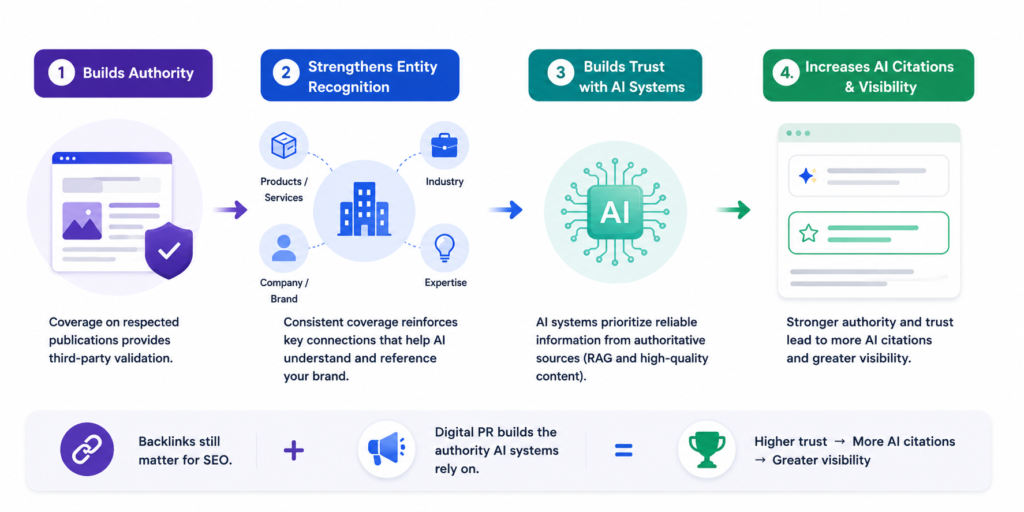
AI-powered search evaluates content differently from traditional search engines. Instead of ranking pages, platforms like ChatGPT, Google AI Overviews, Perplexity, Gemini, and Claude retrieve information from trusted sources to generate answers. This makes Digital PR an important way to improve AI visibility.
Editorial mentions build authority.
Editorial mentions do more than earn backlinks. Coverage on respected publications provides third-party validation, helping AI systems recognize your brand as a credible and trustworthy source.
Repeated mentions strengthen entity recognition.
Consistent mentions across authoritative publications reinforce your brand’s identity by connecting:
- Your company or brand
- Your products or services
- Your industry
- Your expertise
The stronger these signals, the more likely AI systems are to understand and reference your brand.
Trusted publishers appear repeatedly.
For example, AI responses to queries like “best project management software” often cite trusted review and technology sites such as G2, Capterra, PCMag, TechRadar, and Forbes Advisor. Brands featured on these publications are more likely to appear in AI-generated answers than those relying only on their own websites.
Research supports this approach.
AI systems prioritize reliable information from authoritative sources. Google states that AI Overviews draw from multiple high-quality sources, while many AI assistants use retrieval-augmented generation (RAG) to retrieve relevant content before generating responses. As a result, strong editorial coverage and consistent third-party mentions can improve a brand’s visibility across AI-powered search.
While backlinks remain valuable for SEO, Digital PR now helps build the authority and trust that increase the likelihood of AI citations.
Build Citation-Worthy Assets Before You Pitch
Successful Digital PR starts long before you contact journalists. If your content doesn’t offer unique value, even the best outreach is unlikely to earn coverage. Creating citation-worthy assets gives journalists, bloggers, and AI systems something useful to reference, increasing your chances of earning editorial mentions and AI citations.
Publish original research and proprietary data.
Original data is one of the strongest assets for Digital PR because it provides information that can’t be found elsewhere. Journalists often cite exclusive research to support their stories.
Example: An SEO agency analyzes 10,000 websites and publishes a report on the most common technical SEO issues, giving journalists exclusive statistics to reference.
Create benchmark reports, surveys, and industry statistics
Benchmark reports and surveys provide fresh insights into industry trends, making them valuable resources for both media coverage and AI-generated answers.
Example: A cybersecurity company surveys 2,000 IT professionals and publishes an annual report on the biggest cloud security challenges.
Develop free tools, templates, calculators, or interactive resources
Useful tools solve real problems, encouraging people to link to and reference them. They also attract recurring mentions because users return to them over time.
Examples:
- An ROI calculator for digital marketing campaigns.
- A content brief template for SEO teams.
- A website speed checker for developers.
Produce expert insights and thought leadership.
Share original opinions, practical experience, and expert analysis rather than repeating existing information. Strong thought leadership gives journalists credible sources to quote and helps position your brand as an industry authority.
Example: Instead of summarizing AI search trends, publish an expert analysis explaining how AI citations are changing Digital PR strategies, supported by real campaign insights or case studies.
The more original, useful, and evidence-backed your assets are, the more likely they are to earn editorial coverage, attract backlinks naturally, and be referenced by AI systems.
Digital PR Strategies That Earn AI Citations
After creating citation-worthy assets, the next step is earning coverage from the trusted publications AI systems already reference. Focus on building authority through high-quality editorial mentions rather than simply acquiring more backlinks.
Target the Publications AI Already Cites
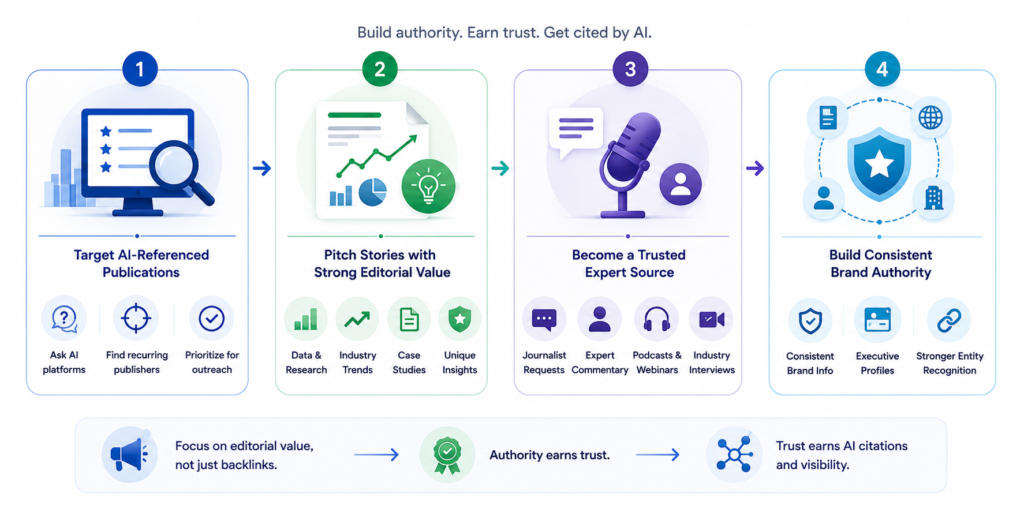
Instead of targeting websites based only on Domain Rating (DR), prioritize publishers that consistently appear in ChatGPT, Google AI Overviews, Perplexity, Gemini, and Claude.
To identify them:
- Ask multiple AI platforms the same industry-related questions.
- Note the publisher domains that appear repeatedly.
- Prioritize those publications for outreach.
Example: For queries like “best CRM software,” publishers such as G2, PCMag, TechRadar, Capterra, and Forbes Advisor often appear across AI responses, making them valuable Digital PR targets.
Pitch Stories with Strong Editorial Value
Journalists are more likely to cover stories that offer original insights or new data. Focus your outreach on:
- Data-driven research
- Industry trends
- Case studies
- Evidence-backed contrarian viewpoints
Example: Analysis of 5,000 e-commerce stores reveals mobile checkout times increased by 18% in 2026, supported by exclusive data and expert insights.
Become a Trusted Expert Source
Increase your chances of being quoted by:
- Responding to journalist requests
- Providing expert commentary
- Speaking on podcasts and webinars
- Participating in industry interviews
Example: A cybersecurity expert is quoted in a technology publication after commenting on a major data breach, strengthening both brand authority and AI visibility.
Build Consistent Brand Authority
Maintain consistent brand information and executive profiles across trusted publications. Repeated mentions help AI systems better understand your brand and expertise.
Example: If your company is consistently described as an AI-powered customer support platform across Forbes, TechCrunch, G2, and your own website, AI systems are more likely to associate your brand with that category.
Story Angles That Journalists and AI Both Reward
Creating citation-worthy assets is only half the equation; you also need a compelling story. Journalists are more likely to cover stories that offer fresh insights, exclusive data, or timely perspectives, and AI systems often surface those same trusted editorial sources. Here are the story angles that consistently earn both media coverage and AI citations.
Original Research and Exclusive Statistics
Conduct original research or analyze proprietary data to uncover insights that aren’t available elsewhere. Exclusive statistics make your content more newsworthy and give journalists a unique source to reference.
Example: An SEO agency analyzes 10,000 websites and discovers that 62% have duplicate title tags, publishing the findings in a research report.
Headline idea: Analysis of 10,000 Websites Reveals the Most Common SEO Mistakes in 2026
Consumer Surveys
Survey your target audience to reveal opinions, buying behavior, or emerging market trends. Survey-based stories provide fresh data that publications can cite.
Example: Survey 2,000 consumers to understand how AI search is changing online shopping behavior.
Headline idea: 68% of Consumers Now Use AI Assistants Before Making a Purchase
Annual Industry Reports
Publish an annual report that benchmarks industry performance or tracks changes over time. Regular reports often become trusted reference resources.
Example: Release a yearly report analyzing AI citation trends across the SaaS industry.
Headline idea: The 2026 AI Visibility Report: Benchmarks and Industry Trends
Emerging Trends
Identify new developments before they become mainstream. Explaining why a trend matters helps journalists create timely stories.
Example: Analyze how AI search is changing the way businesses approach Digital PR.
Headline idea: Why AI Citations Are Becoming the Next Digital PR Metric
Expert Predictions
Share evidence-backed predictions about where your industry is heading. Credible forecasts often attract media attention, especially at the start or end of the year.
Example: Predict how AI search will influence SEO and Digital PR over the next 12 months using current industry data.
Headline idea: Five AI Search Trends Every Marketer Should Watch in 2027
Customer Success Stories and Case Studies
Show how a real customer achieved measurable results using your product or strategy. Case studies add credibility because they demonstrate real-world outcomes.
Example: A SaaS company increases branded AI mentions after earning editorial coverage on several industry publications.
Headline idea: How a SaaS Brand Improved AI Visibility Through Digital PR
Data Visualizations and Infographics
Present research through charts, graphs, or infographics to make complex information easier to understand and share. Visual assets often increase media engagement and improve the chances of being referenced.
Example: Create an infographic showing which publisher domains appear most frequently across ChatGPT, Perplexity, Gemini, and Google AI Overviews.
Headline idea: Infographic: The Publishers AI Search Trusts Most
How to Find the Sources AI Already Uses
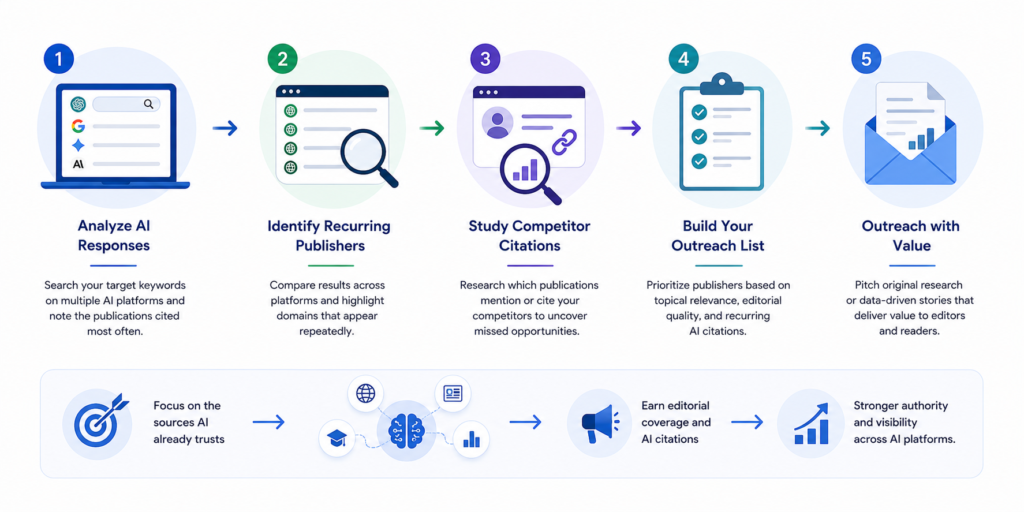
The best Digital PR opportunities often come from the publications AI systems already trust. Instead of targeting every high-DR website, focus on the publishers that consistently appear in AI-generated answers.
Analyze AI Responses
Search your target keywords on ChatGPT, Google AI Overviews, Perplexity, Gemini, and Claude. Note the publications that are cited most often.
Identify Recurring Publishers
Compare the results across platforms and highlight domains that appear repeatedly. These are your highest-priority outreach targets.
Study Competitor Citations
Search for your competitors and see which publications mention or cite them. This can reveal media opportunities your brand is missing.
Build Your Outreach List
Prioritize publishers based on:
- Topical relevance
- Editorial quality
- Recurring AI citations
Example Workflow
For the query best CRM software compares responses across multiple AI platforms. If publishers like G2, Capterra, PCMag, and Forbes Advisor appear repeatedly, add them to your outreach list and pitch them original research or data-driven stories.
Focusing on publications AI already references increases your chances of earning both editorial mentions and AI citations.
Measuring the Success of Digital PR for AI Citations
Traditional PR metrics still matter, but AI visibility introduces new ways to measure success. Track both your editorial impact and how often your brand appears in AI-generated responses.
Key metrics include:
- Brand mentions in AI-generated answers
- Editorial placements on authoritative publications
- High-quality editorial backlinks
- Growth in branded search volume
- Referral traffic from media coverage
- Share of voice across AI platforms
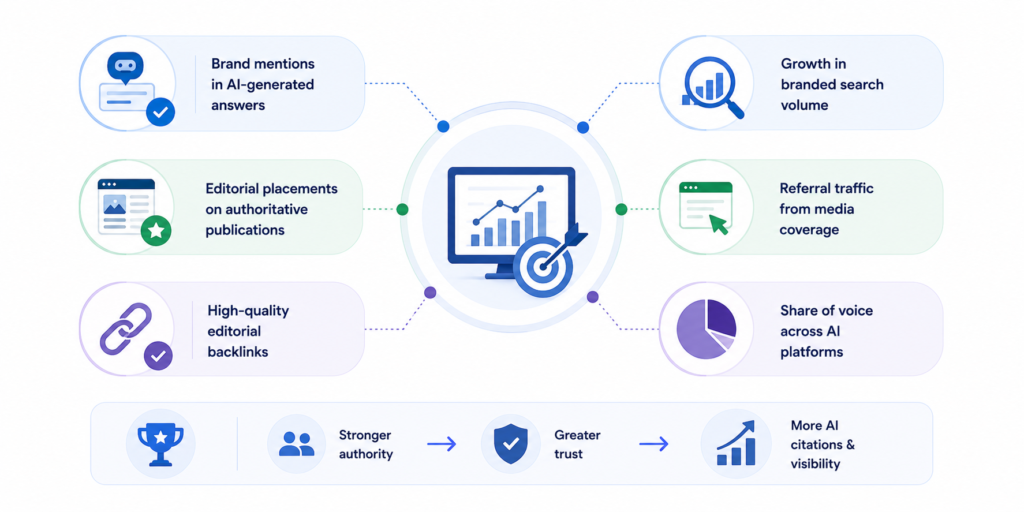
Example: After publishing original research and earning coverage from several industry publications, monitor whether your brand appears more frequently in AI responses for target keywords, alongside increases in branded searches and referral traffic.
Tracking these metrics provides a clearer picture of how Digital PR contributes to both SEO performance and AI visibility.
Common Mistakes That Limit AI Visibility
Even strong Digital PR campaigns can fall short if they focus on the wrong priorities. Avoid these common mistakes to improve your chances of earning AI citations.
Targeting Websites Based Only on Domain Rating
A high Domain Rating doesn’t guarantee AI visibility. Prioritize publications that AI platforms consistently cite.
Example: A DR90 website with little topical relevance may provide less AI visibility than a trusted industry publication.
Pitching Promotional Instead of Newsworthy Stories
Journalists are more likely to cover stories backed by data, trends, or unique insights than product promotions.
Example: A survey revealing changing consumer behavior is more likely to earn coverage than a product announcement.
Publishing Content Without Original Data
Generic content rarely attracts editorial attention. Original research, surveys, and case studies give journalists a reason to cite your brand.
Example: A benchmark report with exclusive statistics is more valuable than a standard blog post.
Inconsistent Brand Information
Different company descriptions, author profiles, or messaging across websites can weaken your brand’s authority.
Example: Using different product names or company descriptions across publications makes it harder for AI systems to connect your brand consistently.
Measuring Only Backlinks
Backlinks are important, but they don’t tell the whole story. Also track AI mentions, branded searches, and editorial coverage.
Example: A campaign may earn fewer backlinks but significantly increase your brand’s visibility in AI-generated answers.
Conclusion
Digital PR has evolved from a link-building tactic into a strategy for building long-term authority. While backlinks remain valuable, AI-powered search increasingly rewards brands that earn consistent editorial mentions from trusted, authoritative publications.
The most effective approach is to create citation-worthy assets, pitch stories with genuine editorial value, and build relationships with the publishers’ AI systems already referenced. Over time, these efforts strengthen your brand’s credibility, increase AI visibility, and improve the likelihood of being cited in AI-generated answers.
Rather than focusing solely on acquiring more links, focus on becoming a trusted source that journalists publish and AI systems confidently reference.
