Modern websites often rely on JavaScript to create dynamic and interactive experiences. JavaScript rendering plays a critical role in determining how easily AI crawlers can access and understand website content. When important information appears only after JavaScript execution, some crawlers may see incomplete content or miss key sections of a webpage.
As AI-powered search continues to grow, making content accessible to AI systems has become an important part of technical AEO. In this guide, you’ll learn how JavaScript rendering affects AI crawlers, why some content gets missed, and the technical steps you can take to improve AI accessibility.
What Is JavaScript Rendering?
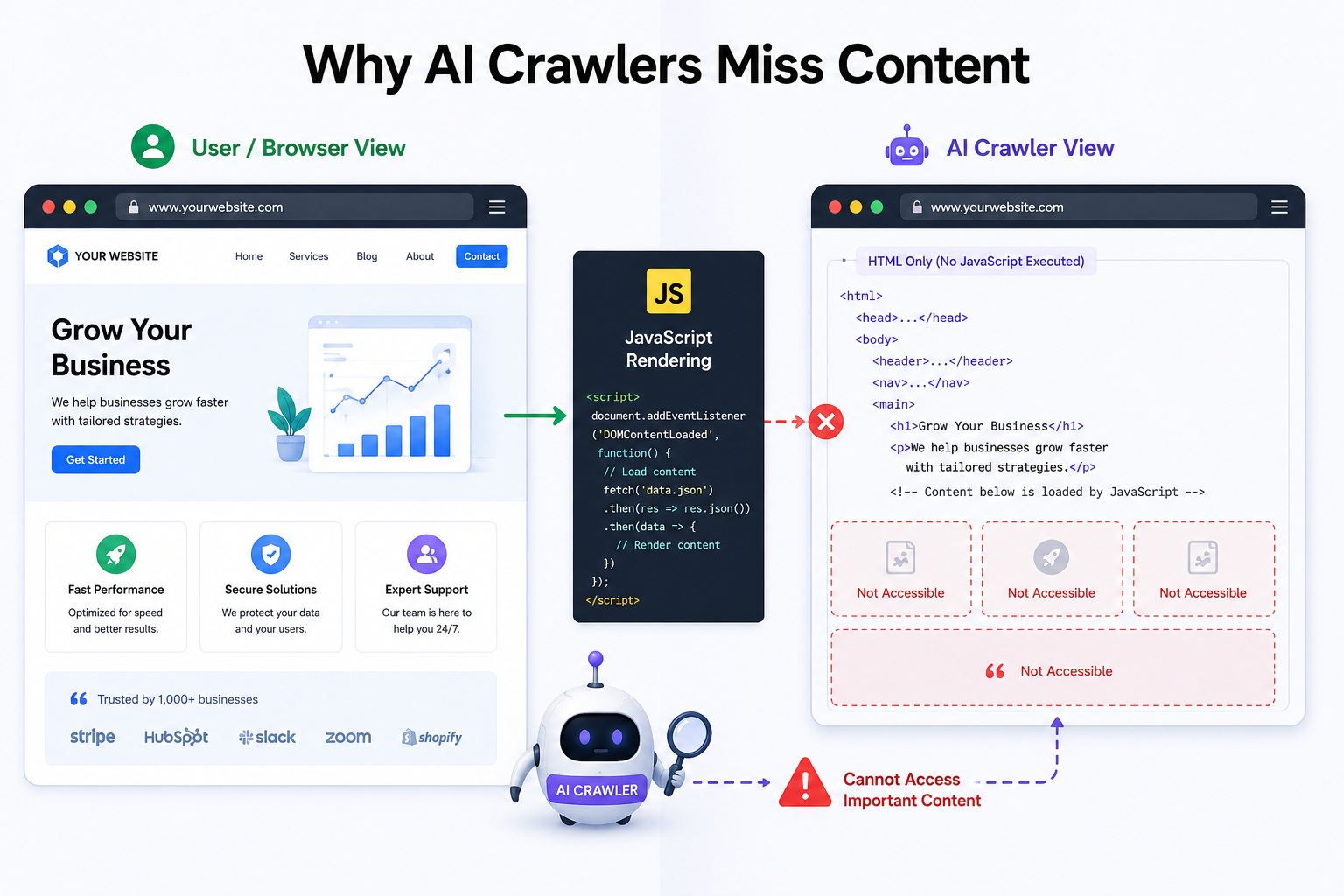
JavaScript rendering is the process of using JavaScript to generate and display webpage content in a user’s browser. While it improves website interactivity, improper JavaScript rendering can make content harder for AI crawlers to access, which may affect AI visibility.
What Is JavaScript?
JavaScript is a programming language used to add dynamic features and interactive elements to websites, such as animations, forms, and content updates. Many modern websites use JavaScript frameworks to create faster and more engaging experiences.
What Is Rendering?
Rendering is the process of converting website code into the visible page users see. For AI crawlers, rendering determines whether they can properly access and understand the content on a webpage.
Types of Rendering
Different rendering methods affect how easily AI crawlers can access website content:
How AI Crawlers Process JavaScript
AI crawlers process JavaScript differently from regular browsers. When a crawler visits a webpage, its ability to execute JavaScript determines whether it can access the complete content or only the initial HTML.
The AI Crawling and Rendering Process
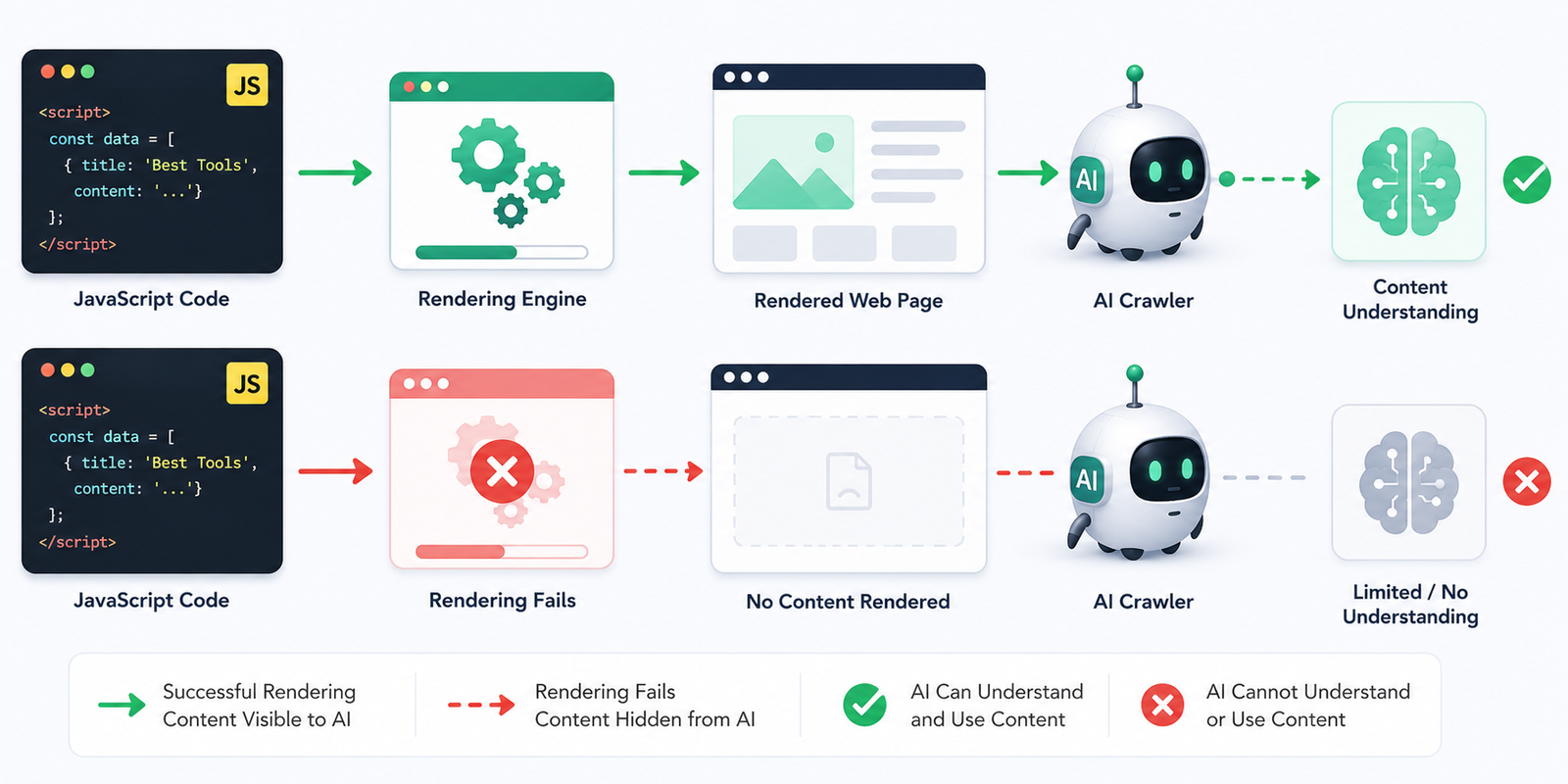
The process generally follows these steps:
Request Page → Read HTML → Execute JavaScript (if supported) → Render Content → Process Information
- The crawler requests a webpage from the server.
- It reads the initial HTML content.
- If JavaScript execution is supported, it renders additional content loaded by scripts.
- The processed content is analyzed and used by AI systems.
Do AI Crawlers Render JavaScript Like Browsers?
AI crawlers do not always render JavaScript exactly like modern browsers. Some may have limited rendering capabilities, slower execution, or may not run certain scripts.
As a result, important content hidden behind JavaScript may not be discovered, making server-rendered or easily accessible HTML important for AI visibility.
Common JavaScript SEO Issues That Affect AI Visibility
JavaScript can improve user experience, but incorrect implementation may prevent AI crawlers from accessing important content. Common issues include:
- Content Loaded Only Through JavaScript: Important text, links, or data that appear only after JavaScript execution may be missed by some AI crawlers.
- Empty Initial HTML: Pages with little or no content in the initial HTML can make it harder for crawlers to understand the page.
- Blocked JavaScript Resources: If important scripts are blocked, crawlers may not be able to render the complete webpage.
- Slow Rendering Performance: Heavy JavaScript files can delay content loading and affect crawler accessibility.
- Hidden or Dynamic Content Issues: Content that requires user actions, such as clicks or scrolling, may not be properly discovered by AI systems.
How to Make Your Content Easier for AI Crawlers to Read
Making your website technically accessible helps AI crawlers discover and understand your content. The goal is to ensure important information is available without relying completely on JavaScript execution.
Use Server-Side Rendering (SSR) When Appropriate
SSR delivers pre-rendered HTML to users and crawlers, making important content easier to access. It is especially useful for content-heavy pages where AI visibility and crawlability matter.
Prerender Important Pages
Prerendering creates a static HTML version of JavaScript-based pages. This helps AI crawlers access essential content without needing to fully execute complex scripts.
Keep Critical Content in the Initial HTML
Place important information, such as main text, headings, and key links, directly in the initial HTML. Avoid hiding essential content behind JavaScript interactions.
Use Semantic HTML Structure
Use clear HTML elements like headings, paragraphs, lists, and links to help AI crawlers understand the context and structure of your content.
Optimize JavaScript Performance
Reduce unnecessary scripts, improve loading speed, and avoid blocking important resources. Faster and cleaner JavaScript helps both users and AI crawlers access your content more efficiently.
JavaScript Rendering and AEO: Why It Matters
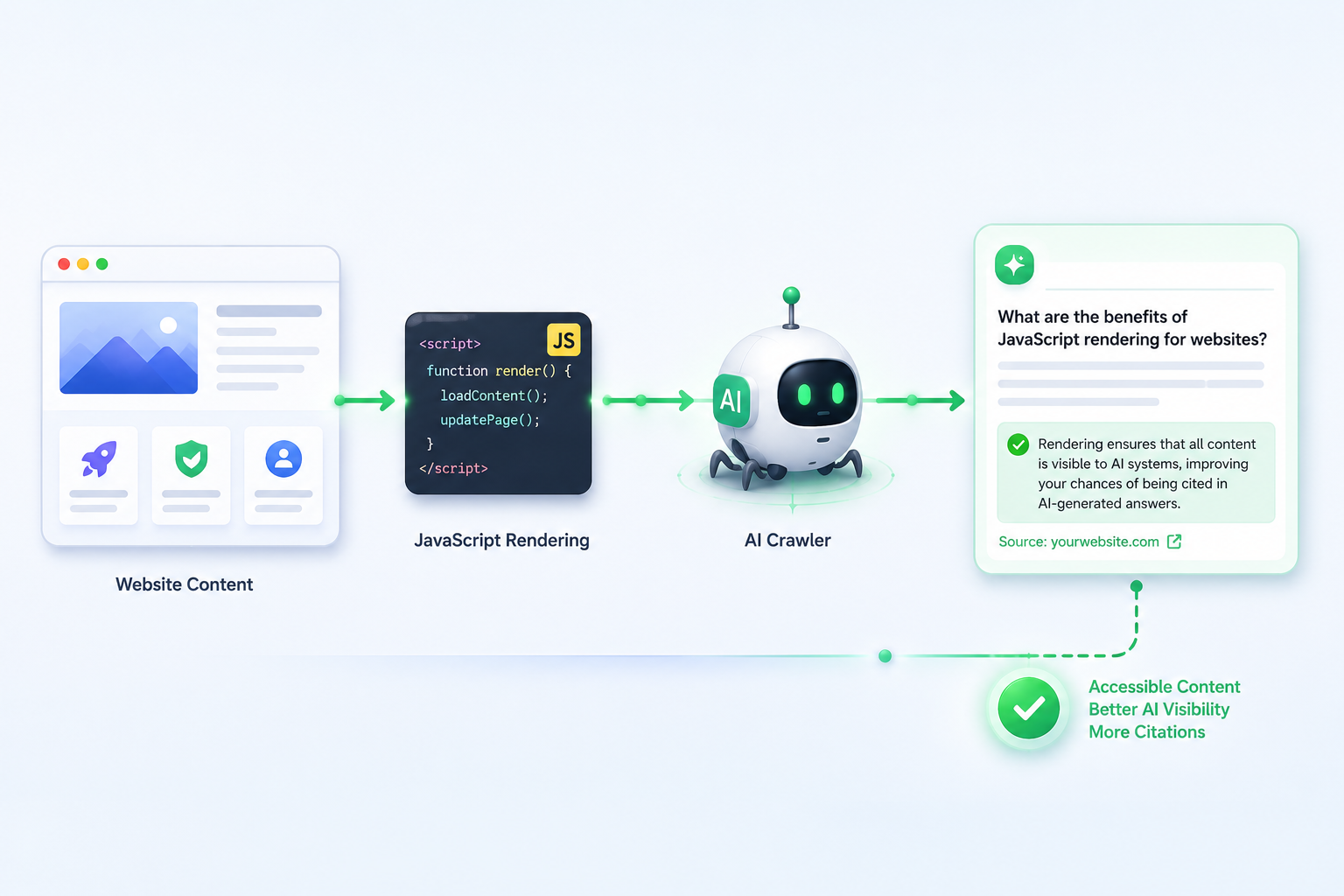
JavaScript rendering affects how easily AI systems can access and understand your content. Proper rendering helps create a strong technical foundation for AI visibility.
- JavaScript rendering is important for AEO because AI systems must access and understand your content before using it in AI-generated answers.
- Proper rendering helps AI crawlers understand your page topic, structure, and context, improving content accessibility.
- Techniques like SSR, prerendering, and clean HTML make it easier for AI crawlers to discover and process your content.
- Rendering is only the technical foundation. Content quality, relevance, structured data, and authority also influence AI citations
Frequently Asked Questions
-
Can AI crawlers access JavaScript-generated content?
Some AI crawlers can process JavaScript, but others may have limited rendering capabilities and miss dynamically loaded content.
-
Does JavaScript affect AI search visibility?
JavaScript does not directly hurt visibility, but poorly implemented rendering can prevent AI crawlers from accessing important content.
-
How do I make JavaScript content crawlable?
Use SSR, prerendering, semantic HTML, and keep important content available in the initial HTML.
-
Can I use JavaScript and still get AI citations?
Yes, as long as AI crawlers can access and understand your content.
-
Is SSR better than CSR for AI crawlers?
SSR generally makes content easier for crawlers to access because HTML is available before JavaScript execution.
Final Thoughts
JavaScript Rendering improves website functionality, but poor rendering practices can make content difficult for AI crawlers to access. Ensuring important information is available in the initial HTML, using SSR or prerendering when needed, and maintaining a clean technical structure can improve AI accessibility.
JavaScript Rendering is only the foundation. High-quality content, clear structure, and strong authority signals are also essential for better AI visibility and citations.

Shanya
Hi, I'm Shanya, an SEO and content writer at RankingBite. I specialize in creating SEO-focused content around search, AI, cybersecurity, and digital marketing. I enjoy turning complex topics into clear, useful content that helps brands build visibility, connect with their audience, and grow their digital presence.