AI search is changing how people discover information. Platforms like ChatGPT, Gemini, Perplexity, and Copilot generate answers by finding and understanding content from the web.
To help AI systems access important website information, a file called llms.txt was introduced. It works like a guide that highlights key pages and resources on a website.
llms.txt may improve content discovery for some AI agents, but no major AI platform has confirmed using it as a ranking or citation factor. This guide explains what it does, where it actually helps, and whether it’s worth your time.
What Is llms.txt?
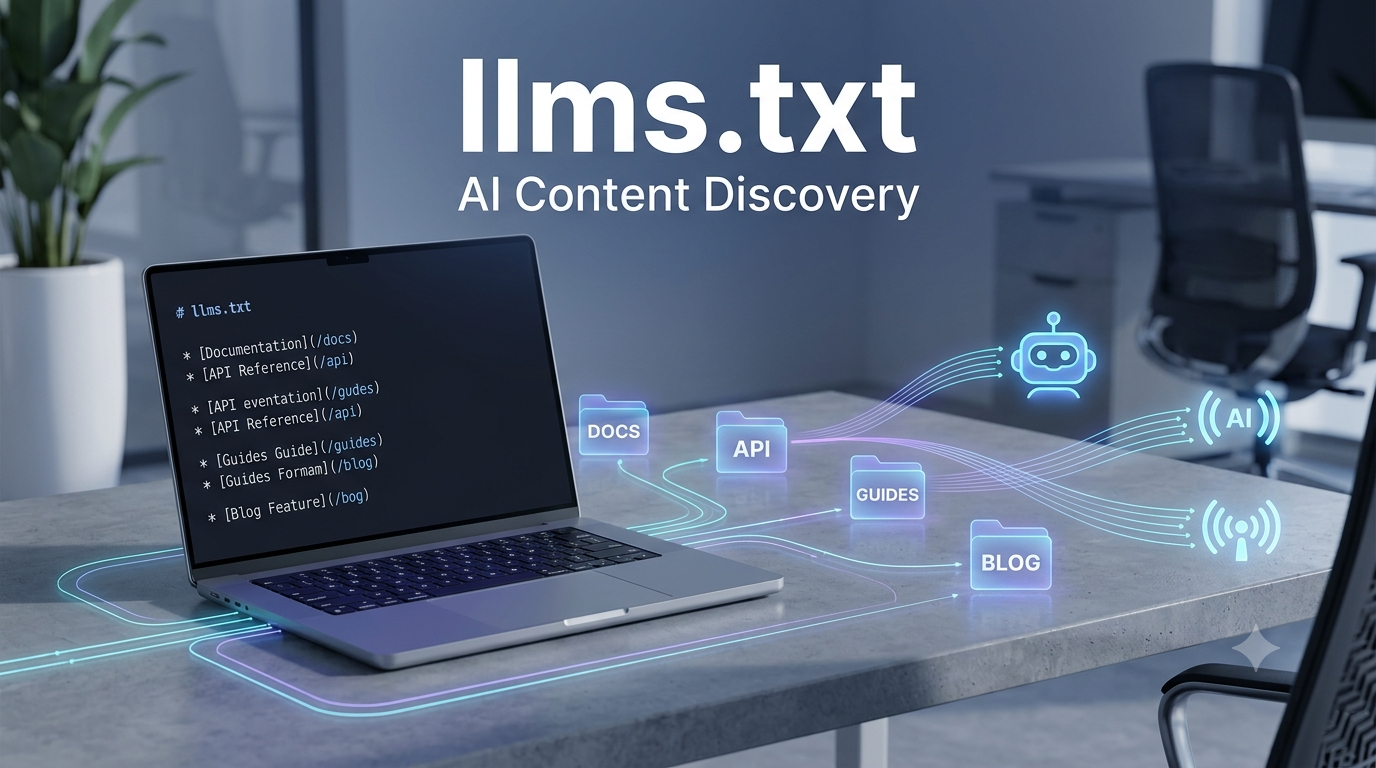
llms.txt is a proposed website file, written in Markdown, that lists a site’s key pages and resources with short descriptions ; a curated map for AI systems instead of a search engine.
Example :
text
# Documentation
/docs/getting-started
Quickstart guide
/docs/api
API reference
/docs/authentication
Authentication guide
/blog/ai-search
AI search documentation
It was proposed by Jeremy Howard (Answer.AI) in September 2024 as a community proposal for helping large language models discover important website content more efficiently.
It is not an official web standard and has not been adopted by standards bodies such as the W3C. Support remains voluntary, and no major AI platform has confirmed using it as a ranking or citation signal.
Llms.txt vs robots.txt vs sitemap.xml
| File | Purpose | Actually Used? |
|---|---|---|
| llms.txt | Guides AI systems to important content | Limited adoption |
| robots.txt | Controls crawler access | Widely used |
| sitemap.xml | Helps search engines discover pages | Widely used |
Unlike robots.txt and sitemap.xml, which are established web standards widely supported by search engines, llms.txt is still a community proposal with limited adoption across AI platforms.
Unlike robots.txt (which controls crawler access) or sitemap.xml (which helps search engines discover URLs), llms.txt is purely a content guide. It doesn’t touch crawling permissions, and it isn’t a confirmed ranking signal on any major platform.
Does llms.txt Actually Help You Get AI Citations?
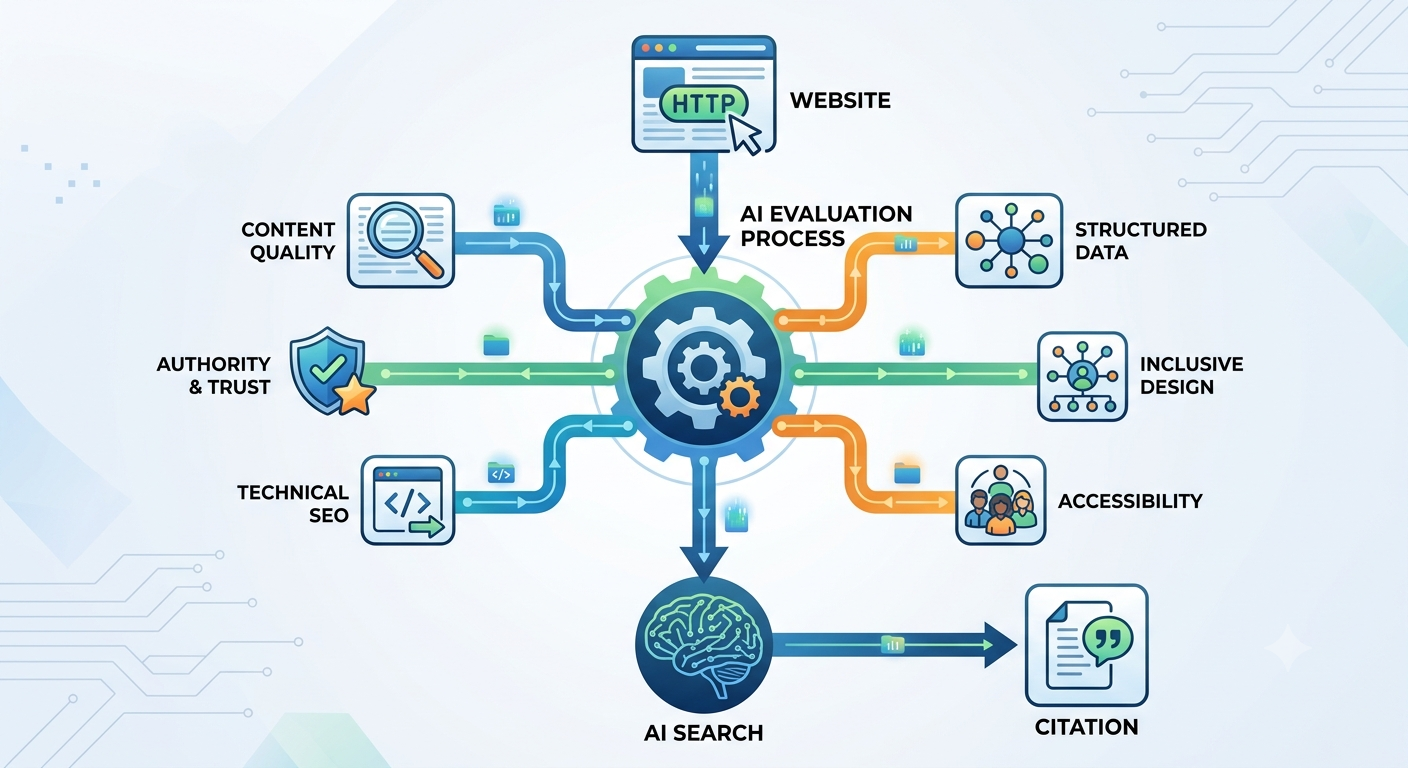
This is the one place the caveat matters, so here it is once, clearly: no major AI platform – OpenAI, Google, Anthropic, Perplexity, or Microsoft – has publicly confirmed that llms influences citations or rankings. AI systems still lean on content quality, authority, accessibility, and topical relevance to pick sources.
| AI Platform | Support Status | Notes |
|---|---|---|
| ChatGPT | Unconfirmed | No official statement on llms.txt use for citations |
| Google Gemini | Unconfirmed | Relies on existing web/search signals |
| Perplexity | Unconfirmed | No public evidence of it as a source signal |
| Claude | Unconfirmed | May access web content; llms.txt use unconfirmed |
| Microsoft Copilot | Unconfirmed | No official support announced |
What we do have is early, informal adoption data: sites that publish developer documentation report AI coding assistants occasionally referencing their llms.txt-linked pages when asked to summarize an API or SDK. That’s anecdotal, not proof of a ranking effect – but it does point to where the file has plausible utility, which is the more useful question than “does it boost citations.”
Where llms.txt Actually Earns Its Keep

Rather than a blanket recommendation, think of llms.txt as a tool suited to a specific shape of website: large, structured, machine-consulted content.
Developer documentation and API references:
This is the strongest use case. When a coding assistant is asked “how do I authenticate with the Stripe API,” it benefits from a clean, curated index rather than crawling a sprawling docs site with hundreds of near-duplicate pages. A well-maintained llms.txt can shortcut that discovery.
Example scenario:A SaaS company with more than 400 documentation pages creates an llms.txt file listing 15 canonical resources, including the quickstart guide, authentication guide, core API endpoints, SDK documentation, and changelog. This doesn’t prove that llms.txt caused the change. Better internal linking, improved documentation, or content updates could also explain the outcome.
Large knowledge bases and technical wikis :
The same principle applies to structured, reference-heavy websites where a curated index helps AI systems locate the authoritative version of important documentation.
Who should skip it entirely :
Small business websites, marketing sites, and blogs with only a small number of pages are unlikely to benefit. For these websites, investing in content quality, crawlability, and technical SEO will have a much greater impact.
How to Create an llms.txt File
- Choose your most important pages: such as documentation, API references, product guides, tutorials, and knowledge-base articles.
- List each URL with a short description : explaining what users or AI systems will find on that page.
- Create the file in Markdown format : using a clear, organized structure.
- Upload the file to your website’s root directory : so it is available at yourwebsite.com/llms.txt.
- Review and update it regularly : whenever important documentation or key resources change.
How to Check Whether Anything Is Fetching Your llms.txt
Monitor server logs and bot activity for requests to /llms from known AI crawler user agents. Pair this with AI-referral tracking in your analytics to see whether visibility changes after publishing.
Because adoption is still limited, you may see very few requests for your llms file. Low fetch activity doesn’t necessarily mean the file has no value. It may simply reflect that support across AI systems is still evolving.
Risks and Common Mistakes
- Using llms as a content dump: Include links and short descriptions rather than copying entire articles into the file.
- Publishing and forgetting it: Remove outdated URLs and keep descriptions accurate as your documentation evolves.
- Treating it as a replacement for robots.txt or sitemap.xml: llms file doesn’t control crawling or indexing. It complements these files rather than replacing them.
- Including private information: Remember that llms is publicly accessible. Never include confidential or unpublished resources.
Should You Add llms.txt?
Not every website needs an llms file. Whether it’s worth adding depends on the type of content you publish and your site’s structure. Use the recommendations below to decide if llms file is a worthwhile addition or if your efforts are better spent on content quality and technical SEO.
| Your Site Is | Recommendation |
|---|---|
| Developer docs, API reference, or technical knowledge base | Worth adding. Low effort with a plausible upside for AI agent discovery. |
| Large content site with structured resources | Worth testing. Add llms.txt, monitor logs, but don’t expect dramatic results. |
| Small business site, blog, or marketing site | Skip it for now. Focus on content quality and technical SEO first. |
| Any site expecting it to boost citations directly | Reset expectations. No AI platform confirms this. Treat llms.txt as a discovery aid, not a ranking factor. |
FAQs
-
Does having an llms.txt file guarantee AI visibility?
No. It is just a roadmap. If your core content quality and technical SEO are weak, AI models won’t cite you.
-
Can it block AI scraping?
No. It is purely informational. To block AI crawlers, you must use robots.txt or block their user-agents.
-
Where does it go?
In the root directory of your website (e.g., [example.com/llms.txt](https://example.com/llms.txt)), just like a sitemap.
-
llms.txt vs. Sitemap: What’s the difference?
A sitemap is a machine-readable XML list of URLs for indexing. An llms file is a Markdown summary meant to give LLMs quick
context.
-
Should I create one right now?
Only if you run a large documentation or information-heavy site. For standard blogs or business websites, focus on core SEO instead.
Final Verdict
llms.txt is not a confirmed AI ranking or citation signal, and no major AI platform has officially stated that it improves AI visibility.
Where it appears most useful is for large, structured websites, especially developer documentation, API references, technical knowledge bases, and extensive documentation portals, where a curated index can make important resources easier for AI systems to discover.
For most business websites, blogs, and marketing sites, your time is better spent improving content quality, technical SEO, structured data, entity signals, and internal linking. Treat llms file as a lightweight supporting file rather than a shortcut to AI citations.

Shanya
Hi, I'm Shanya, an SEO and content writer at RankingBite. I specialize in creating SEO-focused content around search, AI, cybersecurity, and digital marketing. I enjoy turning complex topics into clear, useful content that helps brands build visibility, connect with their audience, and grow their digital presence.