Local search no longer runs through one channel. It runs through three.
A local query today can surface a Map Pack, an AI Overview, or an AI Mode-style conversational answer. Each pulls from different signals and shows a different amount of information.
This shift lands differently for local and multi-location brands than it does elsewhere. These businesses have already invested years into Google Business Profiles, review generation, and citation building. That same investment is now being read and reinterpreted by AI systems across all three surfaces at once, not just one.
This piece breaks down where these surfaces intersect, which local signals still carry weight, where the real risks sit, and the specific moves that work across the Map Pack, AI Overviews, and AI Mode at once.
Key Takeaways
- Local visibility now spans three surfaces: the Map Pack, AI Overviews, and AI Mode.
- Simple, transactional queries still favor the Map Pack. Informational and hybrid queries increasingly route to AI Overviews.
- The fundamentals haven’t changed. GBP accuracy, review depth, and NAP consistency still drive visibility across all three surfaces.
- AI-generated hallucinations are a real risk for local brands and need active monitoring.
- Six concrete actions, in order of impact, are covered below.
Where AI Overviews and the Map Pack Now Intersect
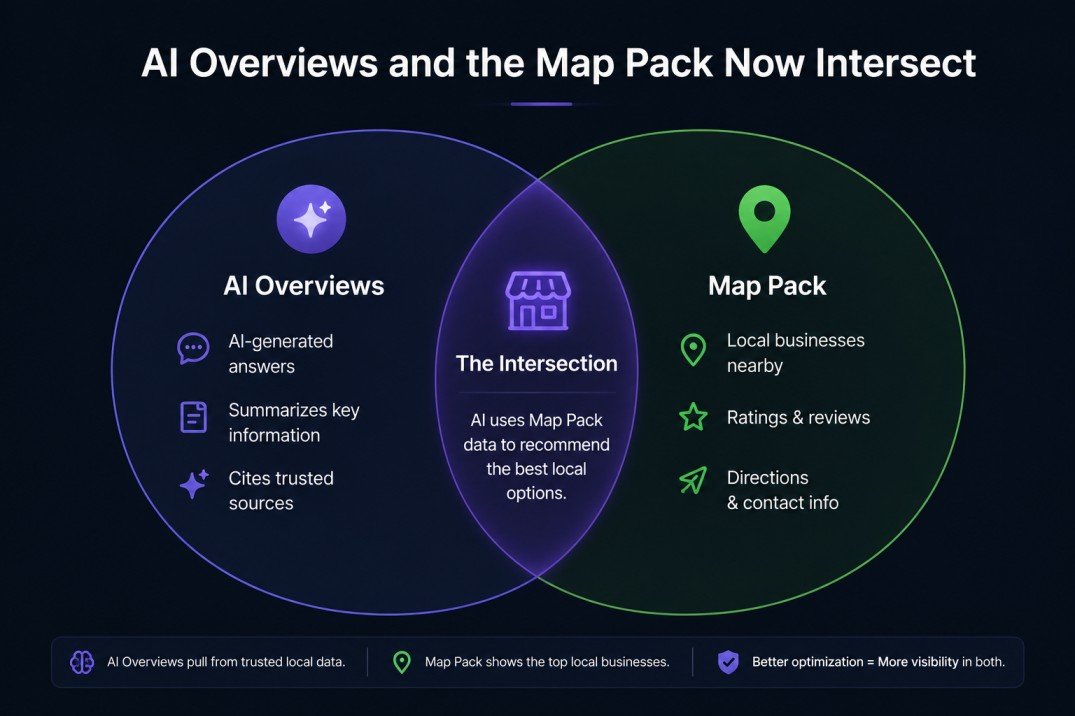
Local search today runs through three distinct surfaces, not one. The Map Pack is Google’s traditional three-listing local result. An AI Overview is a generated summary citing multiple sources. AI Mode is a conversational interface that answers full questions instead of matching keywords.
Each surface pulls from different signals and shows a different depth of information, and a single local query can trigger any one of them, or a combination.
The Map Pack
The Map Pack is the set of three local business listings, plus a map, that Google shows for local-intent queries. It’s built almost entirely from Google Business Profile data.
It has been the default local search result for over a decade, and it still is for straightforward searches.
Example: A search like “plumber in Jaipur” or “coffee shop near me” still reliably triggers this format.
AI Overviews
An AI Overview is a generated summary that appears above or alongside traditional results. For local queries, it often cites a mix of business websites, review platforms, and third-party mentions.
Unlike the Map Pack, an AI Overview isn’t limited to Google Business Profile data. It draws on whatever sources it judges credible for the question asked.
Example: A search like “how much does a wedding photographer cost in Jaipur” is more likely to trigger this format than a Map Pack, since it needs a synthesized answer rather than a simple listing.
AI Mode and Ask Maps
AI Mode, and Google’s Ask Maps feature inside Google Maps, let users ask full, natural-language questions instead of short keyword searches.
A user might ask something like “where can my parents easily walk to this weekend,” and get a reasoned answer rather than a list of pins. This is a meaningfully different interaction than a typical local search.
These three surfaces don’t replace each other cleanly. They coexist, and which one a searcher sees depends heavily on the type of question being asked.
Local Search by the Numbers
The split between these surfaces isn’t random. It follows query intent closely. Simple, transactional local queries, like searching for a specific business type in a specific place, still trigger the Map Pack the vast majority of the time.
Informational and hybrid-intent queries behave differently. Questions that ask about cost, duration, or comparisons are far more likely to trigger an AI Overview instead of, or alongside, the Map Pack. The pattern holds across industries and locations. A query’s intent, not the searcher’s city, is the stronger predictor of which surface shows up.
Which Local Signals Still Matter
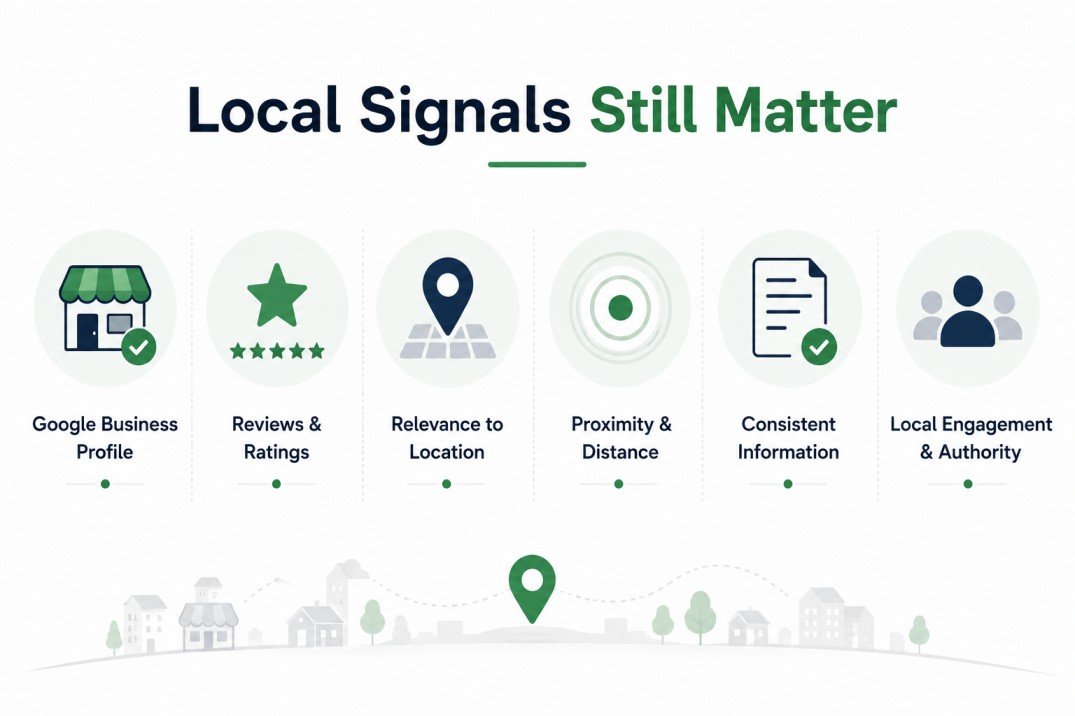
Despite the new surfaces, the underlying local ranking signals haven’t been replaced. They’ve been reweighted and layered under AI interpretation.
Proximity to the searcher remains the largest single factor, and it’s the one thing a business can’t directly control.
Beyond that, Google Business Profile completeness, review signals, on-page local content, citation consistency, and backlink quality all still carry real weight. Every one of these is within a business’s control.
| Signal | Relative Weight | Controllable? |
|---|---|---|
| Proximity to Searcher | Largest Single Factor | No |
| Google Business Profile Signals | High | Yes |
| Review Signals (Volume, Recency, Sentiment) | Moderate-High | Yes |
| On-Page Local Content and Schema | Moderate | Yes |
| Citation Consistency (NAP) | Moderate | Yes |
| Behavioral Signals (Calls, Clicks) | Lower | Partially |
| Local Backlink Quality | Lower | Yes |
This table matters because it reframes the panic some brands feel about AI Overviews. The signals that earned visibility before still do. AI systems are reading the same underlying data, just packaging it differently.
The Risk Layer: AI Hallucinations in Local Results
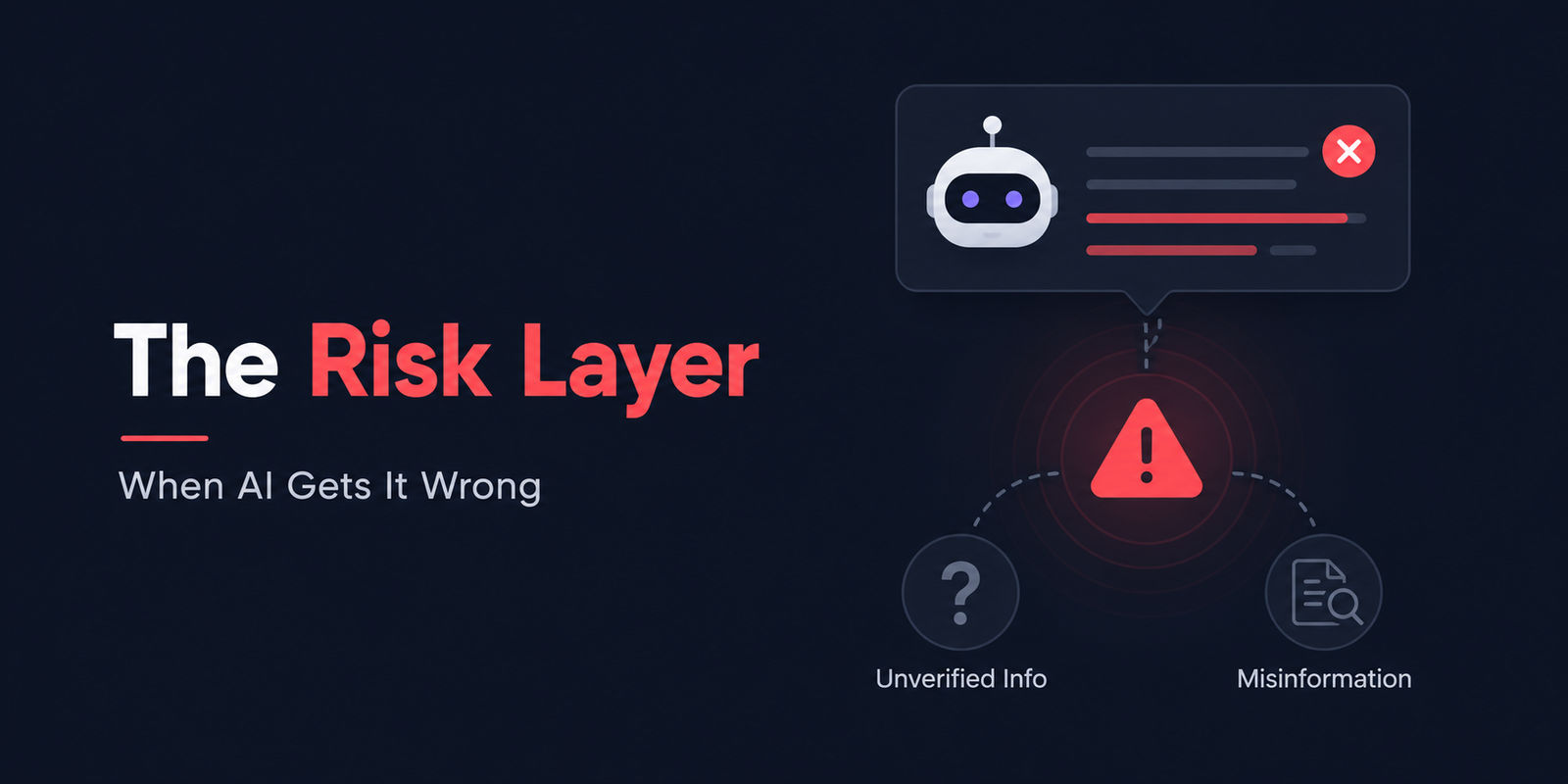
There’s a real downside to AI-generated local answers. AI Overviews can state something about a business that simply isn’t true.
Example: An AI Overview might claim a restaurant is permanently closed when it has only changed its hours, or attribute a negative review to the wrong location of a multi-location brand. Neither error requires bad intent from Google. It’s a byproduct of synthesizing information at scale.
This isn’t a rare edge case. A meaningful share of consumers don’t rigorously fact-check AI-generated claims before deciding where to spend money, which means a hallucinated detail can cost a business real customers.
Monitoring what AI systems are saying about a brand has become part of local reputation management, not a separate task from it.
Practical Moves for Local and Multi-Location Brands
These six actions are listed in rough order of impact. All of them support visibility across the Map Pack, AI Overviews, and AI Mode at once.
Complete and Categorize Your GBP
Choose the most specific category available, not the broadest one. Fill in every field: hours, services, attributes, and a full business description. An incomplete profile gives AI systems less to work with, and less confidence to recommend the business at all.
Write Your Own GBP Q&A
Add the most common customer questions directly, in plain language, naming the service and location. This section is frequently pulled straight into AI-generated answers. Leaving this section empty means letting strangers write it instead.
Build Review Depth, Not Just Star Rating
A review that names the specific service and location carries more weight with AI systems than a plain five-star rating with no detail. Encourage detail when asking for reviews. Timing the request right after service, while the experience is fresh, tends to produce more specific feedback.
Keep NAP Identical Across Every Location
Name, address, and phone number need to match exactly across the website, the GBP, and every directory listing. This matters even more for multi-location brands managing several profiles at once.
Any mismatch makes it harder for an AI system to confirm it’s looking at the same business.
Add LocalBusiness and FAQ Schema
Structured data helps both traditional rankings and AI systems parse who a business is and what it answers. This is technical work, and it’s worth doing correctly rather than skipping it.
Structure Content Around Real Spoken Questions
Write FAQs and service headings as actual questions people ask, not generic labels. A heading like How much does a roof repair cost performs differently than a heading that just says Pricing. This format is exactly what AI Overviews and voice search are built to extract.
Map Pack vs. AI Overview vs. AI Mode, Side by Side
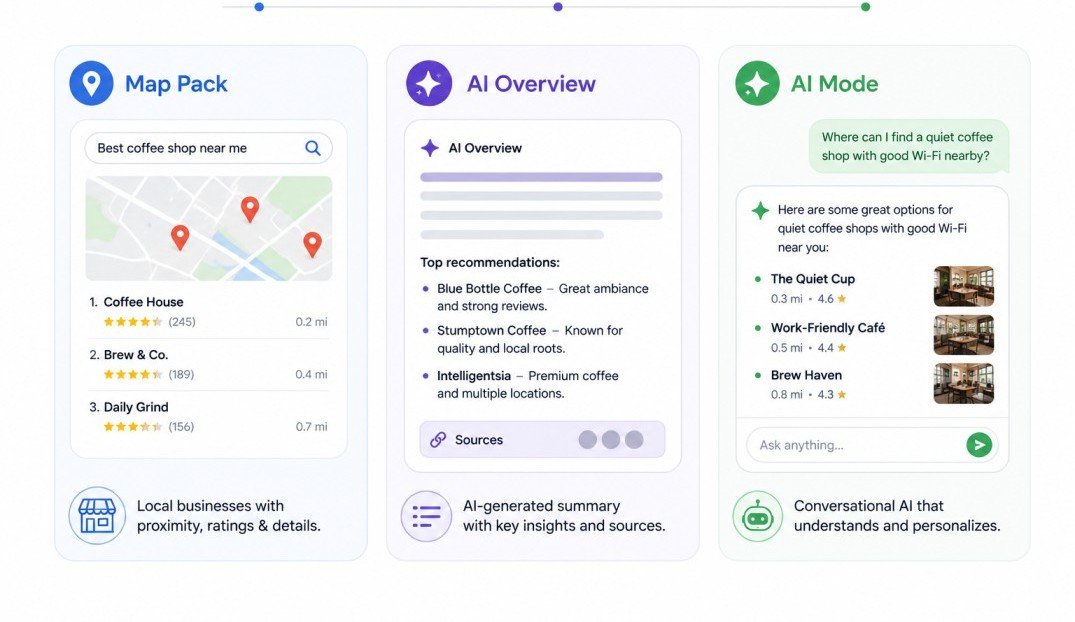
| Mechanic | Map Pack | AI Overview | AI Mode / Ask Maps |
|---|---|---|---|
| Source Count | GBP data, single business per listing | Multiple sources, synthesized | Multiple sources, conversational |
| Trigger | Simple, transactional queries | Informational, hybrid-intent queries | Complex, natural-language questions |
| What It Shows | Three listings plus a map | Generated summary with citations | Reasoned, conversational recommendation |
| How to Influence It | GBP optimization, proximity, reviews | Broad digital footprint, citation-worthy content | Same underlying signals, read conversationally |
Tracking Local AI Visibility
Monitoring how a business appears across these three surfaces now matters as much as tracking traditional rankings. A business can lose visibility in one surface while gaining it in another, and without tracking all three, that shift goes unnoticed.
A few categories of monitoring matter here.
Traffic and behavior signals. Watch for drops in impressions, clicks, or average position in Search Console. A dip that coincides with a rise in AI Overview appearances for the same queries points to visibility shifting, not disappearing.
Direct AI visibility tracking. Beyond traditional analytics, it’s worth periodically checking how a business is actually described when AI tools are asked about it directly, across the different platforms customers might use.
Rank tracking that still includes local rank. Traditional local and organic rank tracking remains useful for diagnosing traffic changes, even as AI surfaces grow. A dropped local rank still often explains a traffic dip better than any AI-related theory does.
Review and mention monitoring. Since AI Overviews draw heavily on review content and third-party mentions, tracking what’s being said about a business across review platforms functions as a form of AI visibility monitoring too, not just reputation management.
This is a deep enough topic to deserve its own dedicated audit process rather than a full breakdown here. If you’ve already built out an AI-visibility audit or a coverage-gap framework, that same process applies directly to the local vertical, with these four categories layered on top.
FAQ
1.Does losing Map Pack visibility mean losing AI Overview visibility too?
Not necessarily. The two draw on overlapping but distinct signals, so a business can lose one and retain the other.
2.Do multi-location brands need a separate strategy for each location?
Each location needs its own accurate, complete GBP and consistent NAP, but the underlying strategy, structured content, real reviews, consistent data, applies uniformly across locations.
3.Can a business appear in an AI Overview without ranking in the Map Pack?
Yes. AI Overviews pull from a wider set of sources than Google Business Profile data alone, so strong third-party mentions and reviews can earn citation even without a Map Pack listing.
4.How long does it take to see results from these changes?
Google Business Profile improvements can show results within a few weeks. Broader signals like backlinks and citation consistency typically take longer to shift visibility.
Conclusion
Local visibility used to mean one thing: ranking in the Map Pack. It now means earning a place across three separate surfaces at once.
The fundamentals haven’t changed. What’s changed is how many places a business needs to show up correctly, and how much less forgiving the system is of an incomplete or inconsistent profile.
Brands that get the basics right, an accurate profile, specific reviews, consistent data, structured content, are positioned for all three surfaces at once, not just one of them.

Farhan khan
Farhan is an SEO writer covering content strategy, search visibility, and brand discovery across search engines and AI platforms.