Why AI Cites Third-Party Sites 6x More Than Your Own Domain
AI answer engines cite third-party websites more often than brand-owned domains because independent sources provide stronger external validation. Instead of relying on a company’s…
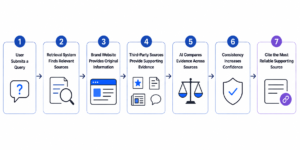
AI answer engines cite third-party websites more often than brand-owned domains because independent sources provide stronger external validation. Instead of relying on a company’s own claims, they compare information across multiple trusted sources to determine whether it is accurate, consistent, and widely recognized.
This does not mean your website is unimportant. Brand owned content establishes the original facts, while third-party sources reinforce those facts with external evidence. Together, they increase the confidence AI has in selecting a source for citation.
A June 2026 study of 167,551 URL-grounded citations across 128 brands, 12 European markets, and 13 languages found that 85.7% of citations pointed to sites the brand did not own, against 14.3%.
The Trust Gap Between First-Party and Independent Sources
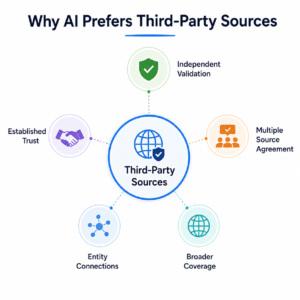
AI answer engines rely on both brand-owned and third-party content, but they do not treat them equally. Brand websites provide original information, while independent sources help confirm whether that information is accurate and widely recognized. This difference creates a trust gap that influences which sources AI is more likely to cite.
AI Expects Brands to Promote Themselves
Brand websites are designed to present their products, services, and expertise from the company’s perspective. While they are the authoritative source for first-party information, AI recognizes that self-published content is naturally promotional. As a result, it looks beyond the brand’s own website before citing a claim.
Independent Sources Reduce Bias
Independent sources reduce bias by providing information that is not controlled by the brand. News publications, research organizations, industry blogs, review platforms, and government websites can validate or challenge a company’s claims from an external perspective, giving AI more balanced evidence to evaluate.
Why External Validation Matters
External validation strengthens confidence by showing that the same information is supported across multiple trusted sources. When independent publications consistently report similar facts, AI has stronger evidence that the information is reliable, increasing the likelihood that it will be cited in generated responses.
Frequently Asked Questions
-
Why doesn’t AI always cite the original source?
AI may not always cite the original source because it evaluates multiple factors, including relevance, clarity, authority, and how well a source answers the query.
-
Can my own website still be cited?
Yes. Your website can be cited when it provides clear, reliable, and unique information that directly answers a user’s question.
-
Do backlinks influence AI citations?
Backlinks do not directly determine whether AI cites a page. However, they often help content earn greater visibility, authority, and independent mentions, increasing the likelihood that it is retrieved and corroborated by AI systems.
-
How does digital PR improve AI visibility?
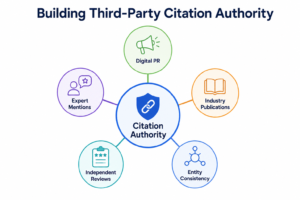
Digital PR improves AI visibility by earning mentions and citations from trusted third-party sources, helping AI systems recognize your brand’s authority and expertise.

kashish
Passionate about SEO, AI search, and content marketing, sharing practical insights on search trends, AI visibility, and digital growth.