SEO Strategy
Category mapping prioritised by commercial value.
Full-scope SEO programme
SEO strategy, technical foundations, content, link building and AI visibility for a consumer GPS brand in a competitive category.
Family1st is a consumer GPS tracking brand competing in a crowded category against the likes of SpaceHawk GPS, BrickHouse Security, Spytec, Optimus Tracker and OneStepGPS. The engagement began in April 2025 as a full-scope SEO programme: strategy, technical foundations, content, link building and AI visibility, with the goal of scaling qualified organic traffic and the authority that both search engines and AI answer engines reward.
Over the nine-month engagement (April to December 2025), Family1st’s organic search performance scaled sharply. Monthly organic traffic roughly tripled, from around 20,000 at the April kickoff to 63,022 by December 2025, peaking near 80,000 during the autumn. All figures from Ahrefs.
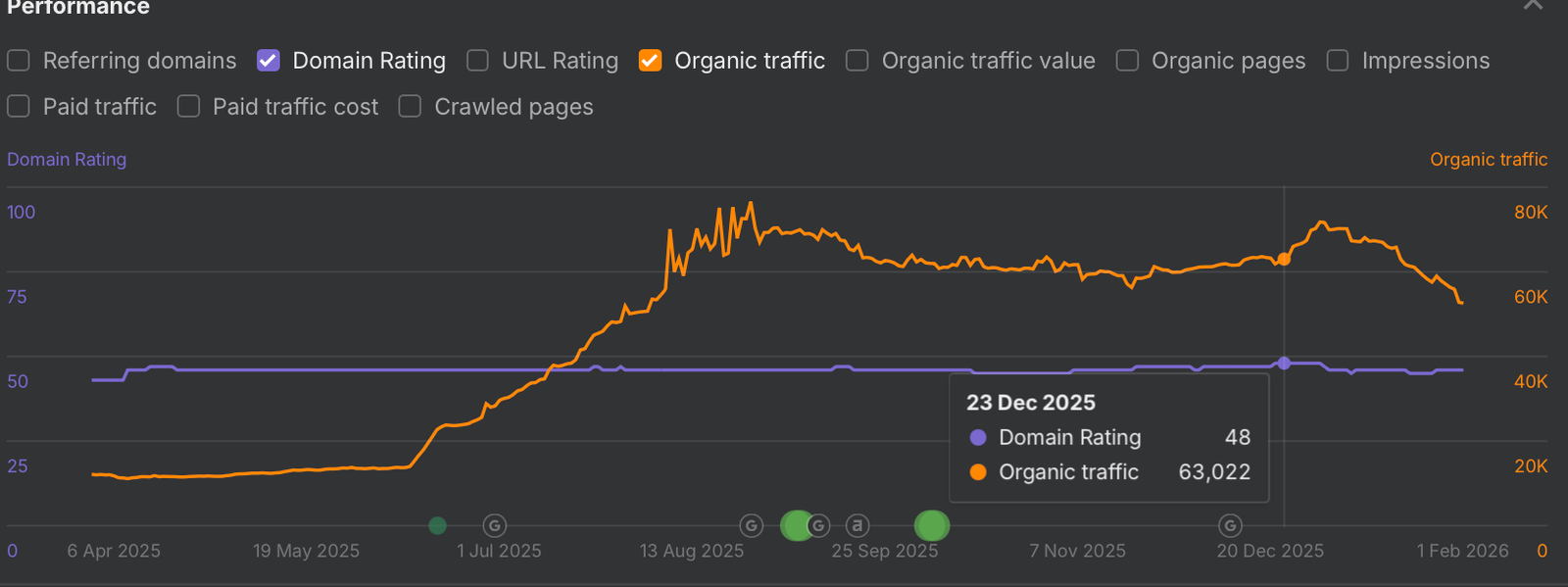
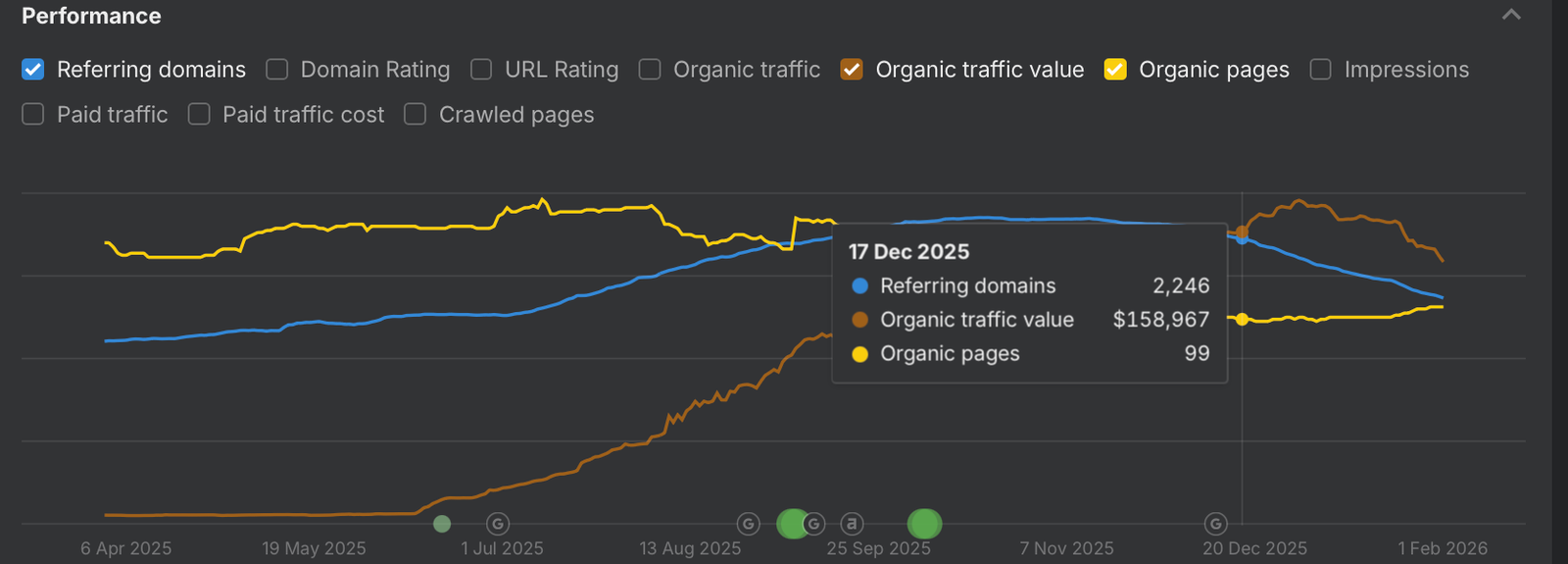
Authority grew in step. Referring domains rose to 2,246 and monthly organic traffic value reached $158,967 by mid-December, the compounding result of the link building and content programme.
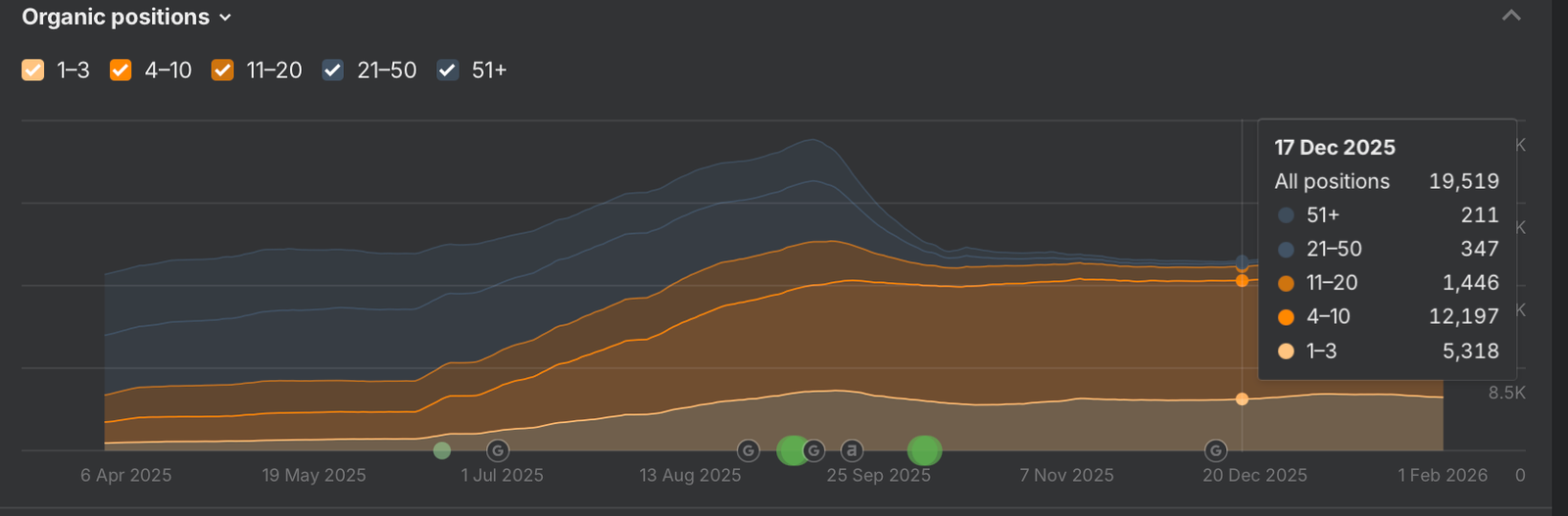
The ranking footprint expanded across every position band. By mid-December the site held around 19,500 organic positions, including more than 5,300 keywords ranking in the top three.
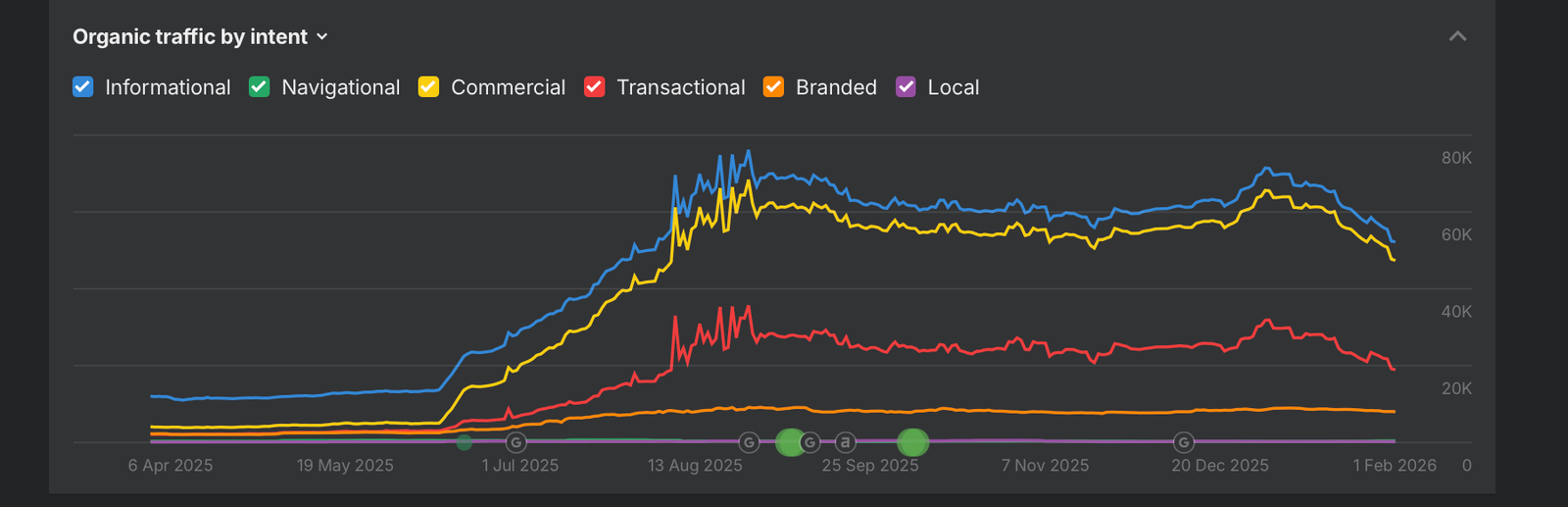
Growth was broad-based across search intent, with informational and commercial demand scaling together rather than relying on a single page or query.
About these figures. This case study covers the April to December 2025 engagement, and all figures are as of the end of that engagement (December 2025), sourced from Ahrefs. Performance after the engagement closed is outside its scope.
Family1st shows what happens when the whole stack moves together in a competitive consumer category: technical foundations unlock the ceiling, content captures the buyer journey, and editorial authority compounds behind both. Multi-intent growth rather than a single-page spike is the signal that the programme, not one lucky page, is doing the work.
Category mapping prioritised by commercial value.
Fixes shipped, not a findings document.
Comparison and buyer-intent pages.
Editorial acquisition only.
Relevance-led, not volume-led.
Recommendation, not just ranking.