SEO Strategy
Category mapping prioritised by commercial value.
Full-scope SEO programme
SEO strategy, technical foundations, content, link building and AI visibility for a consumer GPS-tracker ecommerce brand, built from a low base.
GPSTracker247 is a consumer GPS-tracker ecommerce brand competing in a crowded category against the likes of LightningGPS, Spytec, Family1st, Tracki and AngelSense. The engagement began in March 2025 with organic search close to a standing start, and ran as a full-scope SEO programme: strategy, technical foundations, content, link building and AI visibility, with the goal of building qualified organic traffic and the authority that both search engines and AI answer engines reward.
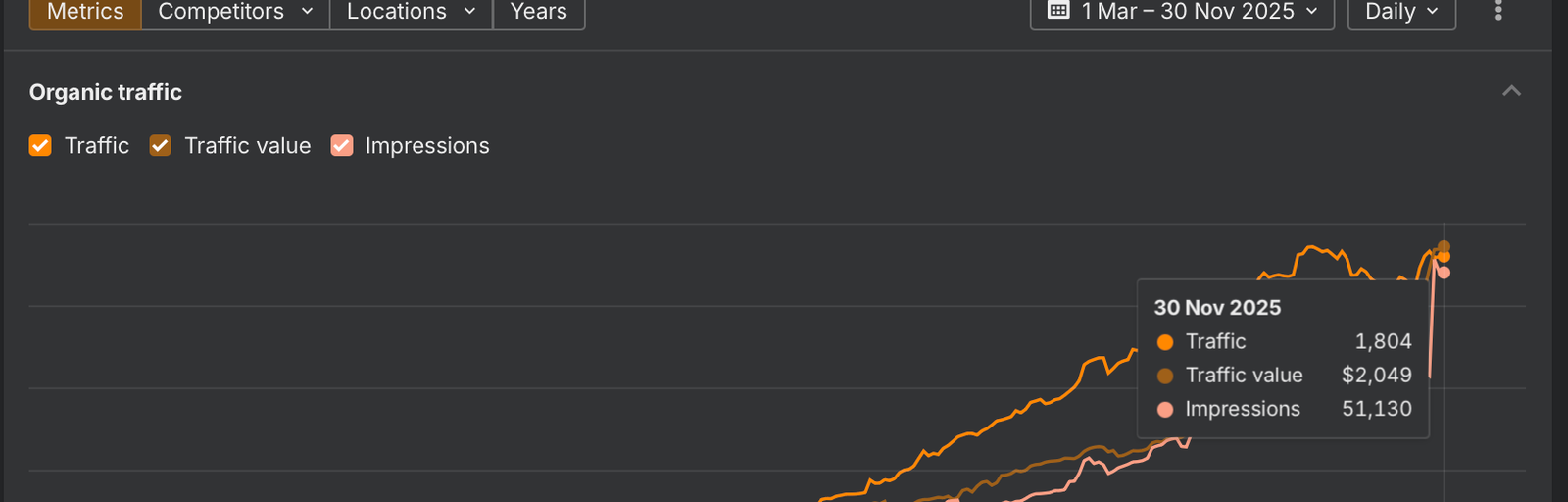
Across the nine-month engagement (March to November 2025), GPSTracker247’s organic search grew from close to a standing start. Monthly organic traffic reached 1,804 by 30 November 2025, worth $2,049 in monthly organic traffic value, with 51,130 monthly impressions. All figures from Ahrefs.
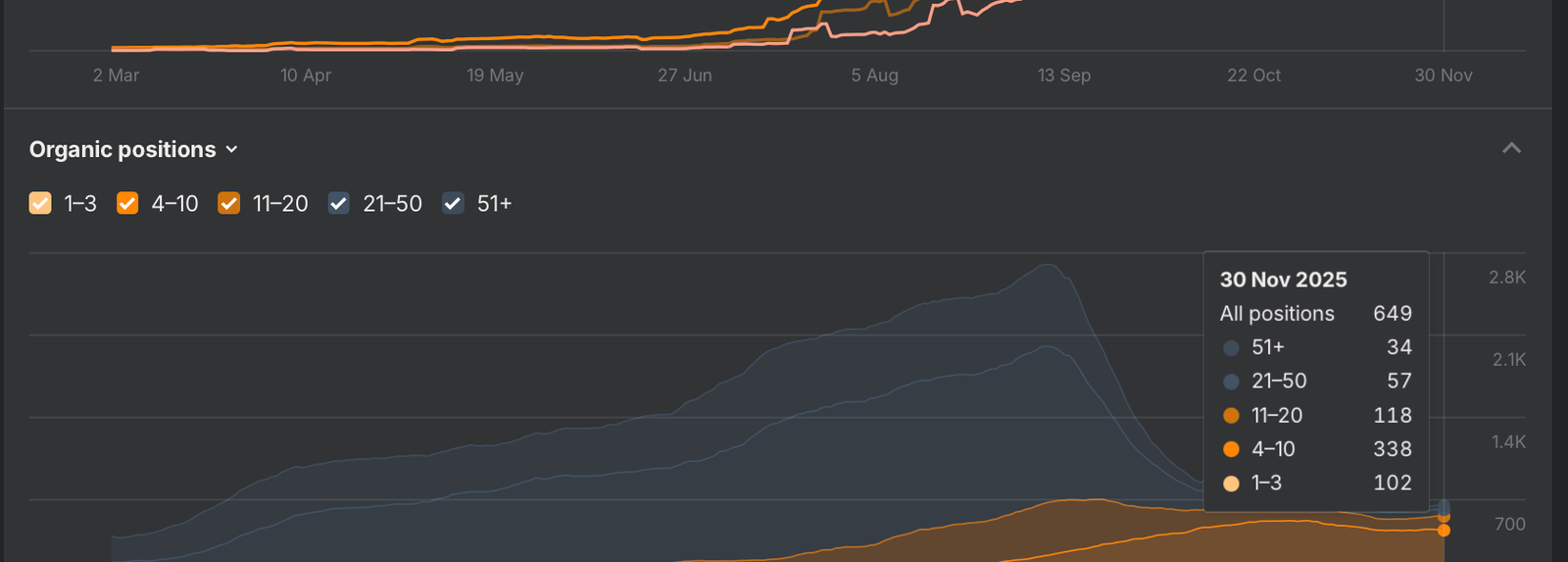
The ranking footprint was built from the ground up, reaching 649 organic positions by the end of the engagement, including 102 keywords ranking in the top three.
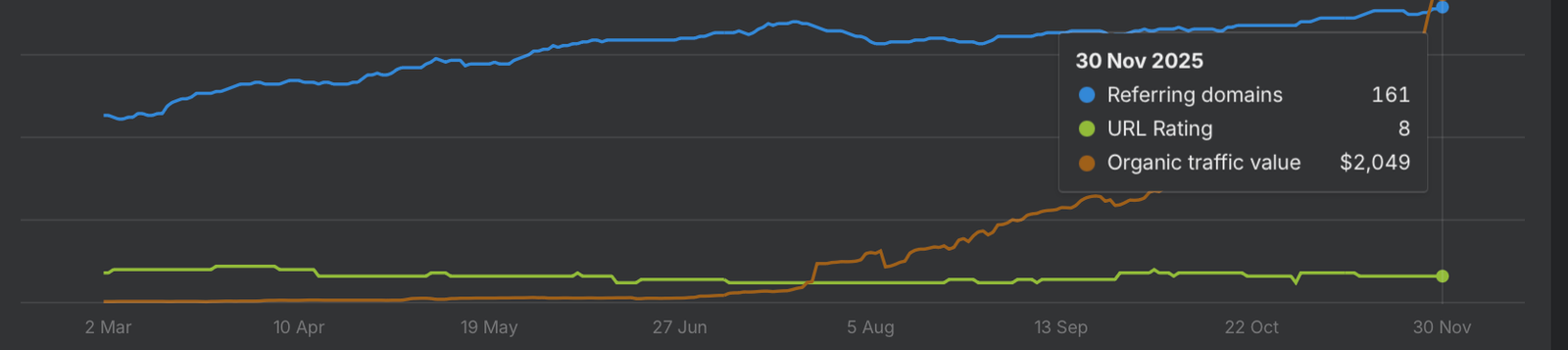
Authority grew alongside rankings. Referring domains climbed to 161 through editorial, manual-review-safe placements, and organic traffic value rose in step to $2,049 per month.
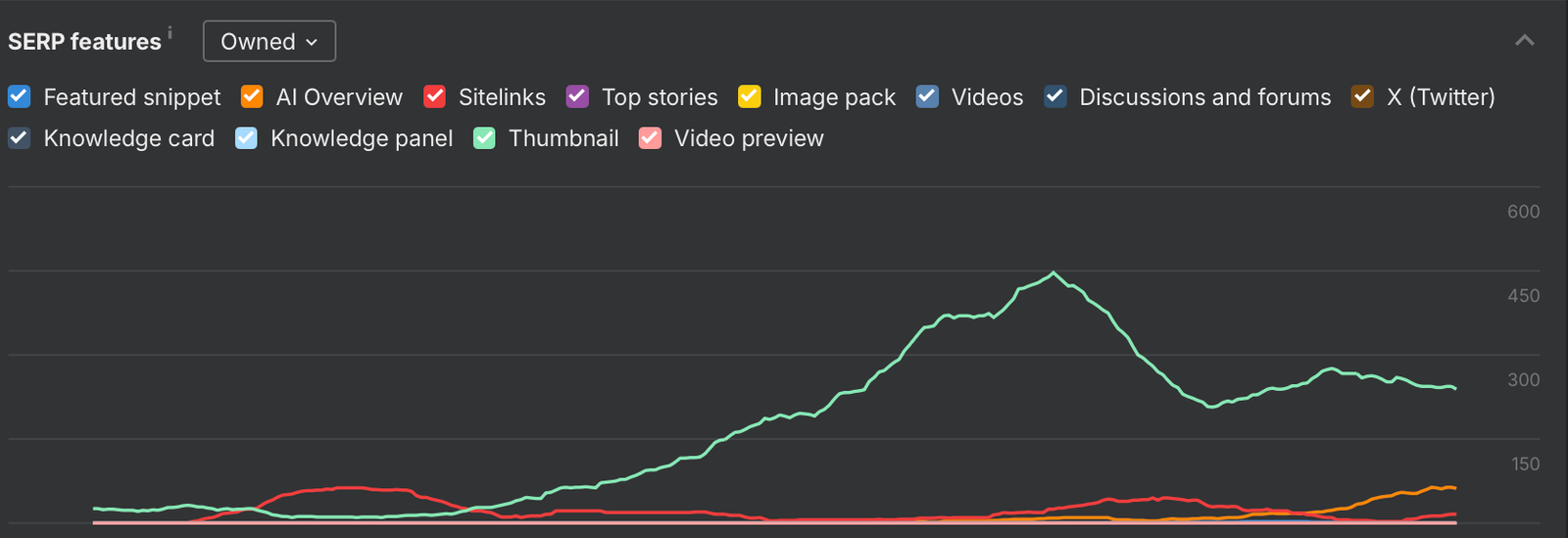
The programme also expanded GPSTracker247’s presence in SERP features, including AI Overviews, featured snippets and rich results, the surfaces that increasingly decide who gets seen and cited.
About these figures. This case study covers the March to November 2025 engagement, and all figures are as of the end of that engagement (30 November 2025), sourced from Ahrefs. Performance after the engagement closed is outside its scope.
Building from close to a standing start is the clearest test of whether the layers work in order. There is no existing authority to mask a weak foundation, so the sequence, technical first, then content, then corroboration, shows up in the results rather than being assumed.
Category mapping prioritised by commercial value.
Fixes shipped, not a findings document.
Comparison and buyer-intent pages.
Editorial acquisition only.
Relevance-led, not volume-led.
Recommendation, not just ranking.