The Future of Search: Agentic AI, AI Shopping, and What Comes After Chat
Search is evolving beyond helping people find information. AI can now answer questions, compare options, and assist with completing real-world tasks. As these capabilities…
Search is evolving beyond helping people find information. AI can now answer questions, compare options, and assist with completing real-world tasks. As these capabilities improve, search is becoming less about retrieving information and more about helping users achieve their goals.
This shift is changing how people research products, evaluate services, and make purchasing decisions. It is also changing what businesses need to optimize for. Instead of focusing only on search visibility, businesses will increasingly need to provide information that AI can understand, verify, and confidently use when making recommendations.
Search Is Evolving Beyond Information Retrieval
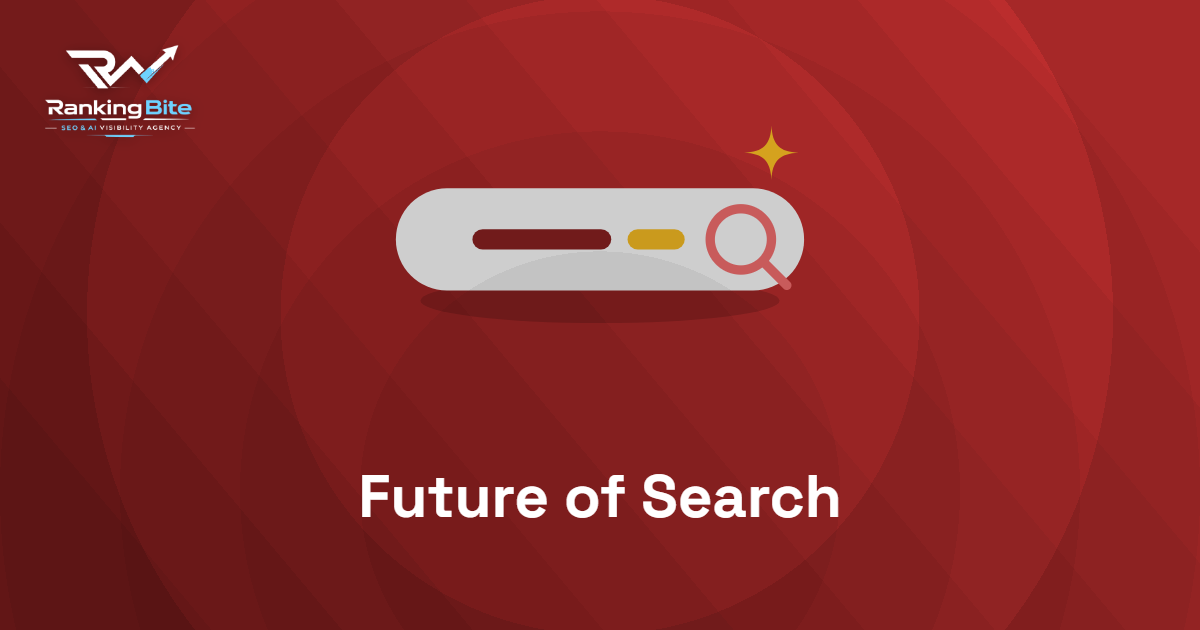
Search is no longer limited to retrieving information. It has evolved from helping users find relevant web pages to generating direct answers and, more recently, assisting with real-world tasks. Each stage reflects a broader role for search, moving from information discovery to action.
Traditional search: focused on helping users discover information by returning a list of relevant websites. Users had to visit multiple pages, compare information, and make decisions themselves.
Generative search: reduced that effort by analyzing information from multiple sources and presenting it as a single, conversational answer. Instead of searching across many websites, users could start with an AI-generated summary.
Agentic search :builds on this capability by helping users move beyond research. Rather than only answering questions, AI can assist with planning, comparing options, organizing information, and completing parts of multi-step tasks with the user’s approval.
From Search Results to Direct Answers
Search results have become more conversational. Instead of reviewing several websites to answer a question, users can now receive a summarized response that brings together information from multiple sources.
This reduces the time spent gathering information and allows users to focus on understanding the topic rather than searching for it. Websites still play an important role, but AI increasingly acts as the first point of interaction between users and online information.
From Direct Answers to Task Completion
The next step in search is helping users complete tasks rather than simply providing information.
For example, instead of asking:
What is the best CRM for a growing business?
Users can ask:
Compare three CRM platforms for a 100-person SaaS company and recommend the best option based on pricing, integrations, and scalability.
Rather than returning information alone, AI can organize research, compare alternatives, and present a recommendation that helps users make faster decisions.
What Is Agentic AI?
Agentic AI refers to AI systems that can plan, reason, and carry out multi-step tasks on behalf of a user. Unlike traditional chat-based AI, which primarily responds to prompts, agentic AI is designed to work toward a goal by coordinating multiple actions while keeping the user’s objective in mind.
Although many agentic systems still require user approval before completing important actions, they represent a shift from answering questions to helping users accomplish tasks.
How Agentic AI Differs from Chat-Based AI
Chat-based AI is designed to answer questions and generate content within a conversation. Agentic AI extends those capabilities by planning workflows, using external tools, and completing tasks across multiple steps.
| Capability | Chat-Based AI | Agentic AI |
|---|---|---|
| Primary Role | Answer questions | Complete tasks |
| Planning | Limited | Multi-step planning |
| Tool Use | Available for individual tasks | Coordinates multiple tools |
| Workflow | Prompt by prompt | Goal-oriented execution |
| User Involvement | Frequent guidance | Greater autonomy with user approval |
Examples of Agentic Workflows
Agentic AI is beginning to support workflows that traditionally required multiple manual steps. Depending on the platform, it can assist with:
- Planning business travel based on schedules and preferences.
- Researching and comparing software vendors.
- Preparing reports by gathering information from multiple sources.
- Organizing meetings and coordinating calendars.
Many of these capabilities are still evolving. For sensitive actions such as purchases, payments, or bookings, most platforms continue to require explicit user confirmation before completing the task.
What Is Agentic Commerce?
Agentic commerce is the next stage of online shopping, where AI does more than recommend products. It can research options, compare products, evaluate reviews, and complete purchases on a user’s behalf with the user’s approval. Instead of helping people find what they need, AI helps them achieve their buying goal.
Unlike traditional e-commerce, where customers perform every step themselves, agentic commerce reduces the effort involved in researching and purchasing. Powered by Agentic AI, it turns AI from a shopping assistant into an active participant in the buying process.
How AI Is Changing Product Discovery
Product discovery is becoming less dependent on keywords and more focused on user needs.
Instead of searching for multiple product names or browsing dozens of websites, users can describe what they are looking for in natural language. AI can then identify suitable products, explain the differences between them, and recommend options that match the user’s requirements.
This approach reduces the time spent searching while making it easier to evaluate products before making a decision.
How AI Helps Buyers Compare Products
Comparing products is often one of the most time-consuming parts of the buying journey. AI simplifies this process by collecting information from different sources and presenting it in a structured format.
Instead of opening multiple product pages, buyers can ask AI to compare:
- Features and specifications
- Pricing differences
- Customer reviews
- Advantages and limitations
- Best use cases
The quality of these comparisons depends on accurate product information and reliable sources, making trustworthy business data more important than ever.
Understanding the Discovery–Checkout Split
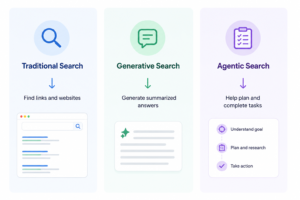
AI is changing how people discover products, but it is not yet replacing the entire buying process. In most cases, AI helps users research products, compare options, and make informed decisions, while the final purchase still happens through a retailer, marketplace, or brand website.
This gap between product discovery and payment is known as the discovery–checkout split. Today, AI is strongest at helping users decide what to buy, while existing commerce platforms still manage how the purchase is completed
As payment systems, merchant integrations, and AI capabilities continue to evolve, this gap may become smaller. However, user trust, payment security, and platform policies will continue to influence how quickly AI moves from assisting with purchases to completing them.
What Comes After Chat?
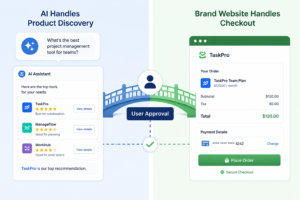
Chat has changed how people interact with AI, but it is only the first step. The future of search is moving beyond conversations toward completing tasks.
Instead of ending with an answer, AI can support users throughout an entire workflow by:
- Researching options
- Comparing products or services
- Recommending the best choice
- Preparing purchases or bookings with user approval
- Assisting with post-purchase tasks such as tracking orders or managing returns
For example, instead of asking, “Which laptop should I buy?”, a user can describe their requirements, and AI can research suitable options, compare them, and prepare the purchase before requesting approval.
The conversation becomes the starting point, while the real value comes from helping users complete tasks with less time and effort.
How Businesses Can Prepare for the Future of Search
Preparing for the future of search means making your business easier for AI to understand, trust, and recommend. As AI moves from answering questions to completing tasks, it will rely on accurate information, clear business signals, and reliable customer experiences before recommending a product or service. Businesses that build these foundations today will be better prepared for the next generation of search.
Create Helpful and Trustworthy Content
Publish content that answers customer questions clearly and accurately. Well-structured, reliable content helps AI understand your expertise and increases the chances of your business being referenced in AI-generated responses.
Keep Business and Product Information Updated
Maintain accurate information about your products, services, pricing, availability, and specifications. Up-to-date information allows AI to compare options confidently and reduces the risk of outdated recommendations.
Use Structured Data
Add structured data to help AI understand the meaning of your content. Structured information makes it easier for search engines and AI systems to identify products, reviews, FAQs, business details, and other important information.
Make Policies Clear and Easy to Find
Display shipping, return, refund, warranty, and payment policies in a clear and accessible way. Transparent policies help AI evaluate whether a business is reliable enough to recommend.
Build Trust Across the Web
Strengthen your reputation through customer reviews, expert content, and trusted third-party mentions. Consistent trust signals help AI verify your credibility beyond your own website.
Create a Smooth Customer Experience
Provide a simple website experience with clear navigation, fast-loading pages, and an easy checkout process. A seamless experience makes it easier for both customers and AI systems to complete tasks successfully.
Preparing for the future of search is no longer just about improving rankings. It is about becoming a business that AI can understand, trust, and confidently recommend when helping users achieve their goals.
Frequently Asked Questions
1. Will agentic AI replace traditional search engines?
No. Traditional search engines are expected to continue evolving by combining search results with AI-powered experiences rather than disappearing completely.
2. Is agentic commerce only for online retail?
No. Agentic commerce can support any business that involves researching, comparing, and purchasing products or services, including travel, software, finance, and healthcare.
3. Can AI complete purchases without user permission?
Most current AI systems require user approval before completing important actions such as payments, bookings, or purchases.
4. What is the biggest challenge for agentic commerce?
Building trust remains the biggest challenge. AI needs reliable business information, accurate product data, transparent policies, and strong credibility before it can confidently support purchasing decisions.

kashish
Passionate about SEO, AI search, and content marketing, sharing practical insights on search trends, AI visibility, and digital growth.