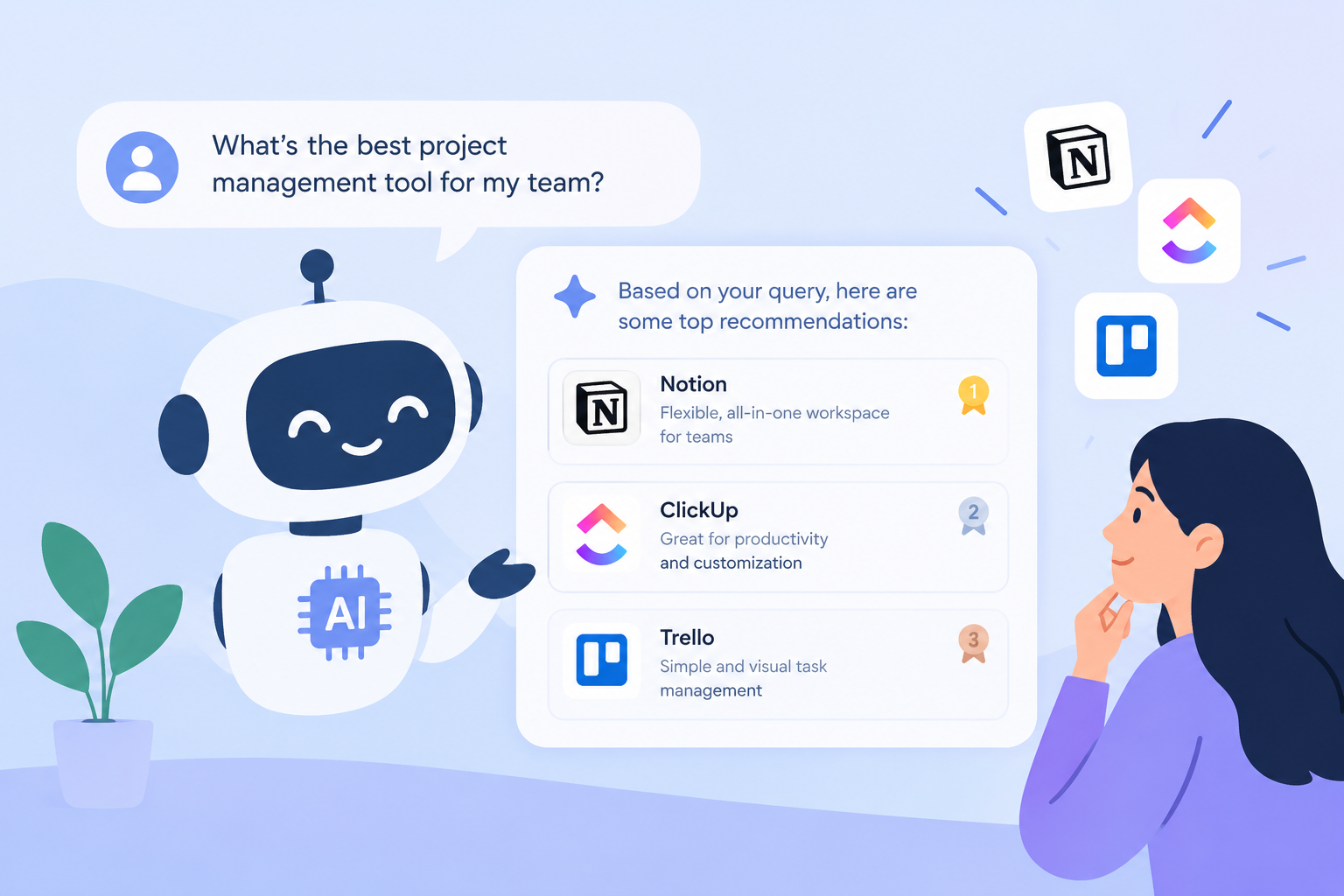
AI chatbots are becoming an important channel for brand discovery. Instead of comparing dozens of websites, users can now ask ChatGPT, Gemini, Perplexity, and other AI platforms which brands they should consider.
But being mentioned by AI is not the same as being recommended. AI recommendations depend on how well a brand is represented, understood, and supported by relevant information across available sources.
For brands, this creates a new visibility challenge beyond traditional search. At RankingBite, we focus on helping brands understand and improve their visibility across AI search and recommendation experiences.
In this guide, we’ll explain how AI chatbots select brands, what influences their recommendations, and how businesses can build stronger visibility in AI-driven search.
What Is an AI Brand Recommendation?
An AI brand recommendation happens when a chatbot suggests a specific brand as a suitable option based on the user’s query, needs, and context. It goes beyond simply mentioning the brand by presenting it as a potential choice.
Mention vs Recommendation vs Citation
| Term | Meaning |
|---|---|
| Mention | AI names or refers to a brand. |
| Recommendation | AI suggests a brand as a suitable option. |
| Citation | AI references a source to support its response. |
A brand can be mentioned or cited without being recommended.
Why AI Recommendations Matter
AI recommendations can influence which brands users discover and consider. As more people use AI chatbots for product and service research, recommendation visibility can become an important part of a brand’s digital presence.
What Influences AI Brand Recommendations?
AI chatbots consider multiple signals when deciding which brands are relevant to a user’s query. These signals help the system understand the brand, its relevance, authority, and presence across available sources.
Brand Entity Clarity
Clear and consistent information helps AI systems understand who the brand is, what it offers, and which category it belongs to. Consistent brand details across important sources can reduce ambiguity.
Content Relevance
Content should directly address the topics, questions, and use cases associated with the brand. Relevant information gives AI stronger context for connecting the brand with specific user queries.
Topical Authority
A brand with comprehensive coverage of its subject area can provide stronger contextual signals. Covering related topics, questions, and use cases helps establish depth around the category.
External Brand Signals
Information outside the brand’s own website can also contribute to how it is understood. Relevant reviews, publications, communities, and other independent sources can provide additional context about the brand.
How to Improve Your Brand’s AI Visibility
Improving AI visibility means making your brand easier for AI systems to understand, discover, and associate with relevant user queries. This requires clear brand information, useful content, credible external presence, and original evidence that demonstrates your expertise.
- Strengthen Your Brand Information – Keep your brand information clear, accurate, and consistent across your website and relevant online sources.
- Create Answer-Focused Content – Create content that directly answers the questions your target audience is likely to ask AI chatbots.
- Build Relevant Third-Party Presence – Earn genuine mentions, reviews, and coverage from relevant websites, publications, and communities.
- Publish Original Evidence – Use original research, first-party data, case studies, and unique insights to give AI systems stronger evidence about your expertise.
How to Get Recommended Across Major AI Platforms
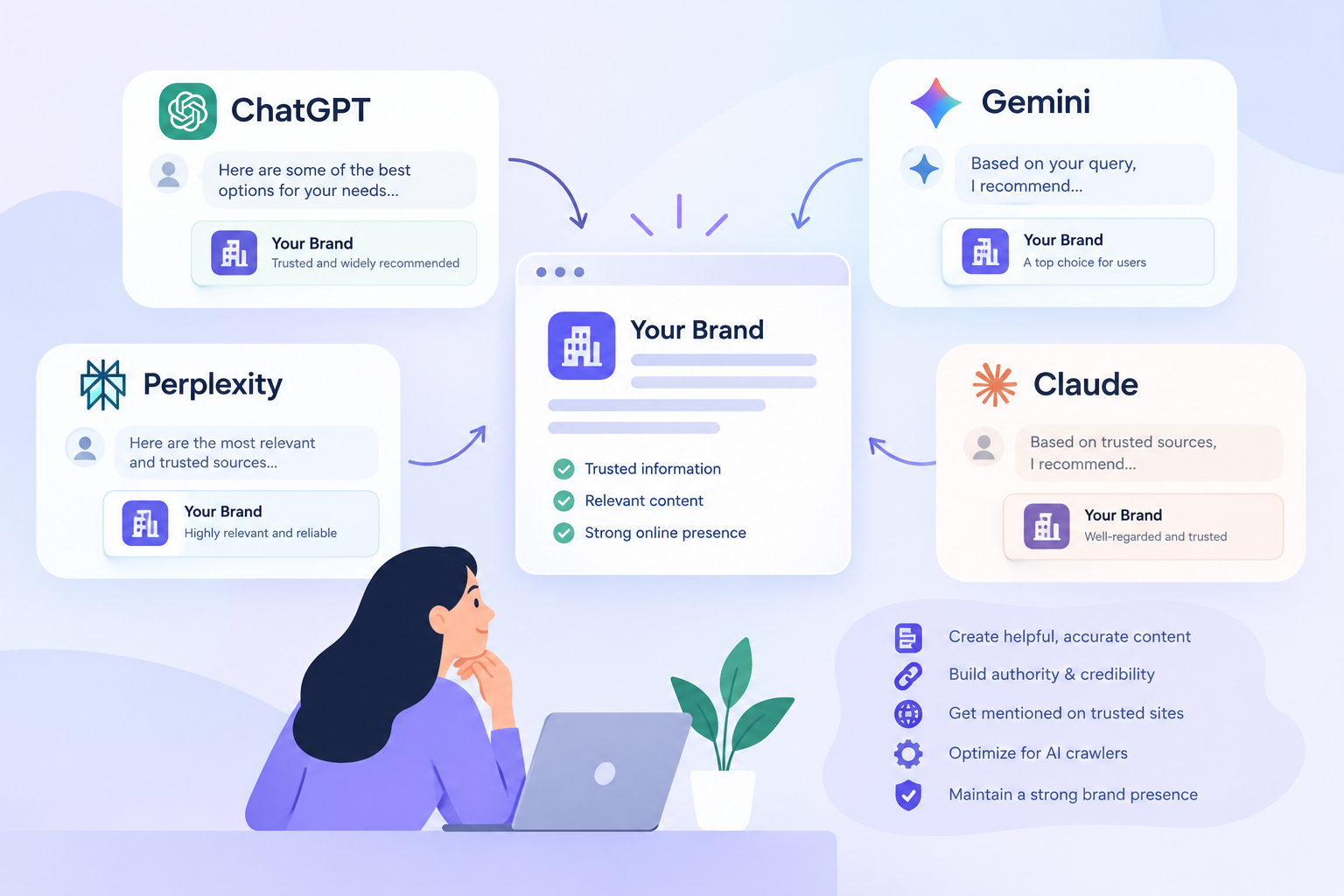
AI platforms use different systems and sources to generate recommendations. A strong strategy should consider how each platform discovers, interprets, and presents information about your brand.
ChatGPT
Improve your chances of being recommended by providing clear and useful information about your brand and creating content that matches relevant user queries.
Regularly test ChatGPT with target prompts to understand how your brand appears in recommendations.
For a deeper look at improving your presence in ChatGPT, read our guide on How to Get Cited by ChatGPT.
Gemini
Build comprehensive content that addresses your category and specific customer needs. Keep important brand information clear and consistent so Gemini has relevant context when generating recommendations.
For platform-specific strategies, explore our guide on How to Get Cited by Gemini.
Perplexity
Focus on structured, evidence-based content that clearly answers user questions. Building relevant sources and making important information easy to discover can support your brand’s visibility in Perplexity results.
You can also read How to Get Cited by Perplexity for a more detailed approach.
ChatGPT vs Gemini vs Perplexity
ChatGPT, Gemini, and Perplexity can use different sources and retrieval approaches when generating answers. Understanding these differences helps brands choose where to focus their AI visibility efforts.
Factor
ChatGPT
Gemini
Perplexity
Primary focus
Conversational answers
Search + AI answers
AI-powered search
Information access
Can use web information when browsing
Strong integration with Google Search
Strong web retrieval
Citations
May provide sources when browsing
May provide source links
Typically provides prominent citations
Recommendations
Context and query dependent
Context and available information dependent
Often closely tied to retrieved web sources
Best content approach
Clear, helpful, answer-focused content
Comprehensive, well-structured information
Evidence-based, source-friendly content
What brands should monitor
Mentions and recommendations
Brand visibility in answers
Recommendations and cited sources
A Practical Framework for Getting Recommended by AI
A simple five-stage framework can help brands systematically improve their chances of being recommended by AI platforms. The process focuses on understanding where you want to appear, improving your brand information, building external credibility, and continuously measuring results.
Define
Identify your target audience, core offerings, key categories, and the queries where your brand should appear.
For example, a SaaS company may target queries such as “best project management software for small businesses” or “best alternatives to Asana.”
Optimize
Improve the clarity, structure, and usefulness of your website and content so relevant information is easy for AI systems to understand.
For example, clearly explain your products, use cases, pricing, features, and comparisons instead of relying on vague marketing statements.
Strengthen
Build supporting signals through relevant third-party coverage, customer feedback, reviews, and credible external sources.
For example, a cybersecurity company could strengthen its visibility through industry publications, expert reviews, case studies, and reputable technology websites.
Monitor
Regularly test relevant prompts across AI platforms such as ChatGPT, Gemini, and Perplexity. Record whether your brand appears, where it appears, which competitors are recommended, and which sources are cited.
For example, test the same “best tools for X” prompt every month and compare the results.
Improve
Use the findings to identify content, citation, and competitive gaps, then update your strategy and repeat testing.
For example, if competitors are consistently recommended for a topic because they have stronger third-party coverage, prioritize building credible coverage around that topic.
How to Measure AI Brand Recommendations
Measuring AI recommendations helps you understand how often your brand appears, gets recommended, and competes for visibility across AI-generated answers.
- Recommendation Rate – Measure the percentage of relevant prompts where AI recommends your brand.
- Citation Rate – Track how often your website or other brand-related sources are cited in AI responses.
- Prompt Coverage – Measure how consistently your brand appears across the different queries relevant to your products, services, and category.
- Competitor Visibility – Compare your brand’s recommendations and mentions with competing brands across the same set of prompts.
Why AI Chatbots May Not Recommend Your Brand
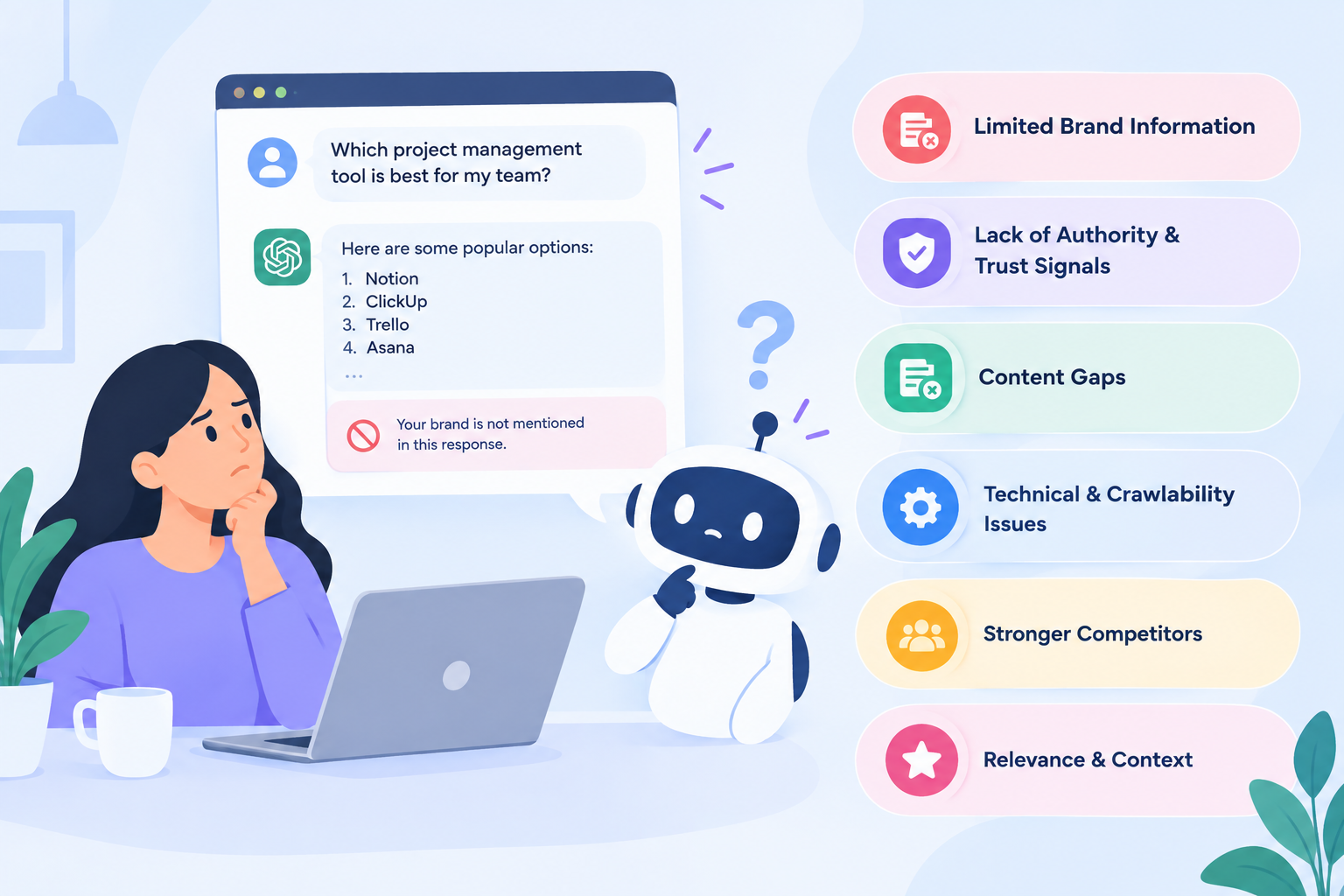
Several factors can prevent AI chatbots from selecting your brand when answering relevant user queries. Understanding these gaps can help you identify weaknesses in your AI visibility and determine where optimization is needed.
Limited Brand Information
If reliable information about your brand is limited, AI chatbots may not have enough context to understand what your business offers, who it serves, or which queries it is relevant to.
Clear information about products, services, use cases, pricing, and expertise can make your brand easier to understand.
Weak Topic Relevance
If your brand has limited content around the topics, problems, or use cases users ask about, AI chatbots may favor brands with stronger topical relevance. Creating useful content around important customer questions can help establish stronger connections between your brand and its target topics.
Limited External Coverage
Few mentions across relevant third-party websites, publications, reviews, or communities can reduce the amount of independent information available about your brand.
Building credible external coverage can provide additional evidence of your brand’s relevance and expertise.
Stronger Competitor Signals
Competitors may have more relevant content, stronger customer feedback, broader media coverage, or more supporting evidence. When their signals better match a user’s query, AI chatbots may consider them more suitable recommendations.
Inconsistent Brand Information
Conflicting information across your website, directories, review platforms, and third-party sources can make your brand harder to interpret.
Keep important details such as your brand name, services, products, and positioning consistent across major sources.
Insufficient Evidence
AI chatbots may have less confidence in recommending a brand when there is limited evidence supporting its expertise, quality, or relevance. Customer reviews, case studies, expert mentions, industry coverage, and other credible sources can help provide stronger supporting evidence.
Poor Coverage of Customer Intent
A brand may be relevant to a category but still miss recommendations for specific customer intents.
For example, a company may offer project management software but have little content addressing queries such as “best project management software for remote teams.” Covering specific use cases can help improve relevance for these searches.
Frequently Asked Questions
Can AI chatbots recommend a small or new brand?
Yes. A brand does not need to be well-known if sufficient relevant information supports its suitability.
Do AI recommendations remain the same for every user?
No. Recommendations can change based on the query, context, and requirements provided by the user.
Can a brand be recommended without being cited?
Yes. A recommendation does not always require a visible citation in the response.
Does being recommended by one AI platform guarantee recommendations on others?
No. Each platform can produce different recommendations based on its available information and systems.
Can AI recommend multiple brands for one query?
Yes. AI may provide several options when multiple brands meet the user’s requirements.
Conclusion
Getting your brand recommended by AI chatbots requires more than traditional SEO. Brands need clear information, relevant content, credible external presence, and consistent testing across AI platforms.
At RankingBite, we help brands strengthen their visibility across AI search and recommendation platforms by combining SEO, content, and AI visibility strategies. The goal is not just to be mentioned, but to become a relevant and credible choice when users ask AI for recommendations.

Shanya
Hi, I'm Shanya, an SEO and content writer at RankingBite. I specialize in creating SEO-focused content around search, AI, cybersecurity, and digital marketing. I enjoy turning complex topics into clear, useful content that helps brands build visibility, connect with their audience, and grow their digital presence.